
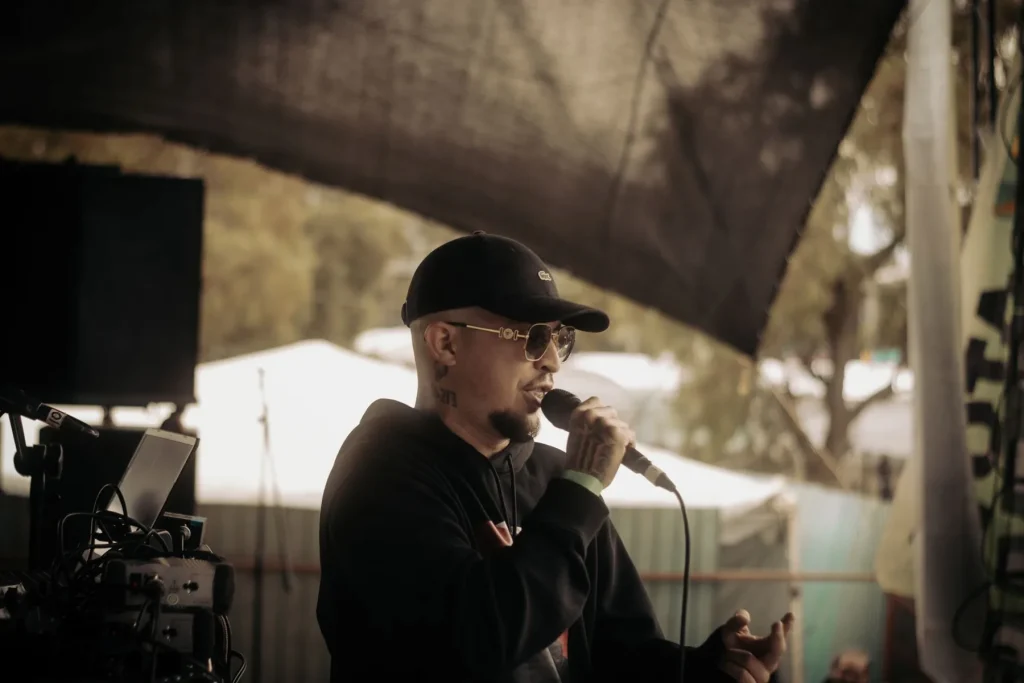
Introduction — this guide traces the path of a collective that left its mark on French rap at a pivotal time.
After the release of Feu, which sold more than 150,000 copies, the rapper reached a wide audience and won a Victoire de la Musique award.
Instead of immediately releasing a second solo album, he put his energy back into the collective project. This collective-first strategy brought the group renewed attention.
This section outlines the guide’s main themes: the group’s origins, its timeline and key albums, its standout tracks, and its impact in the years that followed.
The editorial aim is clear: to offer a sourced overview, concrete details about the music, and perspective on the members.
Finally, the guide explains how solo exposure strengthened the group’s stage presence, from the Victoire de la Musique to the Olympia, and how individual paths became shared ones.
The origins of S‑Crew: a group of friends becomes a rap group
The collective’s first friendships formed in the corridors of a school in Paris’s 15th arrondissement. That is where Framal and Mekra, two brothers, became friends with Nekfeu. Music soon became part of their breaks between classes.
In 2007, 2zer Washington joined the circle. He brought experience and strengthened their resolve to turn sessions among friends into a serious project.
From a group of friends in the 15th to an organized collective
The shift from a group of friends to a rap group took discipline. Nights in the studio, open mics, and battles forged an identity. Gradually, the members began writing together and refining a shared sound.
Networks and independence
L’Entourage, 1995, and live performances helped spread their style. Creating Seine Zoo gave them greater control over production, tours, and music videos. The label strengthened the artists’ independence.
Los Angeles: creative workshop and group cohesion
A stay in Los Angeles brought a change of scene and a burst of creative intensity. Hugz Hefner produced nearly 90% of the instrumentals, becoming the collective’s sonic glue. The brotherhood built over several years established the idea of “intertwined destinies.”
| Milestone | Role | Period |
|---|---|---|
| Meeting at school | Beginning of their friendships | Early years |
| 2zer Washington joins | Rap experience | 2007 |
| Seine Zoo | Independent organization | Professional development |
| Los Angeles | Work on the album and its production | Intensive stay |
The group’s timeline and key albums: from Destins liés to SZR 2001
New momentum emerged in 2015, with collaborations intended to revive the collective’s energy. The group’s appearance on Feu with “La moue des morts” served as a nod to the collective. The reissue, featuring “Question d’honneur” in December, confirmed the intention to bring the group back into the public eye.

2015–2016: the spark
The strategy was clear: build anticipation before the album’s release. Music videos released in late 2015 created excitement and put the collective’s name back on playlists.
Destins liés (June 2016)
On June 17, 2016, Destins liés was released and went platinum. This major commercial success benefited from the rapper’s heightened visibility, particularly in mainstream media.
On the album, the lead voice opens 10 of the 16 tracks and performs 11 choruses (65%). Several tracks received music videos: “On va le faire,” “Démarre,” “J’aurais pas dû,” “Félins,” and “Clan.” This choice broadened the project’s appeal and reinforced a dual perception: a collective project whose commercial momentum depended heavily on one central figure.
SZR 2001: what came next
After Destins liés, SZR 2001 marked the group’s return on firmer foundations. Cooperation that grew through the networks of L’Entourage and the structure built around Seine Zoo made it a natural continuation of earlier projects.
| Year | Event | Impact |
|---|---|---|
| 2015 | Collaborations and reissue | Renewed collective momentum |
| June 17, 2016 | Release of Destins liés | Platinum certification and extensive media coverage |
| After 2016 | SZR 2001 | Return and continuation of collective projects |
Nekfeu and S‑Crew: the group’s history and essential tracks
To understand the collective’s musical DNA, start with these tracks that defined a generation.
Tracks to discover or revisit:
- On va le faire — infectious energy and a catchy chorus, a cornerstone of the album Destins liés.
- Démarre — a driving rhythm, an effective melody, and powerful verses.
- J’aurais pas dû — sharp lyrics and a contrast between the flow and the production.
- Félins — a dark atmosphere and a memorable chorus.
- Clan — a spotlight on 2zer Washington and a music video designed to extend the track’s reach.
The vocal arrangement follows two principles: striking verses and sung choruses that bring listeners together. The leader’s repeated presence on the choruses creates a recognizable sound.
The music videos gave these tracks added force. Their visual treatment created powerful images and helped drive their commercial and cultural success.
The members complement one another: Framal, Mekra, and 2zer Washington bring different vocal textures and approaches to writing. That enriches the music and the group’s overall sound.
Suggested listening order: start with the tracks listed above to hear the group’s energy, then play the full album to appreciate the project’s nuances and the roles of its members.
Impact on French rap: shared destinies, success, and a place in its era
The media visibility gained by a leading rapper gave the collective a launchpad. It turned individual fame into a resource for shared projects.

From solo success to the collective: sales, media, and strategy
Commercially, the gap is clear: a solo album can sell 47,000 copies in its first week, while some releases by other members reach only 500. These figures shaped the strategy.
The approach was a “Trojan horse” strategy: use one artist’s fame to gain access to television shows and radio stations. Media coverage gave the collective a wider place in French rap.
This imbalance also supported solidarity. Collective releases such as Destins liés and later SZR 2001 used that media attention to reach new audiences.
- Showcase effect: appearances on major shows generate credibility and curiosity.
- Promotional reach: the solo album indirectly introduces listeners to the collective project.
- Historical place: the group’s internal organization enabled regular, credible returns alongside other groups of its era.
For more, read a detailed analysis of the cultural and commercial impact of these dynamics.
Conclusion
The collective’s journey shows how a neighborhood friendship became a lasting project. Within a few years, the structure built around Seine Zoo and support from networks such as L’Entourage helped professionalize its work.
Destins liés became a cornerstone, followed by SZR 2001. This period strengthened a loyal fan base.
The members, including 2zer Washington, Framal, and Mekra, maintained a cohesion that lets them combine individual styles with a collective identity.
The music and visuals strengthened their connection with listeners. Further returns seem possible in the spirit of the group.
To learn more about the solo career that helped fuel this collective, explore the third album and its role in bringing a cycle to a close.