

Purpose: this article explores how reading feeds a contemporary rapper’s writing and shapes his artistic world.
The context is clear: on his debut album, Feu (2015), three tracks take their titles from major literary works—Martin Eden, Le Horla and Laughable Loves—revealing a deliberate poetic approach.
This guide maps the references, analyzes stylistic devices (ambiguous rhymes, assonance and antiphrasis) and examines a case study: Laughable Loves.
The argument is simple: literature is more than a passing allusion. It informs the tracks’ themes, form and narrative structure while contributing to the musicality of rap.
Readers will learn to hear double meanings, identify groups of related words and grasp the songs’ emotional and critical force.
Finally, we will place these choices in the making of Feu and ask: how can reading become something alive, personal and universal?
Why literature matters in French rap today
Modern rap builds bridges to literature, turning quotations into invitations to read.
Growing influence: citing literary works helps establish the genre’s cultural standing. References enrich meaning and open a dialogue among music, visual art and writing.
These allusions act as bridges: a listener revisits a verse in light of an author’s work. They may also seek out the book to better understand an idea.
Effect on meaning: vocabulary, imagery and narrative forms borrowed from novels extend the reach of the lyrics. Each listen adds to their sense of depth.
- Reception: audiences gain more ways to interpret the music.
- Discussion: media outlets and communities produce more analyses.
- Longevity: after 10 years, this openness has become a mark of artistic ambition.
| Function | Impact | Example |
|---|---|---|
| Cultural standing | Raises the genre’s profile | Recurring references across an album |
| Bridge | Encourages reading | Verses illuminated by a novel |
| Depth | Multiple interpretations | Allusions that work on several levels |
In short, such references are rarely decorative: they form part of a creative method. For a longer discussion of the subject, see this article.
Nekfeu: a literary voice at the heart of French rap
His writing has often been praised for its precision and the richness of its imagery. As an artist and rapper, he combines careful word choice with command of rhythm.
From a reputation for fine writing to explicit references
His signature emerged early: precise wording, attention to meter and abundant imagery. In 2012, he cited Kundera in a line about “lightness.” On Feu, three tracks borrow the titles of major literary works, signaling a deliberate approach.
How books shed light on the tracks
Borrowed titles, direct quotations and narrative parallels offer ways into the songs. Listeners discover new layers of meaning with each play.
| Element | Effect | Example |
|---|---|---|
| Precise vocabulary | Clarity and density | Carefully developed imagery and metaphors |
| Explicit references | Invitation to read | Borrowed titles on Feu |
| Forms and constraints | Stronger expression of ideas | Chiasmus and alternating voices |
Mapping the references: from Jack London and Maupassant to Kundera
On Feu, three titles serve as literary signposts that guide the listener.
Martin Eden, Le Horla and Laughable Loves: titles, allusions and intentions
The tracks borrow familiar titles and bring their themes into rap.
Martin Eden evokes social ascent and an identity crisis. Le Horla brings in the uncanny and the inner life. Laughable Loves explores desire and disillusionment.
Quotation as a bridge to reading
A quotation works like a signal: it prompts listeners to seek out the source work, then return to the track with a fuller understanding.
“Like Kundera, I find the lightness of being unbearable.”
This example shows a longstanding interest in the authors he cites. For a more extensive analysis, this link leads to a complementary study.
- Function: a name can evoke an entire world.
- Effect: reading deepens understanding of the track.
- Result: cohesion across albums and a clearer artistic statement.
A stylistic toolkit: recurring devices in Nekfeu’s writing
Here are the techniques that run through his verses and shape their rhythm.

Ambiguous rhymes and similar-sounding words
Ambiguous rhymes and similar-sounding words use sound to add meaning. Familiar examples include lines about “balls of gold” and “melting ice,” “Your sweetness kills,” and “a lover’s life” and “the emptiness in me.” These lines bring form and meaning together.
Double meanings and homophones
Homophones allow several readings. In French, one hears “vit la joie” (“lives joy”), then “villageois” (“villager”); “des airs” (“airs”) can become “désert” (“desert”). These shifts enrich the message without interrupting the flow.
Antiphrasis, paradoxes and antimetabole
Antiphrasis makes an impact by overturning expectations: “When I need to empty my mind, I fill up,” and “Your absence is the worst kind of presence.” Such lines act as pivots for ideas.
Assonance, alliteration and musicality
Assonance and alliteration shape the rhythm. They can be heard in tracks such as Altitude and Martin Eden. They support breath control and the impact of a live performance.
Repurposed word groups
Shifting groups of related words creates extended metaphors: safe, mask, robbery; single knot, double knot. These shifts add density to the story and invite multiple interpretations.
- Purpose: these devices are not there for their own sake. They serve an idea and deepen the meaning of each line.
- Often combined within a single sentence, they allow several levels of interpretation.
Ambiguous rhymes: from “balls of gold” to “sweetness kills”
Ambiguous rhymes catch the ear because they bring meaning and sound together in a single moment. They work like small rhetorical turns in a rap verse.
Examples and their critical force
Definition: an ambiguous rhyme allows two readings and creates a double effect. The listener then discovers another layer of meaning.
- “Balls of gold … melting ice” — a close rhyme and a striking image. Technique meets social criticism as finance and climate echo one another.
- “Your sweetness kills” — an approximate, almost assonant rhyme. Little ornamentation, but strong tension between tenderness and violence.
- “A lover’s life … the emptiness in me” — a chain of sounds that heightens alliteration and emotion.
The cumulative effect comes from internal rhymes and cascading rhymes. The virtuosity is not confined to line endings: it lives inside the sentences.
Repeated listens reveal these layers; working them out becomes a pleasure in itself.
Double meanings: “vit la joie”/“villageois” and “des airs”/“désert”
Sound play opens up several readings that emerge over successive listens. These shifts produce a deliberate, controlled ambiguity of meaning.
Homophonic form can turn a phrase into a narrative device. For example, “vit la joie” (“lives joy”) and “villageois” (“villager”) set the city against the desire to leave it. The grammatical constraint hides an implied message: leave the city to find peace.
With “des airs” (“airs”) and “désert” (“desert”), internal clues—a “grain of sand” and solitude—guide interpretation. The line becomes a mental landscape, giving the rap greater depth.
Finally, “on s’renfloue” (“we recover financially”) and “on se rend flou” (“we become blurred”) illustrate a moral shift: money clouds how we see social relationships. Few embellishments are needed to create the turn.
Repeated listening and the pleasure of investigation
- Principle: ambiguity used to create several controlled meanings.
- Scope: these double meanings shape the track, not just one line.
- Effect: meaning emerges on closer reading, encouraging another listen.
Antiphrasis and general truths: “When I need to empty my mind, I fill up”
Saying the opposite for impact: antiphrasis, antithesis and paradox recur throughout the writing. Antiphrasis means saying the opposite of what one intends. Antithesis places opposing ideas side by side. Paradox challenges common sense to provoke thought.
“When I need to empty my mind, I fill up”
The line creates a clash of images. The contrast between “full” and “empty” conveys mental overload and an attempt to escape it. Likewise, “Your absence is the worst kind of presence” makes absence feel palpable.
Antimetabole is a related device. For example: “I know the risks of love, but I’ve always loved risk.” Reversing the terms strengthens the phrase and makes it memorable.
| Device | Effect | Example |
|---|---|---|
| Antiphrasis | Irony and intensity | “When I need … I fill up” |
| Antithesis | Tension | “Absence / presence” |
| Antimetabole | Memorable phrasing | Risks / love of risk |
Onstage, these turns draw an immediate response. They achieve a great deal with little ornamentation. Over the years, this approach has given his words particular force and, before an audience, a sense of simple yet profound truth in rap.
Assonance and alliteration: shaping sound to reinforce meaning
Sound patterns influence meaning as much as the words themselves. Assonance repeats vowel sounds; alliteration repeats consonant sounds. Both shape delivery and strengthen imagery.
For example, Altitude uses the French vowel sounds i and è to suggest an inner ascent. In “$crew – C’est pas un film,” t, d and b strike a sharp beat. In Martin Eden, s and si create a hissing texture.
Read aloud, the density of sound becomes clear: the hypnotic effect grows from repeated rhythm and the close relationship between breath and rhyme.
Reading, breath and stage performance
Reading aloud reveals the rhythmic framework. Breath control helps adjust the attack and pace of delivery to bring certain sound groups forward.
In concert, these choices make the lines easier to remember and encourage exchanges with the audience. Performance turns written words into shared momentum.
Case study — Laughable Loves: Nekfeu meets Milan Kundera
This case reveals a formal dialogue between a short-story collection and a song. The project connects a fragmented aesthetic with musical storytelling.
Unity and variety: fragmented stories, from book to track
The book contains seven stories; the song presents five. Both create a kaleidoscopic effect through fragments.
Structure, chiasmus and symmetry: forms that echo one another
Kundera often arranges his stories in an A‑B‑C‑D‑C‑B‑A chiasmus. The track follows a similar principle through symmetry and a refrain built on antimetabole.
Narration and point of view: masculine, intimate, autobiographical
The point of view remains masculine. The language is direct and sometimes autobiographical; the name “Ken” surfaces like a signature.
Seduction, complications and failure: the “same pattern”
Recurring motifs include seduction as strategy, hotels as settings, moral complications and a repeated pattern of desire → impulse → disillusionment.
Paradoxes and definitions: “love, serum and venom”
“Love: the serum and the venom.”
The phrase condenses a meaning that is both comic and tragic, giving the track a moral dimension close to that of a literary essay.
| Element | Book | Song |
|---|---|---|
| Number of parts | 7 short stories | 5 stories |
| Form | Chiasmus | Symmetry and refrain |
| Point of view | Overt fiction | Overt autobiography |
Ultimately, the work’s influence runs through the rap, shaping the meaning and tone of the track far beyond its title. This fusion informs several albums and confirms the importance of connections between forms.
Feu: a debut album conceived as a manifesto
Feu stands as a manifesto in which private experience meets artistic ambition.
Identity and risk-taking: this debut album sets out a clear worldview. The project takes chances, changes direction and embraces its aesthetic choices. Selection was strict: nearly forty tracks were written, but only eighteen were kept, plus a hidden track.
Varied sounds: boom bap influences, pop experiments, electronic layers and textures coexist. A voice honed onstage gains power and precision in the studio.
Collaborations: Superpoze adds electronic depth, Loubensky creates instrumental textures, and Hugz produces much of the music. Self-production and the handling of music videos in Montréal, Los Angeles and Paris show a strong command of the artistic process.
Personal chronology: the journey from young Ken to a more settled artist, with each track tracing a stage of life. Contributions from the group alongside a distinct solo voice give the album its character.

The writing workshop: drafting, rewriting and “sampling” lines
The workshop begins with accumulated notebooks, files and ideas. In practice, nearly forty tracks are composed and then narrowed to just under twenty.
Selection, coherence and thematic range
The selection process favors a coherent project. Each track is judged by how it complements the others: love, society, identity and personal history must speak to one another across the album.
Rewriting as sampling
Unused lines do not disappear: they become “samples” of phrases. They are recycled, reshaped and polished until an idea finds its best form.
From stage to studio
Performing live develops the power and precision of delivery. Audience reactions help refine diction, breathing and timing.
Ultimately, daily work and critical exchanges with those around him produce an album in which every track has a purpose. These efforts strengthen the whole.
Onstage and in the street: reception, audiences and reality
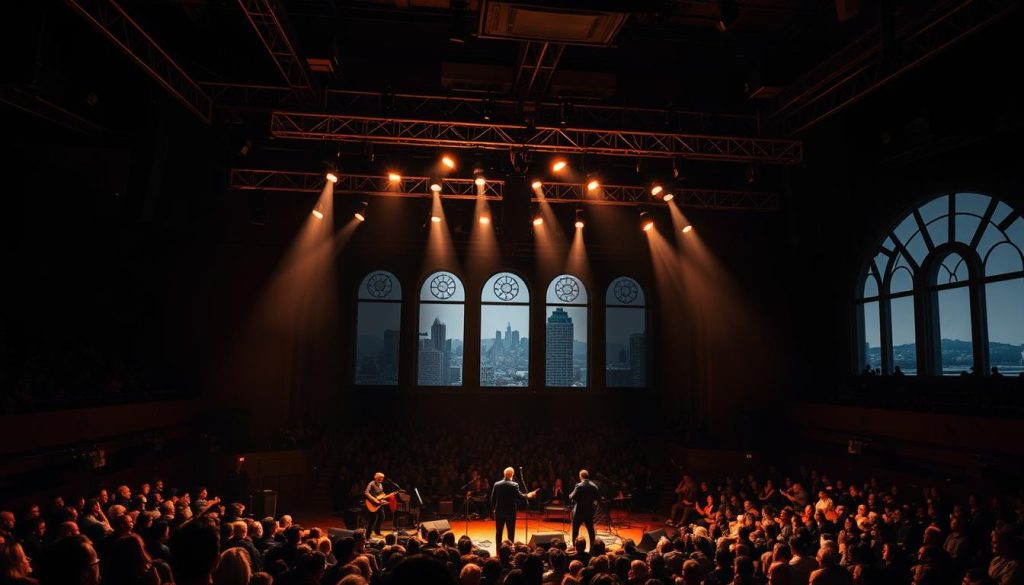
Before an audience, every line takes on another dimension.
The stage reveals real pressure: breathing, timing and silence matter as much as the words. A concert is the test in which the audience’s energy shapes the performance.
Meetings “in the street” provide immediate feedback. They matter more than online numbers. These exchanges keep the artist connected to society and feed the reality of the tracks.
Music videos, places and resourcefulness
The videos extend the album through distinctive places: Tempête in Montréal with a local crew; Egérie in Los Angeles with Dawid Krepski; Time B.O.M.B. with its VHS look; and Ma dope, directed by the artist himself in Los Angeles.
These aesthetic choices express a resourceful approach. Local teams, self-production and a vintage look support the ideas and connect image with sound.
| Element | Function | Impact |
|---|---|---|
| Stage | Immediate test | Measures the tension |
| Street | Social feedback | Impact beyond the numbers |
| Music videos | Visual extension | Stronger themes |
“The dialogue with the audience remains the driving force: loyalty, high standards and constant exchange.”
Nekfeu: the place of literature in his lyrics
Literature emerges as material for composition, far beyond a simple quotation.
From thematic inspiration to formal design, books inform titles, motifs and the structure of tracks. Fragmentation, chiasmus and refrains draw on narrative practices borrowed from novels.
The borrowings are concrete: points of view, inner dialogues and paradoxical definitions become punchlines. Borrowed devices—antiphrasis, extended metaphors and symmetry—serve the energy of rap.
This enriches meaning and gives the story of a life universal reach. The intimate becomes archetypal; personal experience touches a wider world.
Across the album, this method creates coherence: each track belongs to a shared structure. The approach can be heard on record and onstage.
Identity as an artist: reading, writing and performing form a whole. Books are not trophies; they are practical sources of inspiration.
“Reading does more than embellish language: it shapes form and thought.”
Interpretation and context: read, listen, reread
Understanding a track calls for both attentive listening and reading the sources it cites. Moving between them enriches meaning and reveals hidden motifs.

Listening tips: spotting devices and groups of related words
A simple method: 1) listen to the track without distractions, 2) read the work it cites, 3) listen again while taking notes. Moving back and forth sharpens understanding.
- Look for: ambiguous rhymes, double meanings, repurposed word groups and paradoxes.
- Follow internal clues: key words, recurring sounds and symmetry.
- Consider differences between studio and stage: performances can alter meaning.
Example: in Laughable Loves, the refrains and many definitions of love offer fragments that speak to one another. A simple refrain becomes a key to interpretation.
To go further, compare several tracks from the same album. Then return to them later, after more reading: their meaning may change.
This quick method also works for an analytical article: gather evidence and listen repeatedly to build a sound interpretation.
Looking ahead: style, ideas and the wider world
A productive tension emerges between the boom bap tradition and newer textures. It supports work that remains dark and melancholy while opening up to other colors.
Between loyalty to boom bap and measured experimentation
Heritage: rhythm, groove and phrasing remain rooted in a classic beat. This foundation preserves the sincerity of the message and the density of the lyrics.
Explorations: airy layers, trip hop and 1980s electronic influences, and measured passages of singing. These textures broaden the palette without becoming formulaic.
Over the years and across projects, confidence has grown. Personal taste guides choices more than commercial trends.
Guiding principle: preserve quality and authenticity instead of giving in to a ready-made sound. The aim is simple: broaden the music’s range to express the world of the lyrics with greater nuance.
“Going further means keeping the core identity while exploring new horizons.”
- Areas for experimentation: singing, synthesizer layers and trip hop atmospheres.
- Future direction: keep broadening the palette later without losing the rap identity.
Among French rappers: distinctive traits and shared ground
The French rap scene forms a constellation of influences and paths. Some artists connect their boom bap heritage with experiments in sound.
Shared ground: attention to writing, a taste for 1990s groove and care with lyrics bring many French rappers together.
Distinctive traits: literary references and unusual narrative structures create a recognizable signature. The collective often provides the setting in which this style develops.
- Collectives (1995, S-Crew, L’Entourage): support, exchange and creative energy.
- Solo work: the development of a public identity and a personal artistic life.
- Moving between the two: a shared workshop by day, a microphone onstage by night.
| Element | Collective | Solo |
|---|---|---|
| Source | Exchange | Introspection |
| Impact | Strength of the group | Individual voice |
| Examples | Group albums | Personal album |
Ultimately, this path places the artist at a crossroads in rap: a bridge between tradition and modernity, nourished by the stage and a constant return to the studio.
Conclusion
To sum up, this article makes a simple argument: reading drives both meaning and form.
The debut album emerges as a true manifesto project, setting a life to music and words. The evidence is clear: borrowed titles, fragmented structures, symmetry and stylistic devices, along with the case study devoted to Kundera.
Returning again to the books deepens the listening experience over time. Taking account of the public experience—stage, music videos and street—extends and confirms the songs’ intentions.
In conclusion, this artist and rapper holds a distinctive place between heritage and invention. Few performers bring content and form together so closely. Read, listen and reread: it is the beginning of a dialogue that grows deeper with every listen. For a focused reading, see our analysis of Laughable Loves.