
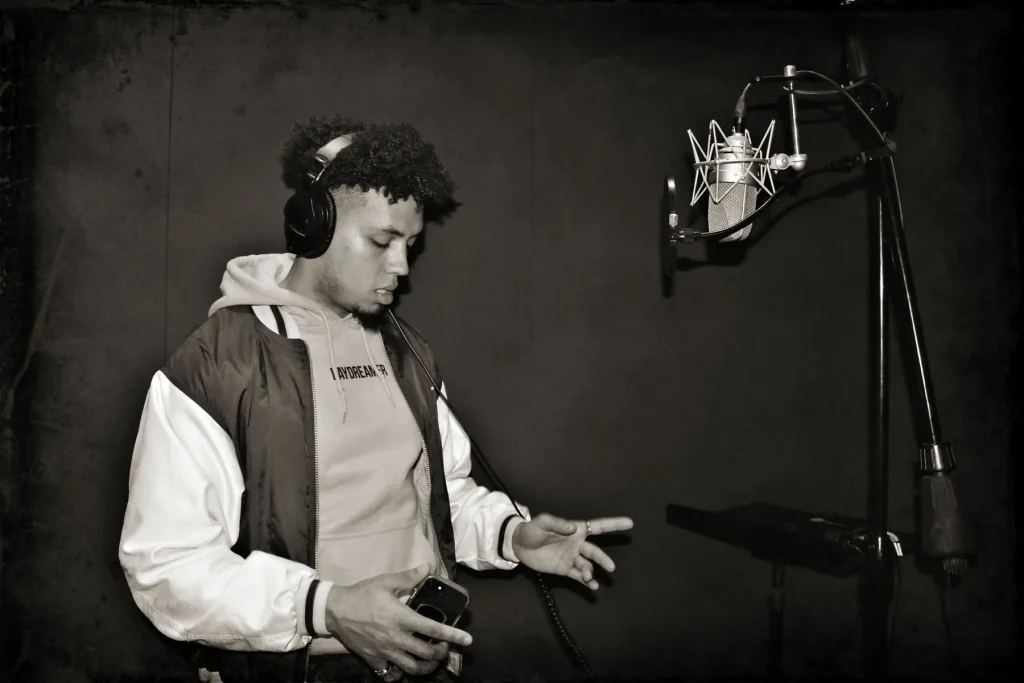
Goal: give fans of the Parisian rapper a clear selection of collaborations in which he shines.
The public context around his discography has changed. Les Étoiles vagabondes : expansion was certified double diamond, renewing interest in his albums and projects.
The temporary removal of Feu and Cyborg from streaming platforms also revived interest in those releases. This list focuses on the quality of singles and album tracks on which he stands out.
Our approach combines a review of studio projects, fan response and critical reception. The film Les Étoiles vagabondes adds a visual dimension that shapes how the collaborations are perceived.
For more, find an annotated selection, with release dates and recurring highlights from his discography, through this link to five standout collaborations.
Why Nekfeu’s collaborations made their mark on French rap
Each collaboration writes a chapter in the modern history of French rap. In the 2010s, the blending of sounds opened doors between scenes. Connections with a range of artists changed the musical landscape.
The writing in these duets makes social reality tangible without sacrificing musicality. On socially engaged tracks such as “Putain d’époque”, the message gained considerable media attention and sparked public debate.
At times, the performance speaks for itself: “Zone”, featured on an album that is not primarily focused on rap, brings fresh energy to the whole project. This kind of achievement demonstrates both artistic success and public impact.
Another strength lies in how well he works with other rappers. He adapts his flow to his partner’s tempo and brings out the song’s narrative side.
- Artistic: quality of writing and a balance between substance and form.
- Public response: tracks that become lasting reference points.
The origins of the collaborations: L’Entourage, 1995 and life in a group
His early years in collectives laid the foundations for a group ethos centered on writing and live performance.
En Sous-Marin (2011) cemented the legend of Flingue & Feu. The joint EP by Alpha Wann and Nekfeu includes tracks such as “En Soum-Soum” and “Monsieur Sable”, which already reveal rare chemistry.
En Sous-Marin with Alpha Wann
The synergy between the two rappers is clear in the way their lines answer one another. Fast passages, seamless transitions and back-and-forth exchanges anticipate their broader collaborations.
Deen Burbigo’s Inception: “Ma IV”
In 2012, “Ma IV” brought Alpha Wann, Jazzy Bazz and Nekfeu together on one track. The line « on est les maquisards du mic’ » (“we’re the microphone’s resistance fighters”) captures the collective ambition of a project that has stood the test of time.
- Group tracks such as “Le Singe Fume Sa Cigarette” build connections between scenes.
- Fans and critics have repeatedly highlighted these early collaborations.
For a closer look at Alpha’s career, see Alpha Wann strikes back.
Alpha Wann x Nekfeu: chemistry, back-and-forth exchanges and shared history
Their work together showcases a vocal back-and-forth technique associated with the Parisian scene. Their collaboration draws on a shared history, onstage and in the studio, that fuels their rapport.
“A Deux Pas”: narrative and technical harmony
“A Deux Pas” (Alph Lauren 2) evokes life in Paris. Their lines complete one another, creating a flow in which the production gives each exchange room to breathe.
This track shows how the story continues from one verse to the next. The balance of breath and rhyme keeps the song flowing.
“Compte les hommes”: mirrored verses and inside jokes
“Compte les hommes” (LÉV) plays on inside jokes about a verse removed from UMLA. Its mirrored verses reveal a distinctive grammar of two-voice rap.
“They answer each other like two conjugated verbs.”
Mutual listening and a sense of timing are central. Fans and critics welcomed the reunion, which strengthens the original album‘s cohesion.
- A rapport forged through shared history.
- Technique: internal and multisyllabic rhymes, carefully controlled breath.
- Impact: high expectations and favorable critical reception.
Ultimately, this approach became a benchmark for two rappers who have mastered the art of trading lines and maintained a high artistic standard.
Nekfeu: best collaborations and guest verses
The selection rests on measurable criteria. We assess the writing, how well the production fits, public impact and relevance to its era.
Writing quality emerges in the alliteration, multisyllabic rhymes and structure of each verse. We examine the passage’s architecture: introduction, central section and conclusion.

What really matters
- Writing: subtle imagery and internal rhymes.
- Production: compatibility between voice and energy (Hugz Hefner, Diabi).
- Public response: views, certifications and status as a single or album track.
- Era: does it open up new stylistic possibilities?
A successful feature balances the lead artist and the guest. The guest’s contribution should add something without overshadowing the album or single. Collaborations across scenes and generations often matter greatly for their artistic richness.
“We judge the emotion conveyed as much as the technical feat.”
| Criterion | Indicator | Specific example | Weight |
|---|---|---|---|
| Writing | Alliteration, multisyllabic rhymes | Verse structure | 30 % |
| Production | Match between flow and beat | Hugz Hefner / Diabi | 25 % |
| Public response | Views, certifications, wider impact | Single or album track | 25 % |
| Era | Innovation or continuity | Opens up or strengthens a scene | 20 % |
Conscious rap and speaking out: when the message leads the song
Socially engaged tracks show that rap can become a platform for ideas without sacrificing musicality.
Dosseh – “Putain d’époque”: society, solidarity and a controversial music video
On the album Yuri, “Putain d’époque” stands out as a socially engaged song about social reality and solidarity. The track achieved rapid success: over a million views in less than two days, followed by a gold certification.
The music video was removed from YouTube after a plagiarism complaint concerning visuals resembling a work by Kader Attia. The controversy fueled public debate about appropriation and visual creation.
Orelsan – “Zone” feat. Dizzee Rascal: speed, technique and punchlines
“Zone” relies on speed and precision. Alongside Orelsan and Dizzee Rascal, the rapper delivers a technically accomplished verse built around braggadocio and careful syllable placement.
The combination works: each artist brings a distinct touch, making the song dense without losing clarity. Its release revived discussion about the balance between speed, message and musicality.
“The message shapes the form when anger becomes a deliberate rhyme.”
These appearances strengthen the image of an artist able to unite substance and form. They also show that taking a stand and writing well can have a real media impact.
Braggadocio and bangers: energy that hits the mark
Some songs put raw energy first to leave a lasting impression. “Skurt Cobain” embodies that approach: a single that hits from the first bar.
Sneazzy – “Skurt Cobain”: Hugz Hefner’s production and a sharp delivery
Hugz Hefner’s production is surgical. It creates a tight framework in which every rhythmic placement counts.
The guest rapper embraces braggadocio without missing a beat. The lines start abruptly, and the punchlines land hard.
The music video uses light and visual style to amplify the song’s momentum. More than 16 million views attest to its cultural reach.
The chemistry between the two artists comes from a shared history onstage. Their dynamic makes the chorus catchy and the verses memorable.
“Immediate impact and a distinctive sound.”
In short, this banger proves how well they adapt to braggadocious rap. It remains simple and immediate, yet instantly recognizable to listeners seeking raw energy.
Bridging generations: inviting, bringing together and helping artists grow
When an established artist lends a voice to a younger one, it opens a door that extends beyond a single.
These collaborations create genuine connections. They attract new listeners, bring distinct audiences together and help shared projects grow. Their social and artistic role is clear.
Ninho – “De l’autre côté”
“De l’autre côté” is an introspective song. The production remains melodic and highlights the downside of success for the rapper. The meeting of a sung topline and a precise verse makes for a genuine success.
PLK – “Woaw”
On “Woaw”, his appearance helped drive the rapid rise of PLK’s debut album, which was certified gold. The track’s socially engaged ending addresses sensitive public issues.
| Song | Characteristic | Role across generations | Public impact |
|---|---|---|---|
| De l’autre côté | Melodic production, introspective theme | Passes emotion between generations | Broadens the artistic range |
| Woaw | Socially engaged ending, live energy | Career boost for the younger artist | Contributes to the project’s gold certification |
Panenka Music and the Fonk network help bring these artists together. By building such connections, the catalogue gains variety, opportunities to pass on experience and fresh sounds. Audiences respond when the partnership feels authentic.
For more context and rankings, see this critical guide as well.
Lyricism and old-school nostalgia
On some tracks, a love of old-school rap provides fertile ground for expression.
Comme une balle (2014) illustrates this connection: the vintage production gives the lyrics room to breathe. The two writers offer glimpses of life in their neighborhood. Personal history feeds the story and brings the song to life.
The impact is evident in how the rapper is perceived as a deeply committed writer. Intimate storytelling adds to his credibility. These passages strengthen the identity of an album centered on lyricism.
Georgio — “Comme une balle”: childhood stories and shared momentum
The song uses simple imagery to build a shared memory. Each line is rooted in a detail that opens onto an entire scene.
Nakk Mendosa — “Altitude Remix”: assonance and a view of the world
On “Altitude Remix”, the shifts between different flows build on recurring assonance. The line « y’a l’odeur de l’au-delà dans l’eau de la rivière » (“there’s a scent of the beyond in the river water”) suggests an almost ecological view of reality.
These collaborations show how technique and sensitivity complement each other. They connect these songs to a storytelling tradition that puts observations of everyday life first. Ultimately, the heritage of old-school music strengthens his identity as a writer and extends his artistic trajectory.
International connections and stylistic range
Some collaborations have created direct links between French and international scenes. These encounters broadened the projects’ sound while reinforcing his image as a curious artist.
Zone: a bridge between the UK and France
The track “Zone” brings together Orelsan, Nekfeu and Dizzee Rascal. The trio creates a clear bridge between the British scene and French rap.
Dizzee brings a distinctly British energy. The fast performance demands rhythmic precision, which Nekfeu maintains throughout.
At the time, anticipation of a music video heightened media interest in the song and the project as a whole.
Crystal Kay: choruses and melody
Crystal Kay delivers memorable choruses on “Nekketsu” (the outro of Cyborg) and “Pixels” (LÉV). Her melodic contribution provides a welcome contrast.
These appearances give the host album room to breathe. They add a human touch and broaden its audience.
Another sign of openness: “7:77 am” feat. 86 Joon on Feu shows transatlantic ambition from the first album. These collaborations portray an artist committed to high standards and stylistic exploration.
“These strategic connections help sustain an artistic career by reaching new audiences.”
In summary, these international bridges add contrast, space and credibility to the albums. They reinforce the sense of a career with a global outlook that remains rooted in the French scene.
Recurring duos that made their mark: Némir, Alpha, Sneazzy
Some artistic partnerships recur across albums until they become familiar reference points for listeners.

Némir – sensitive choruses on “Elle pleut”
The collaboration with Némir often brings sensitive choruses that soften the technical intensity. On “Elle pleut” (LÉV), the chorus serves as an emotional anchor.
On “Princesse” (Feu), his presence makes the song more accessible. Depending on the album, these appearances serve as a melodic interlude or a high point.
Sneazzy – from 1995 to “Saturne”, via “Mon âme”
Their time together in the group 1995 explains their lasting chemistry. Appearances on “Mon âme”, “Deux-Trois” and “Saturne” (Cyborg) show a consistent style.
These songs become live staples or narrative reference points. That familiarity strengthens the two artists’ shared identity.
- Cumulative value: repetition creates a shared memory.
- Shared language: flows, choruses and production choices that answer one another.
- Impact: each duo adds a distinct sound to the discography and something new for listeners.
“These recurring partnerships give the projects an artistic continuity.”
Memorable guest verses: when Nekfeu steals the show
Sometimes a stroke of lyrical brilliance is enough: one verse stands apart and gives a track a new narrative direction.
Technique, alliteration, multisyllabic rhymes: his signature as a writer
His signature lies in his alliteration, multisyllabic rhymes and assonance. These devices serve the meaning rather than exist merely as a display of skill.
On “Zone”, the play with syllables structures the verse and creates momentum. Virtuosity never obscures the clarity of the message.
The role of production: Hugz Hefner, Diabi and the match between track and flow
The music leaves room to breathe. On “Skurt Cobain”, Hugz Hefner’s production calls for short, precise openings to each line.
On “Esquimaux”, Diabi creates a darker setting that demands measured rhythmic placement. These production choices turn passages into memorable moments for listeners.
- A verse can carry entire songs when the writing is precise.
- The place of a guest passage should respect the host album while making an impression.
- Critics applaud when technique serves the rapper‘s emotion.
“Precise writing can steal the show without throwing the song off balance.”
Music videos, releases and public success: another side of collaborations
The images surrounding a release can turn a good track into a cultural phenomenon. A music video extends a song’s identity and gives it a visual presence that speaks to the public.

“Skurt Cobain”: lighting, visual style and millions of views
The music video for “Skurt Cobain” has surpassed 16 million views. Its lighting and framing create a visual rhythm in step with the single.
Close-ups, quick cuts and shifts in color reinforce the song’s energy. This visual style helps it endure in playlists, shares and listeners’ memories.
“Putain d’époque”: removal, controversy and reception
The story of “Putain d’époque” illustrates the risks. After a favorable reception, its music video was removed from YouTube following a complaint.
The removal did not stop the track from influencing public discussion. The Yuri project had already achieved gold certification, amplifying the media response.
“Visuals can accelerate a song’s spread, but they can also create legal risks.”
Choosing the release date can maximize attention: a launch coordinated with an album, a television appearance or press coverage amplifies the effect. The figures (views and certifications) extend a song’s life on streaming services and radio.
| Element | Function | Public response | Consequence |
|---|---|---|---|
| Carefully produced music video | Strengthens visual identity | Shares and wide circulation | Increases longevity |
| Release timing | Optimizes visibility | Media attention | More exposure for the album or single |
| Legal controversy | Risk of removal | Public debate | Impact on image and sales |
| Figures (views, certification) | Measure popularity | Credibility with listeners | Renewed airplay |
Platforms, media and word of mouth form an ecosystem in which images shape the shared memory of collaborations. Visuals remain a strategic tool that calls for careful use.
Timeline: from the 2010s to today
A timeline highlights the actual order of releases and peaks in attention.
- 2011: En Sous-Marin — early milestones in the group story.
- 2012: Inception — stronger connections across the scene.
- 2014: Comme une balle — an old-school milestone before the major album.
- 2015: Feu — a turning point and a central album.
- 2016: Cyborg, alongside standout singles such as Skurt Cobain and Putain d’époque.
- After 2017: tracks crossing scenes, such as Zone.
- 2019: Les Étoiles vagabondes — a project that extends his trajectory.
This chronology shows the move from group rap to international collaborations. The passage of time explains how each stage opened up new possibilities.
Release dates and music videos often reshuffled the popularity rankings. An album can revive an older song or trigger a fresh surge of attention.
“The listening trends tell the story of an era.”
By the end of the decade, Les Étoiles vagabondes marked a turning point. Waves of enthusiasm reshaped the standing of individual tracks and their reception.
Within his own discography: defining featured guests
The partners chosen for each project reveal a coherent artistic strategy, rather than a simple list of names. These collaborations give the albums structure by alternating emotional songs with displays of technical skill.

Damso – “Tricheur”: a modern hit and tightly crafted verses
“Tricheur” is an album track that works like a powerful single. The hook is direct, the chorus is catchy and the verses are shaped for radio.
Damso answers the invitation without overdoing it. The song contributed greatly to the album’s reach and its certified status.
Alpha Wann – “Point d’interrogation”: lyrical back-and-forth
On “Point d’interrogation”, the two rappers trade lines. Their interlocking rhymes create continuous rhythmic tension.
Close in spirit to the first album, this track shows how a duo can open a path forward while strengthening the project’s cohesion.
Némir – “Princesse”, “Elle pleut”: emotion and accessibility
Némir’s appearances bring sensitive choruses. “Princesse” and “Elle pleut” make the albums more accessible.
These songs are often performed in concert and remain lodged in listeners’ memories. Their narrative role strengthens the projects and the overall balance of the discography.
“His choice of partners shows that he values artistic fit over a famous name.”
Cultural impact: from the Parisian scene to the wandering stars
His artistic journey moved beyond local scenes to become part of popular culture.
Feu (2015) opened an era: it was the milestone that established his signature style. Many regard Cyborg (2016) as a creative peak, while LÉV (2019) marked another stage, accompanied by a film that expanded his universe.
The film Les Étoiles vagabondes extends the music’s reach by adding a visual interpretation. The songs can be rediscovered through images: shots, atmosphere and editing offer a different listening experience.
The motif of stars evokes wandering and the search for meaning. It connects personal themes to wide-open spaces and gives the music a symbolic dimension.
After reaching new milestones (certifications and double diamond status), the collaborations grew more ambitious. They crossed scenes and generations and strengthened a network of demanding rappers.
“The dialogue between rap, imagery and storytelling turns a project into a cultural world of its own.”
For another perspective on his artistic journey, read this critical account of his career: an account of the journey.
A short selection: five tracks to revisit
For fans looking for a quick guide, here are five tracks to revisit according to the date and your mood. The list offers an order, some context and a reason to listen again.
-
“Putain d’époque” (2016)
Why: a socially engaged track, notable for its message and its reception after release. It holds an important place on the album Yuri.
-
“Zone” (Orelsan feat. Dizzee Rascal)
Why: a collaboration across scenes that showcases technique and speed. Revisit it for the precision of the flow.
-
“Skurt Cobain”
Why: an energetic single (> 16 million views). Ideal when you want an adrenaline rush.
-
“De l’autre côté”
Why: an introspective duet that explores what lies behind success. Perfect for a reflective listen.
-
“Comme une balle” (2014)
Why: its old-school roots make it a good way to rediscover the writing and the heritage of French rap.
Suggested order by energy level:
- A quiet morning: “De l’autre côté” → “Comme une balle”.
- When you need energy: “Skurt Cobain” → “Zone”.
- When you want to reflect: “Putain d’époque”.
Note: each track retains its value after release through its technique, aura or critical impact. Reading the lyrics reveals subtleties in the writing that the production can sometimes mask.
“Comparing these performances over time helps reveal how his writing has evolved.”
To conclude: this short guide invites you to go beyond these five songs and explore the full album to appreciate the nuances and variety of the artistic choices.
Conclusion
Conclusion
After ten years of collaborations, a few clear conclusions emerge. This selection shows a range of approaches, a commitment to strong writing and consistency in the choice of partners.
Time reveals which songs endure and which evoke a particular period. His artistic life draws on both personal history and collective projects that answer one another.
His place in French rap is clear from these defining interactions. Revisiting the selection helps show how each stage feeds into the next album.
There is still room for new encounters to enrich his journey. Together, these moments form a living story that continues to evolve.