
Goal: this guide examines the song as a whole, from the context of its release in June 2015 to a line-by-line reading of its meaning and emotional effect.
Featured on the album Feu (track 11), the song runs for 3 minutes and 31 seconds, contains 763 words, moves at 75 BPM, and features production by BLV at -7 dB.
The artist blends words and musicality in this example of modern French rap. The lyrics explore youth, doubt, identity, love, and loneliness.
The central argument: the song portrays a generation that combines carefree impulses with existential questions, anchored by a memorable mantra-like chorus.
The sections below examine the technical details, figures of speech, production choices, and cultural impact. Moving between lyrics and sound helps reveal the song’s style and lasting effect.
Why “On verra” remains a touchstone of contemporary French rap
More than a single, this track captures the spirit of an era. The song combines an accessible message with sophisticated writing, making it immediately memorable.
Without tying itself to a particular moment, its message gains wider relevance. The story resonates across different circumstances and generations.
- Delivery and style: a clear voice and carefully crafted writing that appeal to both mind and heart.
- Mantra-like chorus: its momentum captures an attitude toward an uncertain world.
- Unity of sound and meaning: a melancholy yet bright production brings out the lyrics’ nuances.
The care taken with the writing makes every phrase memorable. Listeners often quote the track, encouraging close listening and a reconstruction of the story’s threads.
Ultimately, the balance between immediate impact and interpretive depth explains the track’s lasting influence. Its style becomes a signature, and its appeal survives every new listen.
Nekfeu and “On verra”: History and Analysis
Released on June 8, 2015, this single became a defining part of the album Feu and the artist’s solo identity.
The song captures a generation caught between the urge to move forward and persistent doubts. Its verses sketch everyday scenes—laziness, a veranda, a shopkeeper—that make the story concrete.

Musically, the contrast is clear: a melancholy melody supports a bright chorus. This contrast turns uncertainty into forward motion. The repeated mantra offers a pause in the narrative, a refuge from the unpredictable.
Thematically, the lyrics address life, identity, and how we see the world. The intimate “I” becomes universal: a small scene suggests a larger whole.
- Timeline: June 8, 2015, a key moment in his solo career.
- Texture: striking images and short phrases create a natural flow.
- Meaning: the song distills desire, vulnerability, and the urge to move forward.
“We’ll see what the future has in store for us…”
In short, this story rooted in June 2015 depicts a life in motion, with identity shaped by experience. Its place on Feu confirms its pivotal role.
Song profile
This profile brings together the figures, credits, and sonic characteristics that help place the track in context.
Credits and production
Production: BLV. The spacious production gives the writing room to stand out.
Track: number 11 on the album Feu, released in June.
Length, lyrical density, and format
Official length: 3 minutes 31 seconds. The track contains 763 words, well above the rap average of 400 to 500 words.
That density allows for detailed images and more intricate rhymes. Its structure includes verses, choruses, a bridge, and an outro.
Sonic characteristics
Tempo: 75 BPM, a moderate pace that leaves room to articulate each word without losing the groove.
Level: -7 dB, a controlled loudness that provides energy and clarity.
“A simple technique: leave enough space for every phrase to hit home.”
- Impact: at 3 minutes 31 seconds, its length suits radio and streaming.
- Musicality: more words create more opportunities for sound effects and complex rhymes.
- Coherence: the tempo and -7 dB level reinforce its melancholy yet engaging effect.
In short, the technical profile reveals an ideal framework for a dense song that is easy to follow on first listen and faithful to its intended style.
Lyrical structure: how the track is built
The sequence of sections reveals a carefully considered musical and narrative logic.

Arrangement of the sections
Observed structure: verse / chorus / verse / bridge / chorus / verse / bridge / outro.
Summary: three verses framed by a recurring chorus, two bridges that broaden the perspective, then an outro that completes the idea.
The effect of the repeated chorus
The chorus—“We’ll see what the future has in store for us…”—acts as a mantra.
Effect: it fixes the track in the listener’s memory and turns uncertainty into emotional momentum.
- Verses: accumulated images and concrete phrases, with attention to rhyme and rhythm.
- Bridges: they broaden the argument; the turning point “This world drives you crazy…” takes on social meaning.
- Outro: a gentle resolution that returns the story to everyday life.
Each section adds another layer of interpretation. The play with words and phrases draws listeners in. This structure makes the song easy to follow and remember while giving its images room to breathe.
Meaning and major themes: love, loneliness, and passing time
The lyrics offer a meditation on everyday life, between nostalgia and hope. This song combines concrete scenes with images that give emotions meaning.

The search for self and the future: “On verra” as a mantra
The chorus expresses an attitude toward the future. It turns uncertainty into action: moving forward without controlling everything.
Love and everyday life
Scenes of romance and friendship ground the message. Love makes the choices tangible and recalls the value of a simple life.
Loneliness, the world, and money
Loneliness appears in the face of social pressure. A key line points to a paradox: “This world drives you crazy… the more we fill our pockets, the less clearly we see.” Money clouds perception and deepens confusion.
Dreams, hope, and uncertainty: embracing the unknown
Dreams remain the compass. Choosing active acceptance means keeping faith despite the unknown.
In short, one simple word sets the course: advance. That word sums up the track’s philosophy.
Figures of speech and wordplay
The writing constantly plays with sound to open up several readings of the same line. These devices do more than decorate: they add density and invite another listen.

Double-meaning rhymes: a signature
The term “double-meaning rhymes” refers here to rhymes that suggest two meanings depending on how they are heard. This choice goes beyond end rhyme: it works within the line itself.
Double meanings and homophones
Sound shifts such as “vit la joie” (“experiences joy”) → “villageois” (“villager”) and “on s’renfloue” (“we recover financially”) → “on se rend flou” (“we become blurred”) multiply the possible interpretations.
These homophones heighten ambiguity without weighing down the message. The listener hears one thing, then understands it differently.
Assonance and alliteration: engines of musicality
Repeated vowel and consonant sounds anchor the musicality. They aid recall and support the flow.
Repurposed semantic fields
A semantic field such as that of robbery is sometimes applied to feelings. The mismatch produces striking images.
“Every word is weighed to create several layers of meaning.”
| Device | Example | Effect |
|---|---|---|
| Double-meaning rhymes | “vit la joie” / “villageois” | Two readings and richer interpretation |
| Homophones | “on s’renfloue” / “on se rend flou” | Sound-based ambiguity that adds depth |
| Assonance & alliteration | Repeated sounds in the verses | Rhythm, memorability, and fluid flow |
In short, these figures of speech combine in a form of phonetic play that serves the meaning. Together, they create a shifting, dense, recognizable rhyme style.
To explore these devices further, consult a reference on figures of speech.
Analysis of key lines and poetic effects
One verse is enough to show the tension between money and clarity. The line “This world drives you crazy… the more we fill our pockets, the less clearly we see” distills the point into two pivotal phrases.
“This world drives you crazy… the more we fill our pockets, the less clearly we see”
The line breaks down into clear oppositions: apparent wealth against a loss of moral clarity. The contrast creates a critical effect whose simplicity makes it striking.
The sound shift from “on s’renfloue” to “on se rend flou” gives the French an additional meaning. This wordplay links the action directly to its consequence: the more we accumulate, the less we perceive.
“To die in the fetal position”: a shocking image and irony
This image places death beside birth. It works as an ironic reversal: a protective position becomes a symbol of an intimate end.
The line’s brevity shows restraint in the writing: few words convey considerable meaning. The delivery emphasizes the final word, the line’s conclusion, and strengthens its impact on the memory.
| Element | Device | Effect |
|---|---|---|
| Contrast | Two opposing pivotal phrases | Immediate social criticism |
| Double reading | Homophony of “renfloue” / “rend flou” | Ambiguity and interpretive richness |
| Image | “Fetal position” | Ironic shock and compassion |
| Sound | Short rhymes and assonance | Memorability and intensity |
These short lines create a poetic jolt. They connect social criticism with human intimacy. The return to wordplay such as “vit la joie” keeps the listener alert and gives the lyrics coherence.
Production and atmosphere: compelling melancholy
A measured tempo and spacious layers of sound give the lyrics room to take center stage.
75 BPM establishes a pulse that supports clear delivery. This moderate tempo gives each word emphasis without rushing. The flow remains melodic and carries the listener toward the chorus.
The -7 dB level creates controlled energy. Avoiding saturation preserves nuance and the impact of key lines. Each break or silence therefore produces a distinct effect.
Tempo, intensity, and sonic space in service of the lyrics
BLV’s production leaves plenty of space. The arrangements bring the voice forward to highlight the rhymes and alliteration.
Rhythmic breaks and small sonic accents support the alliteration. They catch the ear and contribute to the melodic impression.
“The music breathes so the lyrics can make an impact.”
| Element | Setting | Role |
|---|---|---|
| Tempo | 75 BPM | A pulse for delivery and singing |
| Loudness | -7 dB | Controlled energy that preserves nuance |
| Arrangements | Spacious sound | Emphasis on the voice and rhymes |
On the album, this sonic contrast sets the track apart from harsher songs. The result is a blend of melancholy that is easy to hum and retains its depth.
Conclusion: the production guides the listener toward the heart of the message without overwhelming it. Every sonic effect serves the meaning, while the interplay between lyrics and sound reinforces the track’s style.
The track’s place on Feu and in the artist’s career
Track 11 provides a point of balance between intense moments and quieter passages.
In the track listing, it sits near the middle of Feu’s 20 tracks, between Égérie (7) and Ma dope (12). This placement offers a useful pause between two moods. The song settles the pace without disrupting the album’s coherence.
Artistically, the track captures the aesthetic of Feu: close attention to lyrics, sharp meaning, and immediate musicality. Released on June 8, 2015, it helped make the album a generational touchstone.
As a bridge to later releases, it points toward more mature writing. Its production choices and lyrical precision anticipate developments in the artist’s solo work.
Within the French rap scene of the time, the track combines poetic ambition with an accessible chorus. These strengths improved its reception with critics and the public, making it a central part of the album.
Rankings of the tracks often confirm its key place, like a star illuminating the whole from several angles.
Reception, influence, and legacy in French rap
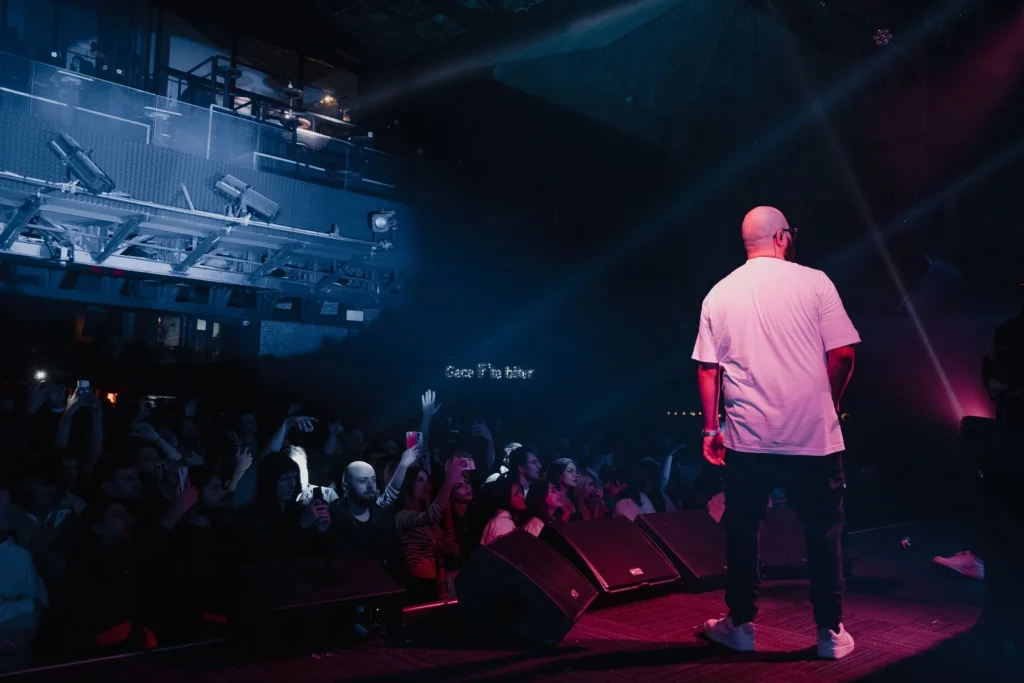
Embraced in concert and then in playlists, the song became an expression of shared hope.
Its reception was swift. Audiences praised its sincerity, powerful chorus, and unifying effect.
On the French rap scene, the track shifted expectations. Younger writers adopted its attention to clear expression, rich rhymes, and the rhythm of its phrases.
The result is a visible stylistic legacy. This style is often seen as ambitious yet accessible. Several artists have cited it as a model for balancing lyrics and production.
Although rooted in its era, its message outlasts passing trends. The song returns time and again in playlists, onstage, and in critical discussions.
“An anthem of perseverance and optimism, carried by writing that holds up.”
In short, the track has secured a lasting place. In both substance and form, it marks a renewed emphasis on listening closely to lyrics.
Listening guide: what to notice in each section
To follow the song step by step, listen for these sonic and lyrical clues in each section.
Verses: figures of speech and double-meaning rhymes
In the verses, listen for the soundplay that gives each phrase density. Spotting internal rhymes and hearing how a rhyme shifts toward another meaning enriches the interpretation.
Notice, too, the short bursts of alliteration that animate the flow and make each phrase hit hard.
Bridges and choruses: messages, slogans, and repetition
In the bridges, listen for the two pivotal words that open a critical field of meaning. They form the argument’s semantic axis.
In the chorus, note the mantra’s slogan-like quality and calculated repetition. The repeated word becomes an emotional marker.
Other formal clues
- Identify the internal rhymes that create a subtle bounce.
- Notice the striking alliteration that sets the rhythm.
- Observe how familiar semantic fields are repurposed to create fresh images.
- Note how the use of sonic space highlights the end of a phrase.
“Guided listening deepens understanding of the meaning and enjoyment of the form.”
Conclusion
To conclude, here is the impression the track leaves.
The song offers a clear message while inviting several interpretations. Its release date (June 8, 2015), length (3 minutes 31 seconds), density (763 words), and BLV’s production (75 BPM, -7 dB) all contribute to its overall effect.
The artist’s command is evident in the double-meaning rhymes, alliteration, and repurposed semantic fields. Form serves content: the carefully crafted style remains accessible.
Finally, this mantra encourages us to keep moving in a complex world. Track 11 on Feu retains a lasting place in French rap. Revisiting the song with the lyrics in hand reveals something new on each listen.