

Released on June 8, 2015, this project was the first solo album from a rapper already known for his work with collectives such as 1995 and L’Entourage.
The record contains 18 tracks and notable collaborations with Sneazzy, Doums, Alpha Wann and Ed Sheeran. Its digital strategy and carefully orchestrated release propelled the project forward.
This article offers a guide to the project’s creative history: its successes, aesthetic choices and the way each track shapes the artist’s journey.
Key figures: a record start with around 36,000 sales in the first week, gold certification in three weeks, platinum in five months and diamond in 2017. The reissue added previously unreleased tracks and instrumentals.
In the following sections, we examine the standout tracks, references and lasting impact of this album on French rap.
Understanding the context of Feu: from solo debut to breakthrough
In June 2015, the release of his first solo album sent shock waves through French rap.
A highly anticipated project
The release brought years of collaborative work to fruition, at a time when the artist had yet to publish a full-length solo project.
A carefully planned release strategy
The release was preceded by a major announcement campaign on social media. Music videos and the involvement of the collectives 1995, S-Crew and L’Entourage mobilized an existing fan community.
Commercial success and musical range
The figures speak for themselves: around 36,000 sales in the first week, gold certification in three weeks, platinum a few months later and diamond in 2017.
| Date | Initial sales | Certification | Time frame |
|---|---|---|---|
| June 8, 2015 | Approximately 36,000 | Gold | 3 weeks |
| 5 months later | Cumulative sales | Platinum | 5 months |
| 2017 | Sales over time | Diamond | Several years |
The 18 tracks blend straight rap, pop, electronic music and trap. The songs and collaborations helped broaden his audience, reaching mainstream media. For a wider view, see the 2016 overview.
Nekfeu’s Feu Album: A Guide to Understanding It
Five selected tracks structure the album and reveal its artistic aims. Each plays a distinct role: manifesto, viral hit, dark performance, pop crossover or technical duel.
Martin Eden: an opening manifesto
Martin Eden opens with a forceful line and sharp rhymes that set the tone.
The track plays with names—Ken Masters, Kenshin and Kentaro—and a bawdy double meaning. This writing develops the theme of ascent inspired by Jack London.
On verra: a turn toward a wider audience
The track took off rapidly after its release: more than 3 million views in three weeks, then 10 million after a month.
Accessible without abandoning rap, it became an enduring single thanks to its chorus and music video, earning diamond certification in 2018.
Le Horla: density and darkness
Driven by a dark atmosphere and dense lyrics, its second verse stands out as a highly technical performance.
This controlled darkness recalls certain strains of French rap and leaves a strong impression.
Reuf (feat. Ed Sheeran): a pop crossover
The track combines a pop and club rhythm, a melodic bridge and a slowed-down ending in the chopped & screwed style.
It also appears on the soundtrack of the film Five, pointing to a connection with cinema.
Point d’interrogation (feat. Alpha Wann): a duel rooted in tradition
Point d’interrogation brings two skilled rappers together to explore respect for rap conventions, references and questions about the meaning of rap lyrics.
Alpha Wann provides a technical contrast that reinforces the track’s roots in French rap.
| Track | Role | Strength |
|---|---|---|
| Martin Eden | Manifesto | Rhymes, opening line, wordplay on names |
| On verra | Viral hit | Memorable chorus, music video, certification |
| Le Horla | Dark performance | Dense lyrics, striking second verse |
| Reuf (feat. Ed Sheeran) | Pop crossover | Club production, slowed-down ending, film soundtrack |
| Point d’interrogation (feat. Alpha Wann) | Technical duel | References, probing questions |
To learn more about the album’s creation and reception, see this additional resource.

References and influences: literature, Japanese culture and wordplay
A mosaic of influences turns each track into a story of its own. Jack London provides the narrative compass for the opening manifesto, while Kundera illuminates the romantic disillusionment that closes the journey.
From Jack London to Kundera
Martin Eden and Laughable Loves serve as guides. These works give meaning to the album’s journeys and shape the image of a hero finding his way.
Maupassant and Le Horla
Maupassant’s haunting presence can be heard in the voice and introspection of Le Horla. This connection creates a dark, powerful atmosphere.
Pop culture and manga
The play on the names “Ken Masters / Kenshin / Kentaro” invites multiple readings. It pairs self-assertive rap with a nod to manga and tattooed yakuza.
- Condensed references: literature, cinema and video games.
- Rhymes and imagery serve the narrative and deepen its meaning.
- Range: highbrow and popular references coexist within a coherent world.
| Work | Role | Impact |
|---|---|---|
| Martin Eden (Jack London) | Manifesto of ambition and ascent | Shapes the hero and his ambition |
| Le Horla (Maupassant) | Haunting, introspection | Dark, powerful tone |
| Laughable Loves (Kundera) | Romantic disillusionment | A romantic yet disenchanted ending |
For a fuller overview of these references, see this feature.
Collaborations, reissue and bonus tracks: extending the album’s story
The choice of guests and the reissue revived the project in the final phase of its release cycle.
Collective roots and strategic guests
Sneazzy, Doums and Alpha Wann embody its collective roots. Their presence confirms the lineage and continuity of the teamwork at the heart of the project.
Ed Sheeran’s appearance on Reuf creates a bridge to pop. It broadens the track’s reach without erasing its rap identity.
Reissue and bonus tracks: extending the album’s life
The December 4, 2015 reissue adds eight previously unreleased tracks and instrumentals. It extends the record’s commercial and artistic life.
The bonus track “Au cœur du G,” initially exclusive to Fnac, became available in October 2019. This decision strengthened the connection with the fan community.
- Cumulative sales by the end of 2015, including the reissue: 156,600.
- Use in cinema: Reuf appears on the soundtrack of the film Five.
| Element | Content | Date | Impact |
|---|---|---|---|
| Collaborations | Sneazzy, Doums, Alpha Wann, Ed Sheeran | 2015 | Collective roots and a move toward pop |
| Reissue | 8 previously unreleased tracks and instrumentals | December 4, 2015 | Renewed sales and media interest |
| Fnac bonus track | “Au cœur du G” | October 2019 (streaming platforms) | Wider availability |
| Figures | Cumulative sales | End of 2015 | 156,600 copies |
Conclusion: the collaborations and additions to the album bring this cycle to a close while preparing the next stage of the artist’s musical journey.
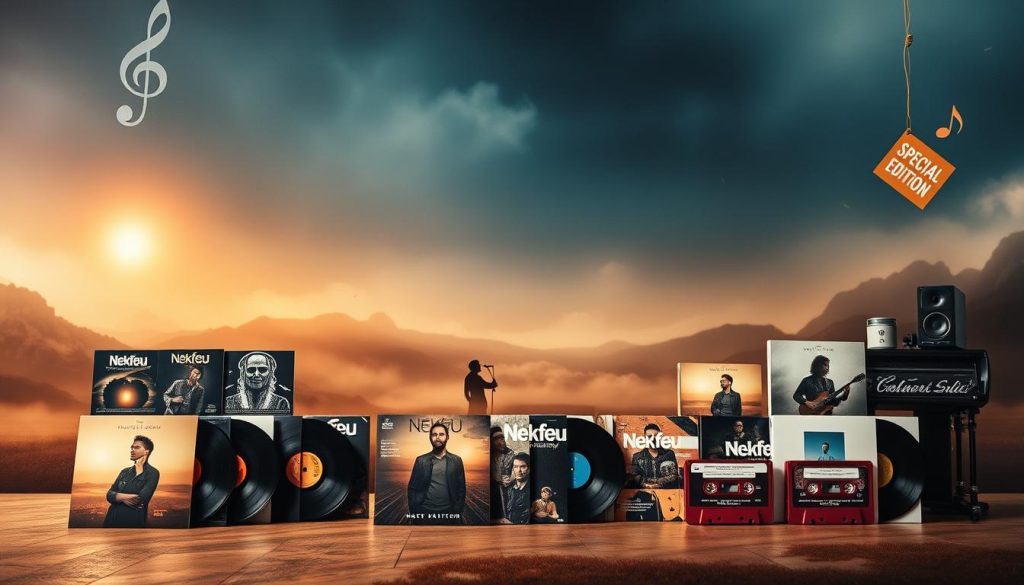
Conclusion
This project offers a rare synthesis of literary ambition and mainstream success.
Released in June, Nekfeu’s album made a record start before progressing from gold to diamond. Its 18 tracks form a coherent whole, from the manifesto Martin Eden to the hits that reached a wide audience.
References to Jack London, Maupassant and Kundera give the lyrics depth. Meanwhile, Reuf, featuring Ed Sheeran, creates a bridge to pop while remaining rooted in rap.
The year-end reissue, followed by the wider release of the bonus track a few years later, extended the album’s life. The record remains a landmark, carried by the figure of a contemporary hero who speaks to his era.