
This article offers a clear, gradual route into the world of a central figure in French rap.
The idea is simple: a structured guide with key figures. It covers the three major albums — Feu, Cyborg, Les Étoiles vagabondes — their expanded editions and certified singles.
Feu and Cyborg achieved Diamond status in France. Les Étoiles vagabondes was certified 2× Diamond and reached No. 1 in France and French-speaking Belgium.
This guide covers the albums, expanded editions, standout singles, collaborations and themes. It also draws connections between his solo and group projects.
Discreet as a solo artist since 2019, he remained active through notable guest appearances in 2024. This guide helps you save time and decide where to begin.
Reliability: release dates, certifications and chart positions are included to guide your listening.
Further on, a suggested listening order and a short version for anyone pressed for time will make your first listen easier.
Why discover Nekfeu today through French rap?
Discovering this lyricist today is a way to trace a decade of change in French rap. Across a few albums, he moved from an energetic, crowd-pleasing style to more intimate, controlled writing. His journey sheds light on how rap has evolved in recent years.
That progression matters: from his first solo album to a large-scale exploration, each release shows growing technical skill. His voice and multisyllabic rhymes give him a recognizable signature. He reaches a wide audience without losing the rougher side of his rap roots.
His independence through Seine Zoo confirms his commitment to carefully crafted music, including its visuals and production. His work addresses life, social questions and personal contradictions. Even while keeping a low profile, his impact on music remains clear.
- Understand recent rap: explore his writing and artistic direction.
- An accessible starting point: if you have little background knowledge, his projects offer a gradual guide.
- A collective history: discovering his work also means understanding the influence of the groups and the collective that shaped him.
One question remains: where should you start to hear that progression from album to album? The rest of this article offers a simple route you can follow at your own pace.
Nekfeu: A Beginner’s Guide to His Discography
If you are short on time, a focused listen is enough to hear three sides of his career. Here is a quick and effective route.
Quick route (short on time)
Start with On verra, Mauvaise graine and Tricheur (feat. Damso). These certified tracks offer a quick taste of his moods: celebration, technical skill and melancholy.
Suggested listening order
Follow the chronological order: Feu (2015) → Cyborg (2016) → Les Étoiles vagabondes (2019). This sequence lets you appreciate the progression in his writing and production.
- Feu: establishes the crowd-pleasing foundation and the album’s initial themes.
- Cyborg: brings technical skill and introspection together in a solo project.
- Les Étoiles vagabondes: broadens the sound and explores deeper questions.
To go further, move on to the expanded editions (Feu Réédition, Expansion), then the group projects and 1995’s album, which put the whole journey in context.
The essential solo albums to hear first
These three records form a clear progression: momentum, mastery, then exploration. Each tells the story of a different stage in his artistic life and offers clues to understanding the lyrics and production.
Feu (8 June 2015) — the debut album and a unifying surge
Feu establishes his signature: instantly memorable anthems and moments of vulnerability. Released through Seine Zoo/Polydor/Universal, it achieved Diamond status and reached No. 3 in France.
- Tracks to start with: Égérie, On verra, Ma dope, Reuf.
- Expanded edition: 4 December 2015, worth exploring later to complete your listen.
Cyborg (2 December 2016) — introspection, technique and cohesion
This album sharpens his writing. Tracks such as Mauvaise graine, Squa and Humanoïde show carefully crafted lyrics and confident delivery.
“A record where technique serves emotion.”
Les Étoiles vagabondes (6 June 2019) — expansive exploration and raw emotion
Les Étoiles vagabondes broadens his sound: it achieved 2× Diamond status and reached No. 1 in France. Ciel noir, Tricheur and Elle pleut combine ambition with sensitivity.
Contributions from his circle and producers such as Hugz Hefner, Loubensky and Diabi give the album its rich sonic identity.
Tip: after your first listen, revisit a few lyrics when you have time to reflect. The construction of the multisyllabic rhymes and the links between themes become clearer.
Expanded editions: Feu Réédition and Les Étoiles vagabondes : Expansion
These album expansions enrich each creative period without changing its foundations.
Feu Réédition (4 December 2015) draws on recording sessions from that period and adds tracks that extend it. Among them, Plume confirmed its appeal by reaching No. 13 in France.
Likewise, Les Étoiles vagabondes : Expansion (21 June 2019) takes the exploration further. The expansion reached No. 1 in France and includes notable new tracks such as Écrire (Diamond) and Dernier soupir (Gold).
For a new listener, the order remains simple: hear the original album first, then return to the additional tracks.
Practical tips:
- Try Plume and Écrire first as entry points.
- Add these tracks to a playlist and listen to just a few at a time.
- Return over several sessions if the album Expansion feels dense.
Standout singles and music videos that raised his profile
A handful of tracks transformed his career and became landmarks in the music scene.
On verra, Égérie, Tempête and Ma dope work well as starting points: catchy choruses, sharp punchlines and a strong visual identity.
On verra marked a turning point in his public profile thanks to its high view count and Diamond certification.
The music videos reinforced the songs’ messages. Égérie was filmed in Los Angeles and Tempête in Montreal. These settings bring the music closer to cinema and add a narrative dimension to the lyrics.
Tricheur and the era of the stars
Tricheur (feat. Damso) cemented a more ambitious period: it reached No. 1 in France and was certified Diamond in France and Gold in Belgium. The collaboration brings together two major rap figures and was welcomed by critics and listeners.
| Track | Certification / Chart position | Music video views | Visual setting |
|---|---|---|---|
| On verra | Diamond; No. 2 in France | 155 million | Iconic video, unifying energy |
| Ma dope | —; No. 43 in France | 78 million | A generational mood, between energy and melancholy |
| Tempête / Égérie | Tempête: No. 21 in France • Égérie: No. 49 in France | 45 million • 39 million | Montreal • Los Angeles, carefully crafted visuals |
| Tricheur (feat. Damso) | Diamond in France; Gold in Belgium; No. 1 in France | — | Two worlds coming together, with international reach |
Listening tip: follow this order to hear his growing ambition — On verra, Ma dope, Tempête, Égérie, then Tricheur. Next, compare each single with its corresponding album track to hear the cohesion of the sound.
Although these tracks have been played almost everywhere, they remain rewarding when you revisit the albums: they mark key stages, and the figures show their impact.
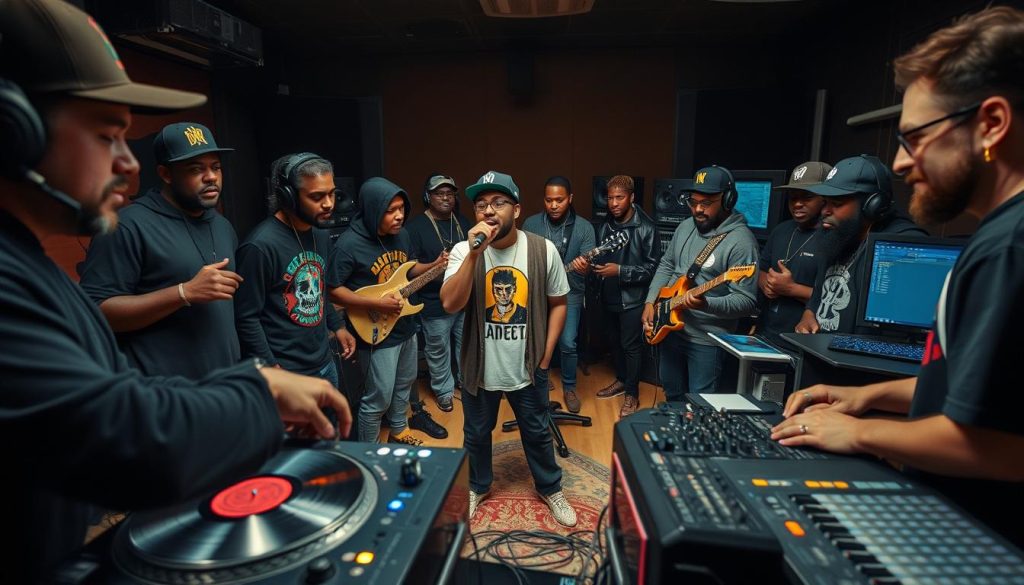
Groups and collectives: 1995, S-Crew, L’Entourage, 5 Majeur, Seine Zoo
The groups gave him a place to experiment with flows, production and lyrics. Those years of collective work explain the versatility and instincts heard in his solo albums.
1995 — from La Source to Paris Sud Minute: the testing ground
1995 was a period of experimentation. From the EP La Source through La Suite to the album Paris Sud Minute, the group refined its boom bap style and technical writing.
That 1995 album remains a valuable reference for understanding Nekfeu’s aesthetic roots and team spirit.
S-Crew — collective energy and shared values
Through Seine Zoo, Destins Liés and SZR 2001, S-Crew developed a work ethic. The collective provides a shared strength that runs through the solo projects.
Feedback from his peers, including Fonky Flav, helps shape production choices and song structures.
L’Entourage — the Paris scene and creative exchange
L’Entourage (Jeunes Entrepreneurs) shows the importance of exchange between rappers. Alpha Wann, Jazzy Bazz and others sustain an ongoing creative dialogue.
- Quick listen: try one track from each collective to hear the continuity with the albums.
- The value of his formative years: this period sheds light on his themes and technical instincts.
“Collectives remain a training ground: you experiment, make corrections, then go solo.”
Essential collaborations with French rappers
Guest appearances open windows onto other musical worlds.
From Ninho to OrelSan, Dosseh to PLK: collaborations worth hearing
The range runs from energetic tracks to introspective songs. Some became landmarks thanks to their certifications and high chart positions.
| Track | Collaborator | Certification / Chart position | Style |
|---|---|---|---|
| De l’autre côté | Ninho | Diamond; No. 2 in France | Melodic energy |
| Zone | Orelsan & Dizzee Rascal | Platinum | Blend of international styles |
| Putain d’époque | Dosseh | Gold | Socially engaged rap |
| Waow | PLK | — | Modern, energetic track |
| Juste pour voir | S.Pri Noir | Diamond | Night-time atmosphere |
Close connections: Alpha Wann, Jazzy Bazz, Sneazzy, S.Pri Noir
His circle of allies provides lasting artistic cohesion. These close collaborators bring different textures and strengthen his credibility onstage and in the studio.
“Encounters often transform the writing: one person pushes for punchlines, another for nuance.”
If you are short on time, listen to these five collaborations: De l’autre côté, Zone, Putain d’époque, Juste pour voir and Waow. Together, they show the variety of creative partnerships.
Practical tip: return to the original albums afterward. This puts each guest appearance in context and clarifies the production choices.
Finally, if you would like to learn more about French voices and the music scene, read this article about French singers for a broader perspective.
Writing, themes and voice: from celebration to searching, head and heart
His lyrics move from shared exhilaration to deeper questions about life and the world.
Feu embodies celebration and collective energy. Its lyrics favor calls for solidarity and choruses that bring people together.
Cyborg turns inward: the mind has doubts, and the writing grows sharper. Clipped delivery and multisyllabic rhymes underscore the tension between technique and emotion.
Les Étoiles vagabondes opens a more intimate chapter. His voice becomes more melodic while retaining its rhythmic precision. Recurring themes include wounded love, loyalty and social awareness.
He has a gift for contrast: simple images and metaphors support elaborate rhymes. He confronts his contradictions and acknowledges his vulnerabilities instead of hiding them.
Tip: rereading the lyrics after listening reveals hidden nuances. The connections between albums and his distinctive style become easier to hear.
| Album | Main themes | Vocal development | Technique |
|---|---|---|---|
| Feu | Celebration, solidarity, energy | Raw, forceful | Unifying flow, memorable choruses |
| Cyborg | Doubt, introspection, identity | More precise and rhythmic | Multisyllabic rhymes, clipped delivery |
| Les Étoiles vagabondes | Inner searching, questions about the world | Melodic, nuanced | Striking imagery, complex rhymes |
“Emotion does not come at the expense of technical skill; technique serves emotion.”
Sonic identity and production: head in the stars, feet on the ground
His sound develops through a constant movement between dreams and reality. Three production approaches shape it: Hugz Hefner’s floating layers, the organic sounds crafted by Loubensky and Hologram Lo, and Diabi’s vision, which brings them together.
Hugz Hefner, Loubensky, Hologram Lo, Diabi: architects of the sound
Hugz Hefner adds a sense of space: layers, reverb and airy atmospheres that support reflection and daydreaming.
Loubensky and Hologram Lo add texture: boom bap drums, analog grit and handmade sounds that ground the tracks.
Diabi provides an overall direction, balancing space and density, particularly on an album built around contrasts.
Boom bap, floating layers, electronic touches: music in fusion
The music blends boom bap with pop and electronic elements. Silence, bass and layered sounds become storytelling tools rather than mere background.
| Element | Role | Example of its use |
|---|---|---|
| Hugz Hefner | Floating atmosphere | Airy passages, melodic choruses |
| Loubensky / Hologram Lo | Organic sounds, percussion | Boom bap drums, analog grit |
| Diabi | Direction & synthesis | Spatial mixing, balance between layers and drums |
The link between sound design and lyrics is clear: some textures invite intimate writing, others a rougher flow. His peers, including Fonky Flav, sometimes influence his production choices. Listen on headphones and alternate between boom bap tracks and more electronic ones to hear the full range.
Key figures and impact: three albums, three Diamonds, a lasting influence
Numbers can sometimes convey the scale of a career better than a long description.
Three solo albums have left their mark: Feu (Diamond, No. 3 in France), Cyborg (Diamond, No. 4 in France) and Les Étoiles vagabondes (2× Diamond, No. 1 in France). The Expansion edition also reached No. 1 in France.
Commercial success has gone hand in hand with critical recognition. Singles with multiple certifications — On verra, Mauvaise graine, Tricheur — have extended his reach among listeners.
That appeal reaches other French rappers with varied styles. His exchanges with peers such as Alpha Wann reflect a commitment to technical excellence.
Beyond the figures, his influence can be heard in themes, production and collaborations. April 2020 brought renewed debate about his legacy and the place this artist might hold in the years ahead.
“Three Diamond certifications across three albums: a rare balance of art and audience.”
In practice, these reference points make listening easier: you know which tracks to add to a playlist, why they matter and where each album fits in the discography.
Updates and recent activity: 2024 collaborations and life as a low-profile artist
In 2024, the artist remained present through selected appearances that showed continued activity without excessive media exposure.
Two notable collaborations that year — S.Pri Noir’s “La Cour des Miracles” and Zed’s “Shaggy” — suggest a clear approach: contribute to chosen projects instead of launching a major new album.
A steady flow of collaborations between 2020 and 2022 (Laylow’s “Spécial”, Jazzy Bazz’s “Élément 115”, Doums, Gims, DA Uzi and Deen Burbigo) maintained his creative momentum. These appearances kept him present in rap while allowing him to set his own pace.
“A low-profile artistic life puts the music ahead of overexposure.”
At the time of writing, no official announcement of a new album has been made. That fits a pace in which each release has room to make a lasting impression.
To stay informed without spending too much time on it, follow streaming platforms and the social media accounts of his collaborators and labels. You may then spot the first signs of a possible return.
| Year | Type of activity | Examples |
|---|---|---|
| 2024 | Notable guest appearances | S.Pri Noir — La Cour des Miracles; Zed — Shaggy |
| 2020-2022 | Steady stream of collaborations | Laylow, Jazzy Bazz, Gims, DA Uzi, Deen Burbigo |
| At the time of writing | Status | No album announcement; a self-directed pace |
Looking back at April 2020 helps place his impact and the debates surrounding that period in context. For newcomers, the best starting point remains the trilogy of albums, followed by recent collaborations.
Return to this article when future announcements arrive: the updates section will evolve with new releases and collaborations.
Conclusion
Here is a flexible, fact-based way to explore this body of work in three stages.
Suggested route: listen to the three albums in order — Feu → Cyborg → Les Étoiles vagabondes — then add the expanded editions and a few key collaborations.
The first album provides an emotional anchor before you approach the greater complexity and control of those that follow. The collectives (1995, S-Crew, L’Entourage) remain central to his artistic identity.
Go step by step and revisit certain tracks later: experience can change the way they sound to you. Which song speaks to you most, and why?
In short, three albums and a lasting mark: a rapper and artist whose balance of substance and style continues to inspire. This article aims to save you time and deepen your enjoyment of the music.