

Nekfeu is a Parisian rapper whose career developed through group performances and solo projects. His path is part of French rap history and reveals a discography rich in texture.
This article maps the sounds that feed his musical world. It follows the years from the groups 1995, L’Entourage and 5 Majeur through the albums Feu, Cyborg and Les étoiles vagabondes.
Several examples illustrate this approach: Troy Andrews’s trumpet on “Ciel noir”, Frank Dukes on “Esquimaux” and Crystal Kay’s Japanese chorus on “Nekketsu”. Each choice marks a step in that journey.
The film accompanying the latest album makes this exploration tangible, travelling from Japan to New Orleans, two places that leave their mark on certain tracks.
The rest of this list examines each project, the origins of its textures and the effect of these sonic references on the writing.
Why samples shape Nekfeu’s world in French rap
The instrumental sound gives a track its direction. A cold theme, like the one in Tempête, establishes a gravity that changes the character of the lyrics.
By contrast, the sampled trumpet in Ciel noir creates bridges and breaks. These elements prompt the rapper to adapt his flow and the shape of his verses.
On Esquimaux, an excerpt from Frank Dukes brings a staccato energy. The result is dense sequences and forceful choruses.
- Cultural reference: an excerpt instantly gives a track its musical character.
- Origin: where a sound comes from influences the movement of the verses and the track’s tone.
- Structure: transitions, bridges and breaks grow out of the borrowed timbre.
Each album thus works as a sonic statement. When a project is released, these production choices establish an identity while allowing every track to retain its own character.
Nekfeu: notable samples and their origins
The tracks are grouped here by period, collaboration and sonic lineage to trace the history of the sound.
How this list was compiled
The approach follows the discography and separates its periods: the groups, the early tracks and then the major projects. The list gives priority to verifiable elements: credits, identified excerpts and production choices.
Collaborations offer valuable clues. Group tracks reveal early sonic signatures that return in the solo projects.
Guide to the list:
- Origin of the motif: where the sample comes from and its stylistic influence.
- Effect on the performance: rhythmic density and room to breathe.
- Historical context: how a track speaks to its time.
This method highlights how the tracks complement one another: the diversity of their sources and the artistic unity of the Parisian rapper’s work.
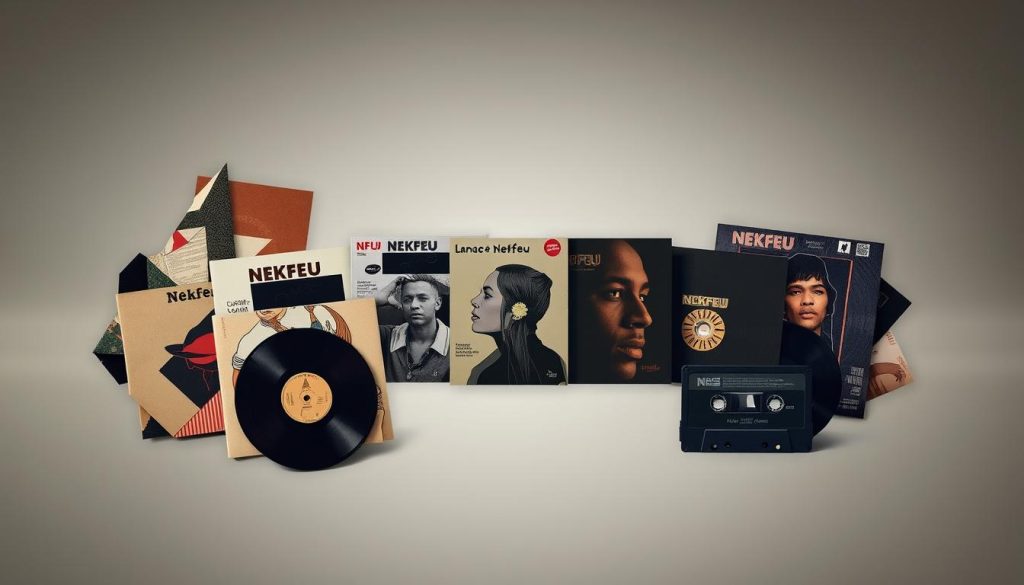
“Mapping the tracks means understanding how production shapes the writing.”
What follows is a broader chronological account, followed by a short list of precisely identified motifs.
From early group work to overlooked gems: the sources that forged the sound
The early years in groups provided room for experimentation, with sample culture already shaping the sound.
These projects show how performing and exchanging ideas within his circle sharpened the rapper’s style.
This is 1995: raw flow between boom bap heritage and sample culture
This is 1995 showcases a fast, clear flow. The track has a boom bap aesthetic in which the sample sets the pace.
Nekfeu & Alpha Wann – En Soum-Soum: a sample of the Austin Powers theme and a 2000s spirit
“En Soum-Soum” opens the EP with a nod to popular culture: a sample of the Austin Powers theme. That borrowing guides the rhythmic delivery and the chorus’s playful spirit.
Guizmo & Nekfeu – Crazy Vibes (Selah Sue Remix): soul vocals, a captivating chorus and Belgian roots
The remix with Selah Sue bridges soul and rap. The Belgian singer’s voice gives the track its colour.
Despite its memorable chorus, the track remains a lesser-known gem compared with the major singles.
5 Majeur – Chillance: Stratega’s melodic instrumental and choice of textures
“Chillance” is built on an instrumental by Stratega. Its fluid atmosphere allows shifts in timbre and relaxed verses.
Fixpen Sill – Garde à vous ft. Nekfeu: a piano sample and old-school scratching
The old-school aesthetic comes through here in the scratching, piano sample and tightly packed verses. This format recalls hip-hop’s roots and the precision of rhythmic delivery.
| Year | Track | Characteristic |
|---|---|---|
| 2009 | This is 1995 | Raw flow, boom bap aesthetic |
| 2011 | En Soum-Soum | Austin Powers sample, 2000s spirit |
| 2011 | Crazy Vibes (Remix) | Soul vocals, melodic chorus |
| 2013 | Chillance / Garde à vous | Melodic instrumental / scratching and piano |
“These group collaborations laid the foundations for a range of textures that runs through the projects that followed.”
Feu: classics and sample-based sounds that hint at their origins
On Feu, the instrumental material guides the delivery and drama of the tracks. The album places production at the heart of the performance.
Tempête: otherworldly production and its effect on the flow
“Tempête” creates a cold atmosphere, almost like cold wave. Its sustained sound creates a tension that makes every punchline cut deeper.
This otherworldly production calls for measured breaths. The attack of each syllable becomes sharper, bringing the lyrics into relief.

Egérie, Le Horla, Princesse: arrangements, voices and influences
“Egérie” was the first track released ahead of the solo album. Its neon-coloured music video sets a sensual direction, while the melodic line shapes the performance.
“Le Horla” blends a literary reference with introspection. The understated but weighty harmonic background supports carefully crafted lyrics.
“Princesse”, featuring Nemir, sets crystalline music against a dark subject. At times, the vocal chorus evokes an image of a singer associated with luxury, strengthening the track’s contrast.
- Sonic effect: the texture influences articulation, breathing and rhythmic control.
- Artistic direction: a consistency that helps the album attain classic status.
“On Feu, every instrument shapes the writing as much as the voice.”
Cyborg: where sonic exploration meets writing and technique
Cyborg is a project in which production accompanies the writing. The album makes sonic choices that shape the form of the lyrics.

Humanoïde
“Humanoïde” lasts about six minutes and thirty seconds. Its instrumental progression unfolds in successive stages.
Each stage creates a shift in the voice. The rising intensity shapes the drama of the track.
Réalité augmentée
This track uses digital textures to criticise social networks. The rapper delivers finely crafted punchlines.
The cold production reinforces the message and contrasts with the vocal delivery.
Esquimaux ft. Népal
The central sample comes from Frank Dukes (“Big Time Shit”). The verse’s percussive energy demands tightly controlled delivery.
Népal’s technical precision brings out the contours of the verses and the opening vocal motif.
Nekketsu ft. Crystal Kay
This track closes the album with a chorus sung in Japanese. It recalls the ending of an anime and creates a pop-rap hybrid.
| Track | Characteristic | Effect on the writing |
|---|---|---|
| Humanoïde | Long progression (6 min 30 sec) | Changes the movement of the verses |
| Réalité augmentée | Digital textures | Strengthens the social criticism |
| Esquimaux | Frank Dukes sample | Percussive flow, precise delivery |
| Nekketsu | Japanese chorus | Closing pop-rap hybrid |
“Cyborg is a project in which every track adapts its form to its starting sound material.”
Les étoiles vagabondes and expansion: travel, jazz, rebetiko and musical heritage
The project’s central idea emerges from the opening: a cinematic narrative without a chorus. This choice creates sustained tension between image and sound.
The title track and accompanying film
The title track serves as an introduction. The film extends its storyline and emphasises its chorus-free narrative.
Ciel noir
“Ciel noir” takes on a jazz character. Troy Andrews’s sampled trumpet and the choir provide its reference points.
Bridges change the tempo. These breaks reshape the verse and the rapper’s intonation.
Premier pas
“Premier pas” connects two places: Japan and New Orleans. Travel and disasters (an earthquake and a hurricane) feed its sonic imagery.
Όλα Καλά
This track borrows from rebetiko. A Greek musical idiom and female voices give it a Mediterranean character.
The vocals advocate acceptance, contrasting with other, more troubled passages.
Melodic expansion
“Ken Kaneki”, “De mes cendres” and “Un nouvel homme” confirm a new direction. Melodic instrumentals and new flows broaden the range of sounds.
“The Parisian rapper adjusts his voice to the borrowed texture, strengthening the unity of the album cycle.”
Identified samples, effects and origins: the shortlist that matters
This shortlist presents three borrowed sounds that turn musical phrases into a driving force for the writing.
Esquimaux → “Big Time Shit” (Frank Dukes)
Origin: Frank Dukes’s percussive loop.
Effect: dry percussion propels the verse. The chopped pattern demands tight delivery.
Ciel noir → Troy Andrews’s trumpet
Origin: a jazz trumpet motif.
Effect: a warm sound and tempo changes. The bridges and choir create breathing room and add depth.
En Soum-Soum → Austin Powers theme
Origin: a 1960s pop theme (a nod to cinema).
Effect: melodic swing brings out the duo. The reference turns the attack of the rhymes into a technical exercise.
| Track | Origin | Effect on the instrumental | Effect on the verse |
|---|---|---|---|
| Esquimaux | Frank Dukes – Big Time Shit | Percussive rhythm and energy | Tight delivery and density |
| Ciel noir | Troy Andrews – trumpet | Jazz character and bridges | Breathing room and depth |
| En Soum-Soum | Austin Powers theme | Pop swing and a knowing reference | Incisive delivery from the duo |
A track’s success does not eclipse the quality of the work: some gems remain under the radar despite important earlier collaborations, particularly around June, in the Feu era.
Effects on flow, punchlines and form: how samples shape the verses
When a sustained sound creates space, the rapper adjusts his breathing.
From instrumental to lyrics: a sound’s origin shapes the writing. A structure with bridges and breaks, as in Ciel noir, requires the verses to be broken into sections. A long progression, as in Humanoïde, invites a track built in several stages.
From instrumental to lyrics: when a sound’s origin guides the chorus and structure
Esquimaux’s percussive movement changes how syllables are attacked and strengthens the lyrics’ rhythmic force. Tempête’s otherworldly atmosphere, meanwhile, slows the tempo and encourages a more measured narrative.
This choice affects the punchlines: some structures call for short, forceful phrases, while others favour a developing narrative. On listening, the connection between sound and writing is immediately apparent.
Watch out for pitfalls: overloading a motif can make a track harder to follow. Underusing a theme robs it of impact.
Finally, the album provides a framework: a project’s consistency gives its formal choices meaning. For a critical listen and a selection of representative tracks, see the 15 best tracks.
Conclusion
The career of a Parisian rapper charts a map of influences in which every instrumental turns a track into a statement. The solo album Feu established foundations that became classics, while Cyborg and the following project developed remarkable precision.
Several gems received little attention, but they demonstrate the power of a carefully shaped form. From the first minute to the last, the sound guides vocal inflections, the pitfalls to avoid and the drama.
Finally, June’s place in the timeline shows the impact of release dates; collaborations, his circle and Fixpen Sill shaped a sound emblematic of French rap. Heard together, these projects form a remarkably coherent body of work.