

The tongue drum is a fascinating instrument that appeals to many musicians, including those with no musical training. Its intuitive design lets you play without worrying about hitting a wrong note. That quality comes from its tuning, which makes playing a rewarding experience.
For beginners, sheet music becomes an essential tool. It provides a structure that guides learners from simple melodies to improvisation. Numbered notation makes notes easy to find, turning each playing session into a chance to be creative.
With an 8-note tongue drum tuned to C major, musicians can explore complete melodies without feeling overwhelmed by complexity. This makes it an ideal instrument for anyone starting a musical journey.
1. Introduction to the tongue drum and its sheet music
The tongue drum is captivating in its simplicity. Also called a steel tongue drum, this melodic instrument is designed to make music accessible to everyone. An 8-note model offers a complete diatonic scale, ideal for beginners.
Here are a few key points to remember:
- Definition: An 8-note tongue drum is a melodic percussion instrument with a steel resonating body and eight tuned metal tongues.
- Differences from other models: Compared with more complex instruments, the 8-note model is recommended for learning to read sheet music.
- Instrument anatomy: The tongues are arranged around a central point. Each produces a specific note when struck.
- Why reading matters: Knowing how to read sheet music lets you play complete melodies instead of choosing notes at random.
- Memory aid: Sheet music helps prevent memory lapses during public performances.
- Cognitive benefits: Reading music stimulates visual memory and strengthens neural connections.
- Intuitive playing: Over time, familiarity with sheet music helps you play without looking at the tongues.
In short, the tongue drum offers many musical possibilities. Learning to read sheet music is an essential step toward making the most of them.
2. Why use tongue drum sheet music?
Sheet music plays an essential role in learning an instrument such as the tongue drum. It provides a clear structure that helps both beginners and experienced musicians progress.
2.1 Make learning easier and avoid mistakes
Using sheet music reduces hesitation. It serves as a roadmap, guiding you from one note to the next. This helps you play your favorite melodies accurately, even on your first attempt.
2.2 Understand melodic and rhythmic structure
Sheet music reveals the melodic structure of songs. By playing familiar pieces, you discover how simple notes come together to create memorable melodies. You also learn to recognize how musical phrases are shaped.
2.3 Develop visual memory and control of the instrument
Reading sheet music regularly strengthens your visual memory. It also improves hand-eye coordination, which is essential for playing without looking at the tongues. “Sheet music is not a rigid rule but a guide that shows you the way.”
Every steel tongue drum has its own voice and harmonic character. Notation helps you explore different note combinations and discover the acoustic richness of your instrument. According to a musician who has arranged more than 50 songs, memorizing an entire repertoire without written support is impossible.
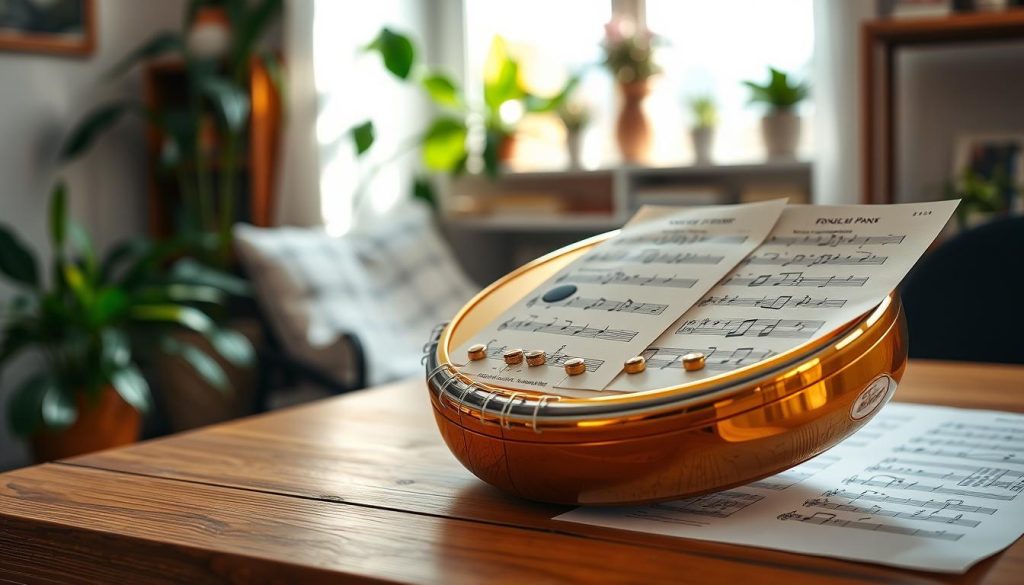
In short, reading sheet music helps you play songs, avoid mistakes, improve your visual memory, and gain better control of the instrument. To learn more about reading sheet music, see this article here.
3. Understanding numbered notation for an 8-note tongue drum
Mastering numbered notation is essential for any musician who wants to explore what this instrument can do. This system, known as NMCA (Arabic numeral musical notation), is particularly well suited to instruments such as the tongue drum. It lets you read melodies quickly and intuitively.
3.1 Basic numbered notation (1 to 7)
In this system, the seven notes of a major scale are represented by numbers:
- 1 = C
- 2 = D
- 3 = E
- 4 = F
- 5 = G
- 6 = A
- 7 = B
The root note, “1” (C), often corresponds to the largest tongue or one that is clearly marked on the instrument. This makes it easy to find when you start playing melodies.
3.2 Octave markings and their symbols (dots, °, *)
Octave markings are essential for adding variety to your playing. A dot above a number means you play the same note one octave higher. Conversely, a dot below means one octave lower. For example, 1° or 1* represents a C in the octave above. This flexibility gives your instrument a broader range of sounds.
3.3 Chords and simultaneous notes (parentheses, hyphens)
Numbered notation also has symbols for chords. For example, parentheses, as in (16), or a hyphen, as in 1-6, indicate that you should play the notes at the same time. This lets you create rich, engaging harmonies.
It is also important to understand that the number 0 or a blank space represents a rest. This helps you follow the rhythm and dynamics of the melody you are playing.
“Reading sheet music is like taking a journey: each note guides you toward a new musical discovery.”
In summary, understanding numbered notation will help you work through pieces with ease and enrich your musical experience. To learn more about reading sheet music, see this article here.
4. Alternative notation: sheet music with letters
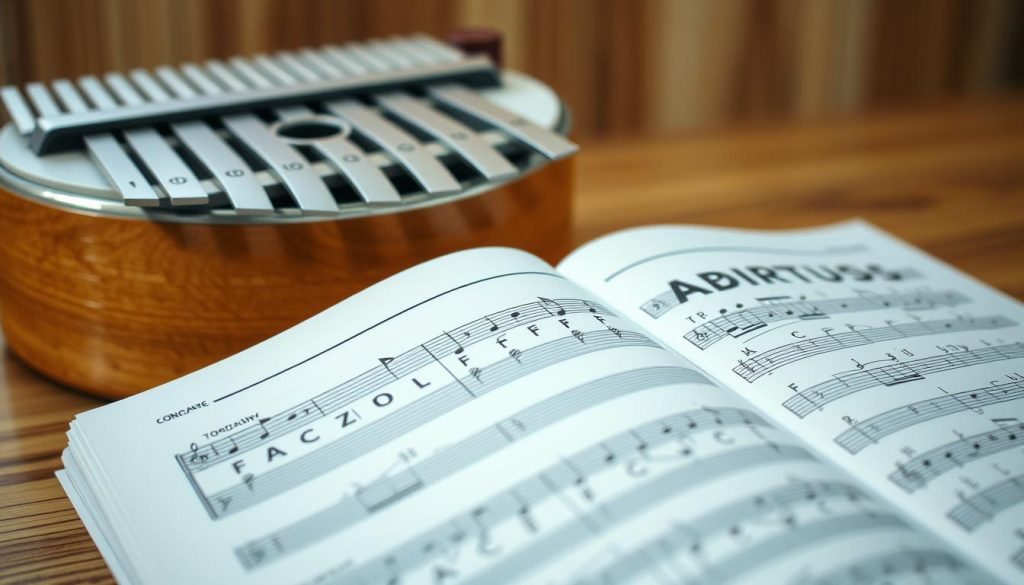
Letter notation is an effective way to read melodies on a steel tongue drum. This system uses letters instead of numbers, making the music easy to read. The equivalents are straightforward: do = C, re = D, mi = E, fa = F, sol = G, la = A, si = B.
This approach is especially useful if you want to explore songs from around the world. Understanding how the notation systems correspond will help you expand your repertoire.
4.1 Matching solfège notes, numbers, and letters
It is essential to memorize how the notes correspond. Here is a summary table:
| Solfège note | Number (NMCA notation) | Letter notation |
|---|---|---|
| Do | 1 | C |
| Re | 2 | D |
| Mi | 3 | E |
| Fa | 4 | F |
| Sol | 5 | G |
| La | 6 | A |
| Si | 7 | B |
4.2 Features and examples of letter notation
In letter notation, a number can follow the letter to indicate the octave. For example, D4 is a D one octave below D5. This works in a similar way to dots in numbered notation.
As you explore examples of letter notation, you will find that the rules for note duration, rests, and chords remain the same as in numbered notation. You can therefore move easily between the two systems.
Get to know online resources that offer sheet music in letter notation. You can then adapt the way you read to suit the source and enrich your musical experience.
5. Where to find free sheet music and learning resources
Many free resources can enrich your experience with this fascinating instrument. Whether you are a beginner or an experienced musician, these tools can help you progress.
5.1 Specialized websites and platforms
To begin, explore sites such as TongueDrumTunes.com. This site organizes pieces by difficulty, making them easier to learn. Another option is DrumSheetMusic.org, which is useful for working on complex rhythms. These platforms provide access to a variety of pieces suited to your level.
5.2 Recommended booklets, PDFs, and video tutorials
Many manufacturers, such as Hluru and ZenaPan, provide starter booklets when you buy an instrument. These booklets contain 10 to 15 melodies along with playing tips.
YouTube tutorials are another valuable resource. Many creators use a visual “falling notes” format that shows exactly which notes to play and when. This makes learning easier.
Finally, you can download song collections in PDF format from sites such as Instruments du Monde, which offers free, printable resources.
5.3 Online communities and collaborative sharing
Joining online communities devoted to this instrument is an excellent way to learn. These forums let enthusiasts share their arrangements and sheet music, creating a collaborative learning space.
When exploring free resources, check the key of each piece. Some scores may be transposed incorrectly and may not match your instrument’s tuning. Taking this precaution will spare you frustration during practice.
6. A luthier’s tips for getting started with your 8-note tongue drum
To get off to a good start with your instrument, follow a few expert tips. A luthier with more than thirty years of experience shares recommendations to help you make the most of your learning.
6.1 Choose a suitable first instrument
Starting with an 8- or 11-tongue model tuned to C major is recommended. Fewer tongues make the notes easier to find and learning more intuitive and enjoyable.
Choose an instrument made from titanium alloy. This material resists rust better and holds its tuning more reliably. You will get a clear sound and sustained resonance without the unwanted noise of cheaper models.
6.2 Play slowly and precisely
Take a slow approach. Play the notes one at a time, even if it feels exaggerated. Accuracy matters much more than speed. By focusing on a clear sound, you will build good habits from the start.
One effective method is to hum the melody before playing it. Follow the numbers on the score with your finger to form a mental picture. This will help you become familiar with the notes before you start playing.
6.3 Avoid common mistakes and accept imperfection
Accept that imperfection is part of learning. If you miss a note, simply keep playing. Your instrument’s harmonious tuning will soften small mistakes. The main goal is to keep the music flowing rather than aim for perfection.
Avoid starting with a complex 15-tongue model. An instrument with fewer tongues lets you focus on learning without feeling overwhelmed. Work these tips into your daily practice to develop good playing habits.

7. Simple sheet music and songs for beginners
Simple melodies are an excellent starting point for beginners who want to get to know their instrument. Here are a few classic songs that will help you build your skills while having fun.
7.1 “Twinkle, Twinkle, Little Star”: a classic melody
Learn to play “Twinkle, Twinkle, Little Star” on your steel tongue drum using this numbered sequence:
1 1 5 5 | 6 6 5 – | 4 4 3 3 | 2 2 1 –. This familiar melody is an ideal starting point for discovering beginner sheet music.
7.2 More recommended melodies: “Happy Birthday,” “Frère Jacques,” and “Au clair de la lune”
Here are more songs to try:
- “Happy Birthday”: follow the sequence 1-1-2-1-4-3 at a moderate tempo of 80 BPM, using a soft mallet for a gentle sound.
- “Frère Jacques”: this traditional round follows the sequence 1-2-3-1 / 1-2-3-1 / 3-4-5 / 3-4-5, ideal for practicing alternating hands.
- “Au clair de la lune”: in 2/4 time, follow the pattern 1-1-1-2 / 3-3-2-1 at a slow tempo of 70 BPM, ideal for working on steady timing.
7.3 Practical exercises to improve rhythm and melody
Use these songs as the basis for exercises that improve your rhythm and melodic sense:
- Vary the tempo of each song.
- Try striking the tongues with different levels of force.
- Gradually add ornaments to longer notes.
Download complete PDF sheets for these songs from sites such as Instruments du Monde so you can keep them handy during practice.
8. Tips for progressing quickly on your tongue drum
To make the most of learning, use effective methods. A structured approach will help you progress quickly. By spending a little time with your instrument each day, you may see results in just three weeks.
Regular, structured practice: schedule and duration
Start by organizing your playing sessions. Spend 20 minutes a day practicing, and divide each session into three parts:
- 5 minutes warming up with simple scales to prepare your hands.
- 10 minutes of focused technical exercises to improve your accuracy.
- 5 minutes playing a complete piece to apply what you have learned.
Explore pentatonic and major scales
Once you have mastered the basics, move on to pentatonic scales. These sequences of five notes offer rich, harmonious sounds. They are particularly well suited to improvising on your instrument.
Expand your playing by exploring different musical modes. The Dorian mode works well for meditative melodies, while the Mixolydian mode adds a bluesy touch. The major mode is ideal for cheerful compositions.
Use a metronome and add improvisation
A digital metronome is a valuable tool for working on tempo. Start at 60 BPM and gradually increase to 120 BPM. This will develop your sense of rhythm.
Also devote part of each session to guided improvisation. It encourages creativity and helps you memorize where the notes are on your instrument. In time, you may be able to play with your eyes closed.
Follow this structured practice guide to turn your daily 20 minutes into an effective learning routine. Whether you are a beginner or want to refine your technique, these tips will help you progress.
9. Playing techniques and hand protection
Mastering playing techniques can enrich your musical experience. You have two main options: mallets and finger playing. Each has advantages and disadvantages.
9.1 Mallets or fingers? Advantages and disadvantages
Mallets are recommended for beginners. They produce a clear, powerful, pure sound. Using them requires no special technique, making learning easier.
Playing with your fingers, on the other hand, creates a more intimate connection with your instrument. This method allows greater speed and accuracy, especially for complex sequences of notes.
9.2 Prevent injuries with suitable finger protection
Over time, playing directly with your fingers can cause friction injuries. To avoid them, you can use finger guards designed for this purpose, such as those offered by Instruments du Monde.
These guards help prevent blisters and irritation while preserving the touch sensitivity needed to play accurately.
9.3 Improve accuracy and speed with the right technique
Refine the way you strike the tongues to gain accuracy and speed. Work on making your movements consistent, positioning your hands in relation to the tongues, and striking each note at the right angle.
Try both approaches during practice. You will develop versatility that will serve you in different pieces and playing situations.
10. Conclusion
Playing the tongue drum is a rewarding journey. Each session brings you closer to mastering this unique instrument. Sheet music opens a path to creative expression. It presents music theory through numbers and makes learning accessible to everyone.
Remember that every minute spent playing brings you closer to musical freedom. You have progressed from your first hesitant attempts to being able to read complex pieces. The benefits of this instrument extend beyond music: it can help reduce stress and improve concentration.
Share your creations online and join communities of enthusiasts. These exchanges enrich your experience and help introduce others to this fascinating instrument. Download the recommended PDF resources to keep expanding your repertoire.