
Goal: understand how a rap album and film come together to create a complete experience. The project was unveiled at a cinema screening on June 6, with a QR code linking to a 30-second freestyle that disappeared after 24 hours.
The film received a theatrical classification and was soon released on Netflix, bypassing the usual release window. The Expansion edition has 35 tracks; the title track is listed at 93 BPM, -11 dB, 3:54 and 923 words. These figures contribute to a melancholy, intimate aesthetic.
This case study examines the world of an artist who reveals his creative life: mobile studios, deadlines and documentary choices. It also explains the release strategy (film, QR code and streaming), the reception at the Woodstower festival and the keys to the new album’s success.
Context, stakes and aims of this case study
This study explains why a single theatrical screening in June changed the project’s trajectory.
The launch paired a film shown once with a QR code linking to a short-lived freestyle. The screening secured a theatrical classification that accelerated the film’s arrival on Netflix.
On the production side, the film was completed 15 days before release. One track was even recorded at 4 a.m. on the day the master was due, showing the pressure on the team.
This case study identifies the factors behind the success: timing (months and days), channels (cinemas and platforms) and strategic implications for the release of an album conceived in part as a visual work.
| Element | Action | Impact |
|---|---|---|
| Single screening (June 6) | Theatrical showing and QR code | Scarcity; theatrical classification secured |
| Production | Completed 15 days before release, with overnight sessions | Severe time pressure |
| Communications | Few interviews (one conversation with Swane) | Story centered on the work |
The methodological aim is clear: assess the project’s place in current music culture, understand its history as a format and draw practical lessons for a transmedia launch.
To learn more about the festival’s opening performance, see the article about Woodstower.
A hybrid release strategy: film, album and temporary access
The release was designed as a concentrated event: a single theatrical screening to capture attention. The June 6 screening turned the conventional format of a release into a rare, newsworthy moment.
The album in cinemas
Showing the film just once created a sense of urgency. By limiting access, the team secured a theatrical classification that sped up its arrival on Netflix: a matter of weeks instead of waiting years.
QR code and short-lived freestyle
A QR code displayed in the cinema gave access to a 30-second freestyle, available 24 days after the screening. This temporary content sparked rapid word of mouth and put the project’s centerpiece at the heart of social media conversations.
From the big screen to Netflix
From cinema to streaming platform, the release compresses time. The rapper becomes a visual storyteller, and the filmed portion serves as an entry point before listeners hear the album. This combination makes the strategy repeatable, provided the team understands the rules governing cinemas and platforms.

Behind the scenes: mobile studios, team and deadlines
Between stops and urgent deadlines, the production turned every location into a sound workshop. The idea was to follow a life in motion and feed that experience into the album and film.
New Orleans, Tokyo, Barcelona, Mexico: a world-spanning studio for the album
The strategy was to move the studio from city to city. From New Orleans to Tokyo, then Barcelona and Mexico, each stop brought its own textures.
This approach required a highly mobile team and careful logistics to maintain backups and keep work moving.
Shocks and storms: unforeseen events captured in the film’s world
A storm in New Orleans, tremors in Tokyo and even a collapsed booth: these surprises changed the working schedule and the recordings.
The incidents became part of the visual story. They also tested the team’s resilience.
“Tell me when it’s good!”: the raw energy behind Ciel noir
The sessions were intense. Takes recorded at very high volume, jumping and shouting generated raw energy.
A Pro Tools session could weigh nearly 30 GB, a sign of considerable creative density.
Delivering the master on time: a film finished 15 days before release
The final pressure was considerable: the film was completed 15 days before release. “Natsukashii” was even recorded at 4 a.m. on the day the master was due.
The logistical needs were straightforward: a mobile studio, fast backups and clear decisions to meet the release deadline.
- Lessons: define responsibilities, protect creative time and keep the team in sync.
- Impact: years of experience enabled the team to deliver the project despite external disruptions.
Musical and technical architecture: tempo, dynamics, density and form
Tempo, dynamics and delivery combine to give the track a precise, melancholy character. At 93 BPM and -11 dB, the production leaves room for the words to take center stage. These settings reduce competition between frequencies and make the lyrics easier to understand.

93 BPM and -11 dB: melancholy production in service of the words
The moderate tempo encourages a measured delivery. The restrained dynamics keep the instrumental in the background.
As a result, the voice and words gain prominence without losing the music’s texture.
923 words in 3:54: density and breathing room
At 923 words, the lyrical density far exceeds the rap average of 400 to 500 words. Each section calls for careful articulation and controlled pauses.
The intro-verse-outro structure and sparing use of the chorus provide places to breathe.
Intros, verses, choruses and bridges: a well-managed musical grammar
The form favors narrative clarity: an intro establishes the mood, verses carry the story and choruses help the track stay in memory. Where present, the bridge changes the tension before the outro.
| Element | Role | Technical impact |
|---|---|---|
| Tempo (93 BPM) | Rhythmic framework | Measured delivery |
| Dynamics (-11 dB) | Placement in the mix | Voice brought forward |
| Density (923 words) | Lyrical load | Planned breathing points |
Conclusion: these technical choices support a vision in which music and storytelling respond to one another. The section on production seeks a balance between texture and intelligibility so that every track finds its place on the album and on stage.
Themes and motifs: identity, stars, travel and intimacy
On this album, cosmic motifs mirror searching introspection.
Alienation, success and the desire for freedom
Success feeds doubt even as it opens doors. The rapper examines his public life and seeks a path toward greater authenticity.
Social pressure and racial perceptions run through the lyrics. Loyalty and love form the story’s moral center.
Intimate cosmology
Stars, black holes and dust become images for relationships drifting apart.
The sky is both a refuge and a place of tension: ambition meets the pull of earthly gravity.
Travel and pop culture
The sequence CDGLAXJFKHNDATH charts a real and symbolic journey between airports and multiple identities.
References to Kid Paddle and Eren ground a generational story. The music blends these influences into a personal voice.

| Motif | Sign | Function |
|---|---|---|
| Alienation | Verses about success | Question freedom |
| Cosmic imagery | Stars, black holes | Metaphor for separation |
| Travel | CDGLAXJFKHNDATH | Map of belonging |
| Pop culture | Kid Paddle, Eren, GTA | Identity formation |
Collaborations, creative circle and artistic choices
The artistic circle built around the project reveals thoughtful and sometimes unexpected choices.
Alpha Wann plays an important role in this close-knit circle: he ranked his guest appearances, placing “Flingue & Feu” first and “Compte les hommes” second, while “À deux pas” and “En sous-marin” were left out.
Alpha Wann, guest-appearance rankings and brotherly bonds
This ranking shows that a guest artist’s name affects how a track is perceived. Here, reputation shapes how listeners interpret its emotion and coherence.
Ed Sheeran, Nemir and the changing origins of “Elle pleut”
The track went through several versions: Ed Sheeran even recorded a chorus in French. Nemir ultimately appeared on it, reflecting an evolving creative process.
The team’s role: producers such as Diabi, engineers and friends accompanied the project from demos to final versions.
“What matters is that the song serves the emotion, not the guests’ egos.”
The decision to grant just one interview, to the Swane association, confirms a clear preference: let the album and film speak for themselves.

| Element | Decision | Impact |
|---|---|---|
| Alpha Wann’s rankings | Selection of guest appearances | Credibility and expectations |
| “Elle pleut” | Multiple versions | Final choice guided by emotion |
| Team (production and engineering) | Choice of final versions | A unified sound |
Ultimately, the project retains an element of international openness while preserving the rapper’s identity. The balance between loyalty and boldness remains the key to this musical world.
“Les Étoiles Vagabondes”: Nekfeu’s odyssey explained
Four key tracks offer a panorama in which the studio becomes as much a character as a place.
“Ciel noir”: oxymorons and intensity
The New Orleans session captures extraordinary energy. The shout “Tell me when it’s good!” crystallizes that tension.
The gospel choir gives the music a spiritual dimension and creates a striking contrast between the sky and darkness.
The title track: searching and breathing room
Kezo’s production puts the voice at the center: 93 BPM, -11 dB, 923 words in 3:54. This arrangement gives the rap room to breathe.
The restrained structure makes the chorus rare but effective, strengthening the narrative.
“Cheum”: hook and sample
The hook “I’m the best-looking of the ugly ones” creates an identity. The “Ugly & Violent” sample brings an unexpected change in sound.
This carefully chosen quotation places the track within a rich culture of musical references.
“De mes cendres”: bridge and credits
The melody, close to “Sentiments” by Jazzy Bazz, is transposed and sped up for use over the credits.
Produced by Loubensky/Monomite and arranged by Diabi, this track links cinema and the album.
Conclusion: together, these tracks show how the studio, hook, sample and melodic line unite a work blending lyricism, identity and cinema.
The work’s scope: Expansion track list, performances and live appearances
Expansion brings together 35 tracks that map an expansive musical world. The track list runs from the title track to À la base, offering a complete view of the project.
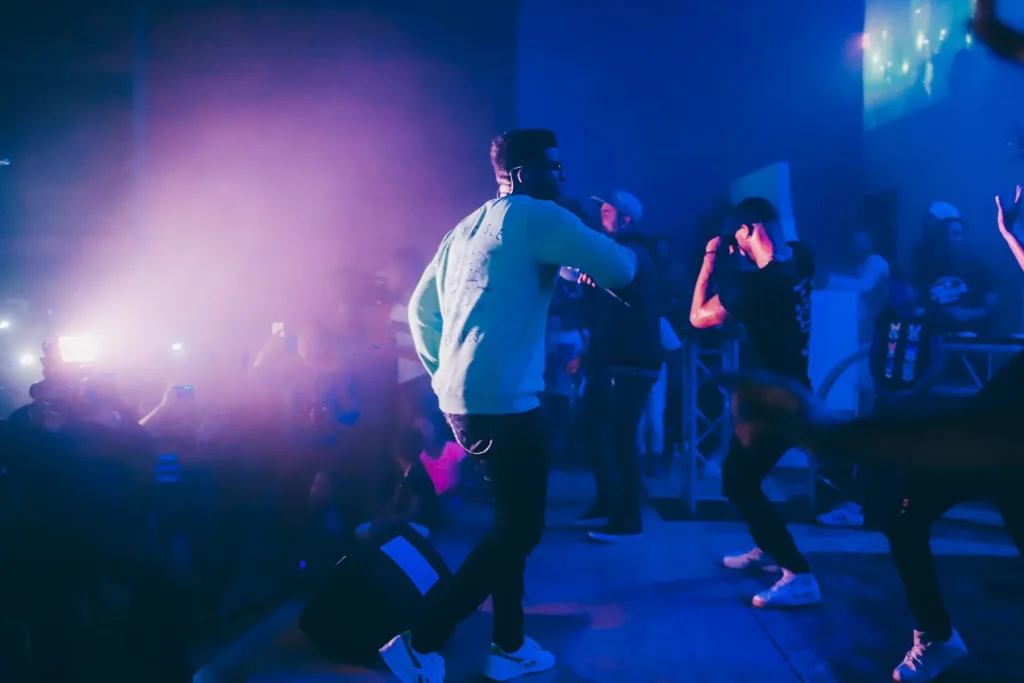
On stage, the Woodstower appearance has symbolic value. The environmentally conscious festival — attended by 33,000 people in 2018 — provided a springboard at the opening of its 2019 edition. Its “banana peel” logo recalled the goal of zero waste.
The preparation shows remarkable determination: “Natsukashii” was finished at 4 a.m. on the day the master was due. This illustrates the need for close coordination between studio and tour.
Adapting 35 tracks for concert performance demands decisive choices. The stage needs a visual design, a set list and carefully managed transitions to preserve the narrative’s coherence. The team then plays a central role between record and audience.
| Element | Function | Impact |
|---|---|---|
| 35-track list | Thematic panorama | Variety and a connecting thread |
| Woodstower (2019) | First concert performance | Environmental commitment, visibility |
| Late completion | Resilience | Fast pace, energy on stage |
Ultimately, Expansion gives the new album a life extending over several years. The release and concert dates extend the work and strengthen the audience’s loyalty day by day.
Conclusion
This project shows how an artist can weave cinema, an album and concerts into one coherent journey.
The June window and completion 15 days before release made delivery urgent. The theatrical classification secured through the single screening, the short-lived QR code and the Netflix release contributed to a hybrid success.
With 35 tracks on Expansion and a title track listed at 93 BPM, -11 dB, 3:54 and 923 words, the music carries lyrics driven by determined passion.
The star metaphor runs through the story, connecting private life with a public career. This album shifted expectations, from the darkness of a cinema to the light of a streaming platform.
For technical details, see the track information.