
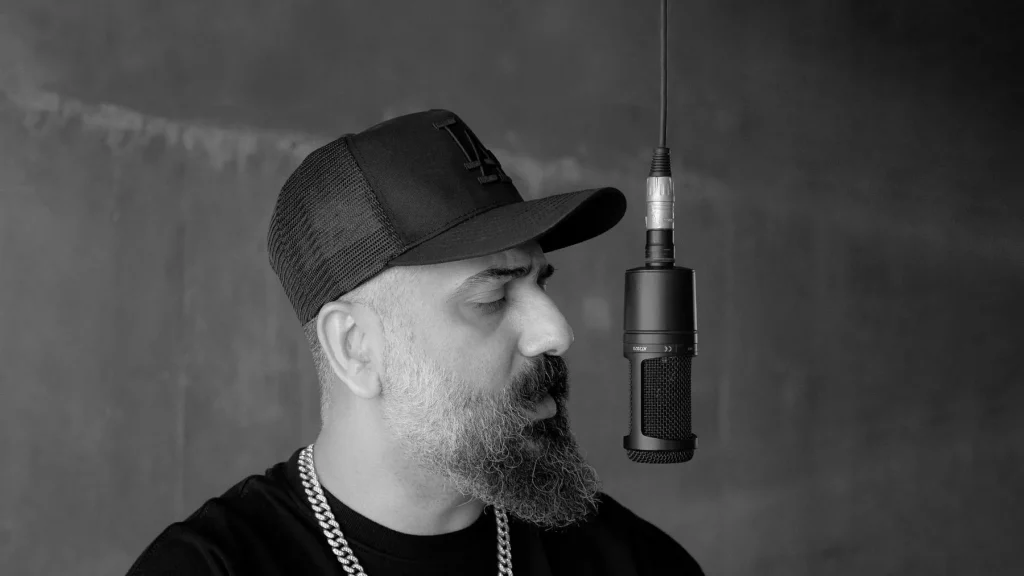
“Ma dope” stands as a landmark of contemporary French rap. The song, the twelfth track on Feu (2015) and retained on its reissue, opens with a declaration of belonging.
In three minutes and forty-seven seconds, the artist delivers 754 words. A tempo of 136 BPM and mastering around -8 dB give the music an energetic, forceful drive.
The central theme combines individual freedom, authenticity and resilience. The chorus, “That’s my dope,” becomes a statement of identity for urban youth, from the skatepark to loyalty to the crew.
This introduction sets up the analysis: the lyrics’ structure, verses and chorus, hip-hop references and social meaning for the listener. To consult the track information and technical data, follow the source; the sections that follow examine the song’s formal construction and reception.
Context and intentions: why “Ma dope” still matters in French rap
Released in 2015, the song arrived as French rap was redefining the boundary between mainstream success and artistic ambition.
Its initial release on June 8, 2015, followed by the December 4 reissue, places the song at a time of transition. Its affirmation of values — loyalty to loved ones and resistance to being molded to fit expectations — shows its place in the music of the period.
The autobiographical element emerges in images of skateparks and urban life. They offer a generational perspective, caught between the desire to escape and the need for words and actions to agree.
Carefully chosen references to Heltah Skeltah and Trunks place the song in a hip-hop tradition rich in allusions. Amid a rapidly changing scene, it continues to be cited for its sincerity and impact.
“That’s my dope”: a declaration that reaches different audiences and strengthens the story at the heart of the album.
Nekfeu lyrics: an in-depth analysis of “Ma dope”
The song is a statement of purpose for anyone choosing their own path. Its concise lyrics bring together freedom, authenticity and resilience.
Main theme: freedom and authenticity
The song’s main theme is clear: asserting freedom in the face of pressure. The imagery remains concrete, and the voice retains an intimate sincerity.
Values: loyalty and the importance of loved ones
Loyalty to the crew runs through every line. Loved ones shape the life being described and give the message a moral framework.
Facing judgment
“I don’t give a damn what you think…” / “You want to control my life?”
These direct challenges express an unequivocal refusal. They establish an uncompromising style and show the writer’s determination in the face of criticism.

| Element | Function | Effect on the listener |
|---|---|---|
| Verse | Develops the story and urban imagery | Creates a sense of closeness and strengthens credibility |
| Chorus | Distills the statement of identity | Strengthens memorability and emotion |
| Bridge and changes | Plays on energy and melancholy | Heightens the emotional impact |
The interplay of energy and melancholy reinforces the message. Repeated affirmations serve as moral touchstones and help establish the main theme in listeners’ minds. Ultimately, the poetic style and structure support a claim to autonomy as a guide for life.
References and allusions: from Heltah Skeltah to Trunks
The song uses many allusions to create an immediate shared language with the listener. These references connect it to different cultural worlds.
Hip-hop and Japanese pop culture: codes, imagery and impact
Heltah Skeltah appears as a tribute to the American hip-hop tradition. The mention establishes a lineage and speaks to old-school rap fans.
Trunks points to Japanese pop culture and manga conventions. The image evokes a visual world that many recognize and embrace.
“Ready to raise hell like a Rolling Stone”: meaning and impact
The bridge — “Ready to raise hell like a Rolling Stone / My guys are in the house and everyone is stoned” — claims the energy of live performance and creative chaos.
“Ready to raise hell like a Rolling Stone / My guys are in the house and everyone is stoned”
The slogan works as a rallying cry. When the phrases “my guys are in the house” and “everyone is stoned” appear, the shared space becomes a stage.
- Hip-hop heritage = respect and a cultural bridge.
- Japanese pop culture = striking imagery and visual recognition.
- Slogan = contagious rhythm and immediate recall.
| Reference | Origin | Effect |
|---|---|---|
| Heltah Skeltah | American hip-hop | Affirms a rap lineage |
| Trunks | Japanese pop culture and manga | Striking visual image and generational appeal |
| Rolling Stone (image) | Rock and live performance | Controlled stage chaos and shared energy |
Rap song structure: how “Ma dope” arranges its verses, bridge and chorus
The song follows a precise rhythmic structure designed to maximize the effect of each line.

Verse, bridge, chorus
The sequence is as follows: verse > bridge > chorus > verse > chorus > bridge > verse > pre-chorus > chorus.
Each verse adds detail to the story. It establishes attitudes and images in a few words. The bridge, a section used as a transition, renews the energy.
The chorus’s role
The chorus provides a memorable point of reference. Its repetition helps reinforce the song’s main theme.
“That’s my dope”
Pre-chorus and variations
The pre-chorus prepares the ear and creates steps in the emotional progression. The variations place the impact at the right moment, at 136 BPM.
Breath control and the distribution of 754 words prevent redundancy. The structure supports a clear message and a gradual build in intensity.
- A clear rap song structure: short sections and pronounced effects.
- The section of the song used as a bridge restores rhythmic force.
- A tight distribution of words to better reinforce the main theme.
Verse analysis: style, imagery and life story
Each verse works like a short scene from life. The images are concrete: a skatepark, long rides and injuries described plainly.

Urban youth and vivid imagery
Read as snapshots, the verses show nighttime wanderings and a friendship tested by an accident (a fractured fibula). The line “I want to glide through my city on a longboard” becomes a metaphor for emancipation.
An independent stance and a refusal to conform
The writing style emphasizes independent production and a rejection of radio formulas. The line “I don’t give a damn what you think” establishes a voice that resists industry decision-makers.
- Snapshots: skate scenes, an injury and nights spent with friends.
- Tight flow: verbal density that makes every detail vivid.
- Ethics: loyalty to loved ones and the crew’s values.
| Element | Function | Effect |
|---|---|---|
| Verse | Recounts fragments of life | Closeness and realism |
| Style | Concrete images and short rhymes | Emotional impact |
| Stance | Independent production and rejection of radio formats | Artistic independence |
“No rest for the phenomenon on the mic”
The chorus as a declaration: “my city, my crew, my style, my flow”
In the song, the chorus acts as a sonic seal of belonging. It distills the pride expressed by “my dope, my city” and the group’s signature into a single line.

“That’s my dope… My city, my crew, my style, my flow… Your girlfriend calls me ‘handsome’… Mamen, my crew has my back…”
The slogan works like a seal: it gives the song a place in collective memory. Repeating the chorus reinforces the central theme and establishes its sonic identity.
The line “your girlfriend calls me ‘handsome’” uses playful provocation. It adds to the performer’s charisma and creates a knowing connection between the audience and the artist.
The idea that his crew has his back evokes a protective circle. Here, solidarity becomes an emotional shield and a collective strength.
- Identity: “my dope, my city” elevated into a signature phrase.
- Provocation: “your girlfriend” for its effect on stage.
- Unity: “my crew has my back” as a collective promise.
| Element | Function | Effect |
|---|---|---|
| Chorus | Distills identity | Immediate recall |
| Humor and provocation | Strengthens charisma | Captures the audience |
| Solidarity | Affirms protection | Emotional support |
To consult the track’s technical details and explore its structure further, see the track information.
“Mac Cain,” “dollar dollar mode” and the language of consumption
The recurring sounds running through the verse draw the listener back to repeated, almost mechanical actions. The repetition of “Mac Cain” works like an echo: it draws attention to the routine of the street market.
This refrain becomes a critique. It reveals the absurdity of an act of consumption repeated without thought.
Repetition as critique: social routines and habits
The constant return to “Mac Cain” imitates habit. It turns a word into the sign of a ritual. Here, repetition brings dependence and social conditioning into view.
“Mac Cain, Mac Cain, Mac Cain”
It conveys an unspoken accusation: the ear hears both the tedium of the action and its necessity.
Slang and rhyme: how the vocabulary grounds the music in reality
The vocabulary of money and exchange — “give and take,” “asking in dollar mode,” “dollar dollar mode” — sketches an economy of survival. Slang and rhyme ground the message in the street.
Mentions of “White Widow” and “Dutch weed” add concrete details. They blend pleasure, dependence and criticism.
Musically, hard sounds and alliteration turn these words into rhythmic material. This approach gives the genre its force: it uses repetition to awaken critical thought.
| Element | Function | Effect |
|---|---|---|
| Mac Cain (repetition) | Mirrors routine behavior | Reveals the absurdity of the action |
| Dollar dollar mode / asking in dollar mode | Language of exchange | Shows an economy of survival |
| Slang & references (White Widow) | Realistic grounding | Density and authenticity |
| Sounds (alliteration) | Sonic technique | Rhythm and critique |
Ultimately, this mosaic of signs — “Mac Cain,” “dollar dollar mode,” “asking in dollar mode” — builds a narrative economy. It documents the street while questioning it.
Production characteristics: 136 BPM, -8 dB, energy and melancholy
The production immediately establishes a rhythmic tension that blends force with nuance. At 136 BPM, the tempo pushes the voice toward a way of articulating syllables that is urgent yet controlled.
The rhythm calls for tighter phrases and the use of syncopation. The flow gains urgency without losing clarity.
The mix, calibrated around -8 dB, retains a forceful sound. This level gives the drums presence without overwhelming the vocals.
Tempo and intensity: brisk rap driven by an urban groove
The combination of punchy drums and darker textures creates a contrast between energy and melancholy. Precise transients leave room for the ad-libs.
Length and density: 754 words in 3:47, above the genre average
At 3:47, the song contains 754 words, an unusual density. The average rap track often contains around 400 to 500 words over two to five minutes.
This density requires sustained delivery and a production that leaves breathing room. The instrumental supports the choruses and sets up each renewed burst of energy.
Producer: 1upWorld — clear vocals, precise transients and room for small details.
On a first listen and on repeated plays, the wealth of sonic detail holds the listener’s interest. The choice of a fast tempo distinguishes the song in a field often marked by mid-tempo tracks.
“Ma dope” on Feu and its reissue: track listing and reception
Placed twelfth, the track serves as an anchor in the structure of Feu. Its position toward the end gives the album dramatic weight and offers a pause before the close.
The song’s theme connects with other tracks in the ongoing urban narrative. Its style stands out for its urgency and contrasts with more melancholy passages.
The reissue confirms this track’s place in the project. Keeping it reflects artistic coherence and continued audience interest.
Its reception has endured: chorus lines quoted repeatedly after the release helped establish the song within rap. Memorable slogans, strong urban imagery and a stage presence proven through performances help explain that longevity.
“A song that sums up the album’s identity while remaining instantly recognizable.”
In short, the track plays a strategic role: it shows the artist’s range without weakening the message and combines critical ambition with popular appeal.
S.Pri Noir’s contribution: the chorus’s origins and artistic chemistry
The song’s chorus emerged from a breakdown and a shared instinct in the recording booth. A longtime friend from open-mic events, S.Pri Noir recognized the potential of a track sent to him without a chorus.
A computer failure prevented them from retrieving the session. The artists then improvised by feel. The simple, singable chorus emerged in one take and fit the verses without distorting them.
By feel: improvising after a breakdown
The anecdote shows how a technical constraint can become an opportunity to create. Another artist’s contribution becomes a turning point for the song.
The featured artist’s added value
S.Pri Noir brings a different vocal color. His contribution adds a melodic dimension that makes the chorus unifying and lively on stage.
- Another artist’s contribution: a longtime collaborator, with an earlier exchange on “CFA.”
- Another artist’s contribution: a spontaneously created chorus and quick thinking in the studio.
- A second artist on the song: greater credibility and audiences coming together.
“A powerful verse, an inspired chorus: the shared signature that sealed its success.”
Conclusion
The song closes with a clear synthesis: the verses trace an openly embraced urban life, while the chorus becomes a banner for “my dope, my city.”
The rap song structure — verse, bridge, a section used as a transition, and chorus — maintains intensity without a lull. The style blends energy and melancholy, supported by a forceful production (136 BPM, -8 dB).
The words “I don’t give a damn what you think” and “you want to control my life?” embody an independent stance. The chorus, with a girlfriend calling the artist “handsome” and a crew having his back, leaves memorable images.
Ultimately, the consistent structure and the chemistry of the collaboration with S.Pri Noir reinforce the song’s main theme and sustain its place in contemporary rap.