
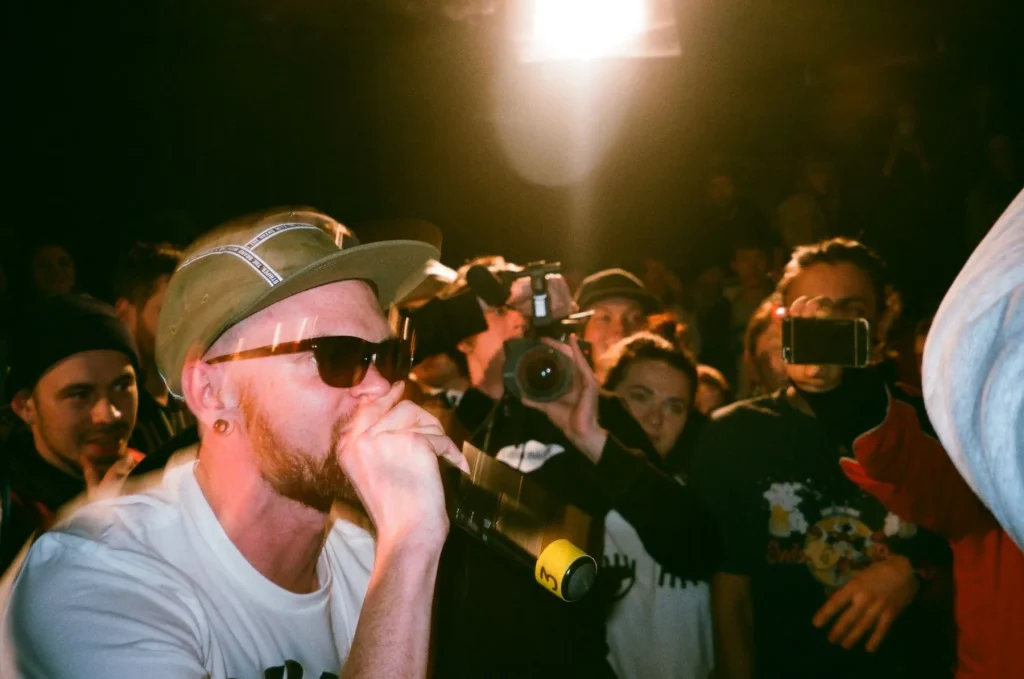
Welcome to this guide, which takes you inside the workshop of a rapper known for his writing and precise choice of words. We trace the threads running through his albums and across the years to better understand his artistic journey.
Our approach shows how meaning shapes every choice: the words, images and rhythmic structures that build a personal and collective story.
We will place his work in context, from his first album to the album and film that make the stars a compass. We will explore his main themes: writing, love, travel, the cosmos, loyalty and pop culture, along with his techniques—rhymes, alliteration and double meanings—and their impact on stage.
Our aim: to offer a useful way to listen again and discover more meaning in each track. For references and examples, read this overview of his influences: references and inspirations.
Why this guide now: understanding the DNA of a French rap lyricist
Watching a project take shape on film changes the way we hear every line. Les Étoiles vagabondes used film to show rehearsals, studio takes and even moments when inspiration ran dry. It made the creation of the album visible.
The format helps us see more clearly, even as it deliberately blurs the line between creative work and documentary. We move from day to night in the studio and follow the actions that give the music meaning.
This matters because the album and film offer glimpses of rhymes, alliteration and ambiguous rhymes as they first emerge. They help explain why Nekfeu is seen as a craftsman of meaning.
This guide aims to illuminate the connection between the lyrics and the person behind them, so listeners can find joy and imagine new possibilities through attentive listening. We will examine recurring motifs, from “Avant tu riais” to love, doubt and choice.
- Method: examining techniques and songs through material recorded in the studio.
- Value for learning: seeing how form serves meaning across an album, film and live performance.
- What makes it distinctive: a rapper who documents both creative blocks and discoveries.
Nekfeu: recurring themes in his lyrics
Each album weaves a network of images in which writing becomes a compass. Writing is never a neutral act here: words must be put down to leave a trace and resist oblivion.

Writing and metapoetry: a matter of life, death and rebirth
Writing captures memories. It turns each word into a character. The page becomes an archive against disappearance.
Love and realistic romance
The songs mix tenderness with revisions and second thoughts. From one track to another, double meanings deepen the emotion and allow for several readings.
Travel and creative exile
References to airports (CDG, LAX, JFK, HND, ATH) evoke departures from major cities. Jazz and gospel feed his writing and his reflections on himself.
Stars and the cosmos
The stars act as mirrors for emotional distance. A simple image can carry many interpretations.
Loyalty, brotherhood and pop culture
The word “reuf” (brother) and a refusal to accept division shape this outlook. Manga, video games and a playful vocabulary punctuate intimate scenes.
“Writing means capturing a few unique memories…”
Across the songs, these motifs speak to one another. The lyrics build a story in which life and death reflect each other, and every word creates a world full of meaning. The album becomes a collection of connected images.
Nekfeu’s key literary devices: when form serves meaning
Here, form becomes an instrument: each technique shapes an idea and guides the listener.
Multisyllabic and ambiguous rhymes
Definition: a multisyllabic ambiguous rhyme goes beyond a matching final sound. It creates a sound pattern that gives the writing a recognizable signature and an effect on meaning.
It works like a fingerprint: sequences of [p] and [s] sounds, for example in Tempête, let several readings resonate at once.
Double meanings and homophones
A line can suggest two plausible words or phrases. Familiar examples include “Plus on s’renfloue et moins on voit clair” and the play on “on verra” and “on se rend flou”; another pairs “vit la joie” with “villageois.”
This double meaning enriches the lyrics and invites listeners to return to the line.
Alliteration, assonance and breath
Alliteration marks the rhythm and breath of a line. Phrases such as “C’est pas un film” can slow or quicken its delivery.
Assonance and repeated sounds shape listeners’ memory of the rapper’s work.
Chiasmus, irony and parallelism
ABBA patterns, reversals and ironic phrasing create structures that reflect the idea. In Avant tu riais, chiasmus turns the meaning around.
Semantic fields and shifts in meaning
Vocabulary drawn from robberies, mathematics or medicine helps express intimate feelings. These unexpected images give emotions a new frame.
“These techniques are more than tricks: they build a vision and give the themes coherence.”
Writing and the search for the right words: from page to studio
The search for the right word turns the workshop into a sound laboratory. Writing does more than record an idea: it must hold onto the moment, find its cracks and preserve what is fading away.
Writing to capture reality
“Writing means capturing a few unique memories…”
The repeated takes in the album and film reveal this process. We hear hesitation, revision and, eventually, a line that stands without distracting noise.
The page, the voice and the mind
The word, the text and its meaning become characters in dialogue. The mind connects images and memories to refine the rhythm of speech.
The rapper adjusts a rhyme or moves a word, and the breath changes everything. His voice shapes each syllable to strengthen its intention.
Behind the scenes, the album is born twice: first on the page, then at the microphone. This modern writing room values craft and meaning over display.
Love, grief and the human condition
Love and grief answer each other like two voices searching for the same word. Addressing another person drives these songs: hurt, promises and language all become material for writing.
“Your absence is the worst kind of presence” expresses loss with sharp economy. By contrast, “Love is an essence / Death is a birth” captures the tension running through the lyrics.
Separations become a story of day and night. Longing alternates with clarity. Scenes take shape through objects, seasons and specific places.
Forms and semantic fields
A cluster of words—fuel, cycle, essence—illuminates the connection between love and life. Irony and parallel structures intensify emotion through their form.
- Love as a message to another person, a wound and a struggle to reconnect.
- Grief as a passage toward symbolic rebirth.
- Physical details that give memory a tangible form.

| Element | Function | Example |
|---|---|---|
| Direct address | Connects the line to another person | Lines addressed directly to “you” |
| Semantic fields | Connect themes and images | Essence, cycle, fuel |
| Forms | Amplify meaning | Irony, parallelism |
“Your absence is the worst kind of presence”
As you listen, look for pivotal lines that concentrate the meaning. Follow the movement from shock to writing, then from falling to rebirth. The album arranges these stages into a complete human story.
Ciel noir, Dernier soupir and the oxymoron as a worldview
An oxymoron opens the door: night carries both grief and promise.
“Ciel Noir” establishes this tension. The contrast between sky and darkness brings joy and pain together in one breath. The oxymoron becomes a way to embrace life and death.
Alliteration built around r weighs down the line. It makes the night rumble and the words roll like a drum. The rhymes give unstable emotion a structure and steady the thought.
The gospel choir acts like a star made of sound. It bridges the personal and the sacred. Jazz adds shifting harmonies and leaves room for the voice to express meaning.
In “Dernier Soupir”, the final breath marks an ending and announces another birth. The key line—“Death is a birth”—turns a fall into a passage.
- The rapper’s stance: loyalty to the collective and rejection of division.
- Effect on stage: the crowd becomes a choir and the night a sanctuary.
- The album’s coherence: a night-time story guided by the stars.

| Element | Function | Example |
|---|---|---|
| Oxymoron | Brings opposites together | Sky / black, joy / pain |
| Alliteration | Adds weight and rhythm | R sounds that make the line rumble |
| Choir and jazz | Connect the personal and the sacred | Gospel and shifting harmonies |
| Rhymes | Steady the emotion | Give the oxymoron a beat |
Travel and “CDGLAXJFKHNDATH”: wandering as a method
The airport codes in the title form a mental map that compresses a creative journey.
Decoding the title means reading a world map through five codes: CDG, LAX, JFK, HND and ATH. It acts as a coded title that conveys the project at a glance.
“Y’a qu’sur les plages du succès qu’on échoue” plays on the French verb for both failing and washing ashore: public triumph meets private exhaustion. Brief stopovers and jet lag become creative fuel.
Washing ashore on the beaches of success: poetic boarding passes
Crossing major cities in a short time shapes a fragmented way of writing. The sounds take on local colors: jazz and gospel in the United States, textures from Japan and rap recorded in the studio.
“Each track reads like a poetic boarding pass.”
- Places—studios, airports and rooms—become the quiet setting for the work.
- Stopovers leave atmospheres that seep into the rhymes and voice.
- The new album opens up a wider range of sounds and gives the stars greater meaning.

| Element | Function | Example |
|---|---|---|
| Airport codes | A condensed map | CDG / LAX / JFK / HND / ATH |
| Stopover | Source of atmosphere | Jazz in LAX, gospel at JFK |
| Place | A mobile workshop | Studio, hotel room, airport |
Video games and manga: a way to see reality more clearly
Video games and manga provide ways to tell a story of adolescence in light and shadow.
The vocabulary of video games (GTA, R1) and references to series such as Hunter x Hunter and Kid Paddle punctuate the lines. They create precise, tangible images.
Often, two words are enough to shift from comedy to seriousness. A title or GIF evokes an entire scene and gives memories meaning.
Rap uses these pop culture references to make an experience accessible. Self-mockery tempers the ego, while defeat becomes a chance to learn.
As you listen, treat these words as clues. They connect years of gaming and comics to a contemporary aesthetic.
- A clear purpose: playful vocabulary to describe concrete experiences.
- Two registers: humor and gravity in a single line.
- The rapper’s role: connecting subcultures with an intimate story.
Ambiguous rhymes in practice: a listening workshop
Repeated sounds provide a framework for an idea as it unfolds. This exercise shows how to spot sound patterns (p, s, v, t) and follow their logic.
From Tempête to Réalité augmentée: hearing the “p,” “s,” “v” and “t” sounds
Start by listening to Tempête: sequences of [p] and [s] give way to [v] and [t]. Repetition shapes the breath and creates a rhythm for the argument.
Réalité augmentée plays with the sounds of “passé” and “futur” to create a double meaning linking time and memory.
ABAB, ABBA and beyond: when rhyme shapes thought
Spotting ABAB and ABBA patterns helps show how ambiguous rhyme frames the progression of an idea. Avant tu riais illustrates an ABBA chiasmus that reverses the thought.
Consider the sound play in “avoir rêves” and “vit joie”: these homophones help hold the themes together. You can count the times a technique recurs in a verse.
- Start the exercise by listening for sound patterns.
- Listen actively: identify alliteration and its effect.
- Move to the lyrics: read them line by line to see how they work.
“On verra” plays on “on s’renfloue” / “on se rend flou”: a simple example of ambiguous sound play.
To explore further, read a detailed analysis and listen to these lyrics again, paying attention to every sound.
The album and film as one project: Les Étoiles vagabondes in cinemas
The project takes the form of a filmed journal: the album becomes a film that shows meaning taking shape.
Immersive listening: rehearsals, creative blocks and behind the scenes
The camera brings us into rehearsals and moments of creative block. We watch the mind at work day after day until an idea clicks. Repetition becomes a way to learn about the process.
The effect on listeners is clear: entering the workshop helps us understand the intention behind a rhyme or an alliterative phrase. We follow the making of a song, its cuts and the choices that lead to its final version.
“The film records the creative process: blocks, fresh attempts, a love of words and decisions that give them meaning.”
Within French rap, this approach is considered unusual. The camera acts as a magnifying glass, revealing ambiguous rhymes and other literary devices as they emerge.
- Overall format: an album conceived for the big screen and the stage.
- Dramatic progression: creative block → another attempt → the birth of a line.
- Visible themes: love, death, brotherhood, the choir and the intensity of live performance.
| Aspect | Function | Observed effect |
|---|---|---|
| Filmed rehearsal | Documents the creative work | A clearer understanding of meaning |
| Behind the scenes | Shows the choices being made | Value for learning |
| Stage adaptation | Extends the experience | Emotional power in performance |
The stage, social commitment and life in France: from Woodstower to the city
On stage, words become a form of commitment: every concert creates a dialogue with an audience and a place.
Woodstower, a festival committed to environmental responsibility, welcomed a record 33,000 attendees in 2018. The following edition opened with a presentation of the album and film, showing how one project can move between screen and stage.
This setting shows how performance can embody concrete values. The refusal of divisive deals, evoked in “Dernier Soupir,” illustrates an outlook that carries through the concerts.
Over a few years, larger stages changed how the songs were heard. The choir and audience alter the meaning of a line, while the staging creates a new effect.
- The stage gives the rapper and the city a space for engagement.
- The same rhymes heard on the album gain fresh energy on stage.
- The movement between venues, festivals and media creates a living network.
| Element | Function | Impact |
|---|---|---|
| Festival | Visibility | A wider audience |
| City | Context | Social resonance |
| Performance | Interpretation | New layers of meaning |
“The stage reveals the connection between the performer and the work he presents.”
Rap in France has a tradition of socially engaged writing. Here, public life inspires the lyrics, while local events change how audiences receive them.
To explore literary devices and their connection to the stage, read this analysis.
Conclusion
These threads hold the work together like a constellation. They reveal a story that arranges life through images, techniques and emotions.
Keep this method in mind: listen to the words, notice the stars, and follow the mind that gives shape to each day. Although the form may seem complex, it clarifies the meaning.
This combined project—album, film and stage—affirms the place of rap in living literature. Love, ambiguous rhymes, double meanings and alliteration all help build its story.
To finish: listen to each track again with this guide in hand. With every listen, this story of French rap reveals another layer.