
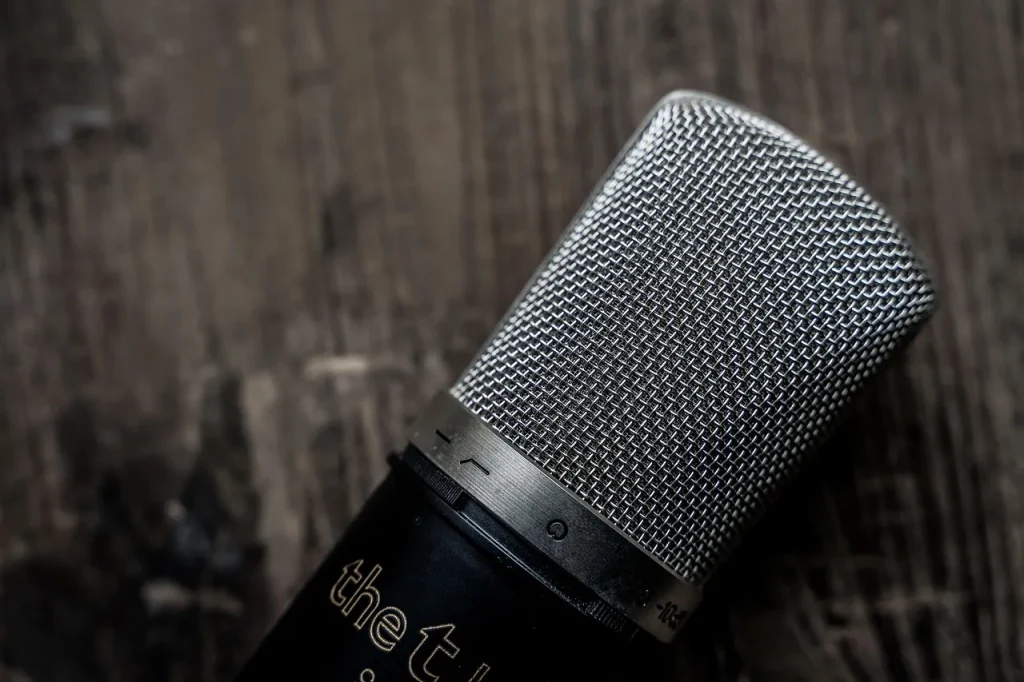
Whether you are new to music or looking to make your productions more professional, choosing a studio microphone is a crucial step. It is the first link in the audio chain, capturing the raw sound — and a poor choice at this stage cannot be fixed in mixing or mastering.
Condenser or dynamic: two approaches
Condenser microphones are the most common choice in studios. Their sensitivity captures the finest nuances of a voice or acoustic instrument. The Rode NT1, Neumann TLM 102 and Audio-Technica AT2035 are established models in this category, with prices ranging from 150 to 600 euros. The trade-off is that they also capture problems in the room: reverberation, ventilation noise and traffic outside. Some basic acoustic treatment is therefore recommended.
Dynamic microphones, such as the Shure SM7B and Sennheiser MD 421, are less sensitive to their surroundings. They are more forgiving in untreated rooms and can handle high sound pressure levels. That is why they are often used to record rap vocals and podcasts, or placed in front of a guitar amplifier.
USB or XLR: a beginner’s question
A USB microphone plugs directly into a computer. It is a simple, effective way to get started, especially with podcasts or voice-overs. An XLR microphone requires an audio interface, but offers better conversion quality and more flexibility than USB. For anyone undecided, some newer models offer both USB-C and XLR connections, allowing you to upgrade your setup without buying another microphone.
Budget: how much should you spend?
Between 100 and 200 euros, you can find microphones capable of competing with much more expensive models. The Rode NT1 5th Gen, for example, has a self-noise level of just 4.5 dBA — a level that 500-euro microphones struggled to reach ten years ago. Above 500 euros, you enter the realm of microphones with a distinctive character: from the Neumann U87 to the Sony C-800G, each model brings its own colour and sonic signature. For a closer look at the options on the market, this studio microphone comparison covers models from 150 to 10,000 euros, with recommendations for different uses.
The common mistake to avoid
Spending your entire budget on the microphone while neglecting the room’s acoustics. A 150-euro microphone in a well-treated space will consistently produce better results than a 3,000-euro microphone in a reverberant bedroom. Before upgrading your microphone, consider absorption panels, bass traps and placement. The right microphone is the one that suits your needs, your room and your budget — not necessarily the most expensive one.