

The tongue drum is a melodic percussion instrument that is attracting more and more enthusiasts. Its price can vary considerably, from €20 to over €1,000. This variation depends on several factors, including build quality, materials and the number of notes.
In this buying guide, we will explore the relationship between cost and quality in detail. Whether you are a curious beginner or an experienced musician, you will find practical advice to help you make the best choice for your budget.
We will cover the main price ranges: entry level (€20 to €50), mid range (€80 to €150) and high end (€150 to €1,000 or more). Established brands such as Zenko, Beat Root and Meinl Sonic Energy offer different options.
This guide will answer essential questions: how to choose an instrument for your skill level, how much to budget and where to buy a quality tongue drum. Get ready to discover how to assess sound quality before investing in this soothing instrument.
Introduction to the tongue drum: a unique musical instrument
Since its creation in 2007, the tongue drum has captivated many music lovers. This melodic percussion instrument stands out for its ease of use and soothing sounds. Whether you are a musician or simply curious, it is fascinating to discover this unique instrument.
The tongue drum, also known by several other names, has a rich and varied history. Here are some names used for it:
- Steel tongue drum
- Tank drum
- Hank drum
- Zen drum
- Tongue drum
- Slit tongue drum
The name “tongue drum” comes from the shape of the cuts in the metal, which resemble tongues. These cuts are essential because each produces a note when struck. Originally, these instruments were made by hand from recycled gas cylinders. That method has since evolved to produce higher quality models.
One of the instrument’s great advantages is that it is intuitive. You do not need to know how to read music to start playing. Within minutes, you can produce harmonious, relaxing sounds. This makes it an excellent introduction to more complex instruments such as the handpan.
Tongue drums have a variety of uses:
- Relaxation: their gentle, soothing sounds encourage relaxation.
- Meditation: suitable frequencies can help you concentrate.
- Creative play: ideal for children and adults, they stimulate the imagination.
Whether played alone or in a group, the tongue drum creates a welcoming atmosphere. It is also an original gift idea for any occasion. Children in particular can benefit from it: they can easily begin making music, develop coordination and stimulate their creativity.
In short, the tongue drum is an accessible, versatile instrument that appeals to people through its sound and ease of use. Whether you want to relax, meditate or play creatively, this instrument can accompany you.
The key factors that affect a tongue drum’s quality
A tongue drum’s quality depends on several fundamental technical factors. They determine its sound and how well it suits different playing styles. Let’s look at them one by one.
Number of tongues and notes: effects on complexity and sound
The number of tongues is crucial. Each tongue produces a distinct note. Models have between 6 and 15 tongues. For beginners, an instrument with 6 to 12 tongues is recommended. This makes it comfortable to learn while exploring simple pieces.
Materials: steel, aluminium, nitrided steel and their effects
The materials used directly affect sound quality. Aluminium is light, making the instrument easier to carry. Copper produces warm sounds, while stainless steel provides good durability. Nitrided steel, treated with nitrogen, is the best choice for resistance to impacts and moisture.
Size and weight: effects on portability and richness of sound
Size and weight also matter. A larger diameter creates a bigger resonating chamber, producing deeper sounds. Lightweight aluminium models are ideal for carrying, while heavier steel models offer greater stability.
Tuning and musical scale: major, minor, 440 Hz or 432 Hz
Finally, tuning is essential. A major scale produces cheerful sounds, while a minor scale evokes a melancholy mood. A frequency of 440 Hz is the standard for playing with others, whereas 432 Hz is often chosen for meditation.
| Factor | Effect |
|---|---|
| Number of tongues | Determines the number of playable notes and affects musical complexity |
| Materials | Affect durability and sound quality |
| Size | Affects richness of sound and ease of transport |
| Tuning | Determines the musical mood and compatibility with other instruments |
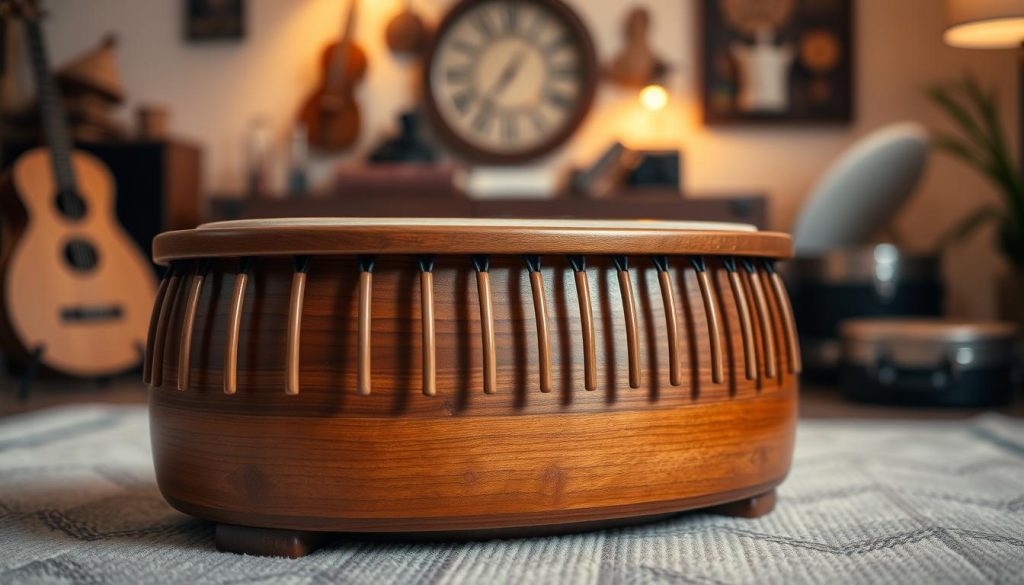
How much does a tongue drum cost at different quality levels?
Tongue drum prices vary according to several factors, including build quality and materials. These instruments therefore fall into different price ranges. Here is an overview of the categories available on the market.
Entry level prices: simple models for beginners
Entry level models are ideal for people who want to discover the instrument without spending too much. These tongue drums generally cost between €20 and €50.
The Thomann Tongue Drum 6-inch Lotus JG, priced at €29, is one example. This 15.2 cm model has 11 notes in D major and is ideal for beginners. It offers an accessible and enjoyable musical experience.
Mid range instruments: a balance between sound quality and affordability
The mid range runs from €80 to €150. It offers a good balance between sound quality and price. These instruments are designed for regular use and are often chosen by aspiring musicians.
For example, the Thomann Tongue Drum 12-inch Lotus M, priced at €69, is a 30.5 cm model with 15 notes. It offers excellent value for people who play often.
High end models: professional instruments with careful finishes
High end models start at €150 and can exceed €1,000. These instruments are intended for discerning musicians seeking careful finishes and professional sound quality.
Examples include the Sela Tongue Drum SETD13U2 at €155 and the Rammerdrum 15″ at €469. Made from stainless steel with particular care in their handcrafting, these models deliver an exceptional sound experience.
What determines the price: materials, handcrafting and brand
Several factors affect tongue drum prices. The choice of material is particularly important. Nitrided steel, for example, costs more but offers greater durability. Brand reputation and tuning quality are also determining factors.
Ultimately, accurate tuning and notes often justify investing in a more expensive model. Users note that the best-selling models combine simplicity, a suitable size and good value for money.
For more information about price ranges and recommended models, read our article on tongue drums.
Price ranges and typical models by budget and skill level
Tongue drum models on the market span several price ranges suited to different skill levels. Whether you are a newcomer or an experienced musician, there are options for every taste and budget.
Budget models (€20 to €50) for discovery and gifts
Budget models are perfect for people who want to discover the instrument without spending too much. Here is one example:
- Thomann Tongue Drum 6-inch Lotus JG at €29: a compact 15.2 cm drum with 11 notes in D major, ideal for beginners.
Mid range instruments (€80 to €150) for regular use
Mid range instruments offer a good balance between sound quality and affordability. Recommended models include:
- Thomann Tongue Drum 12-inch Lotus M at €69: a 30.5 cm model with 15 notes, ideal for musicians who play regularly.
- Thomann Nataraj Tongue 12-inch A-Akebono at €89: designed for meditation, with 8 notes in the Akebono scale.
High end products (€150 to €1,000 or more) for discerning musicians
High end models are intended for musicians looking for careful finishes and an exceptional sound experience:
- Sela Tongue Drum SETD13U2 at €155: 33 cm in diameter, with 11 notes in C major.
- Meinl Sonic Energy MOSTD4DG at €218.90: 10 inches, 8 tongues, tuned to F-sharp minor at 432 Hz.
- Rammerdrum 15″ at €469: made from stainless steel, it offers superior sound quality.
Recommended brands and models by budget
Several brands stand out on the market:
- Zenko
- Beat Root
- Sela
- Rammerdrum
- Meinl Sonic Energy
- Staag
- Tama Classic Series
- Pearl
- Rav Vast
The April Yang model is particularly valued for its refined appearance and exceptional sound, thanks to its steel and titanium alloy finish.
For the best choice, look for a diameter of at least 12 to 13 inches (30.5 to 33 cm) to obtain satisfying sound quality, regardless of the number of notes. Before buying, compare models online and read other users’ reviews.
How can you assess a tongue drum’s sound quality?
To fully appreciate this instrument, focus on its sound quality. This includes resonance, note clarity and the richness of its harmonics. A good tongue drum should produce sounds that resonate pleasantly and soothingly.
What makes good resonance and clear notes?
A quality tongue drum should offer:
- Well-defined notes: each note should sound distinct and clear.
- Long resonance: good resonance enriches the musical experience.
- Harmonic balance: the different tongues should blend harmoniously.
The importance of tuning and harmonics
Tuning is a fundamental factor. A well-tuned instrument produces pure tones and pleasing harmonics. Poor tuning, by contrast, can diminish sound quality. The materials used also affect tone. Steel, for example, produces rich, deep sounds, while aluminium produces brighter sounds.
Try before you buy: why does it matter?
Trying several models before choosing is highly recommended. It lets you compare their sounds and find the one that best meets your musical expectations. If you cannot try them in person, read online reviews and watch demonstration videos. This will give you a clearer idea of their sound quality.
Taking time to assess an instrument properly before buying helps avoid disappointment. Experienced musicians also recommend listening to how long each note resonates when judging build quality.
Finally, consider your playing style: do you prefer the often deep, enveloping sounds suited to meditation, or the clear, rhythmic sounds suited to more energetic playing?

Practical tips for choosing and buying your tongue drum
Choosing a tongue drum can seem complicated, but a few practical tips can help. It is essential to match your choice to your skill level and intended use. Here are some things to consider before buying.
Choose according to your skill level and musical use
Beginners should favour simple models with fewer tongues. An instrument with 6 to 11 tongues is often enough to start. For more experienced musicians, models with 15 tongues or more allow you to explore more complex pieces.
Also decide how you will mainly use it. If you want an instrument for relaxation and meditation, choose a minor scale tuned to 432 Hz. For more energetic playing, choose a major scale tuned to 440 Hz.
Essential accessories: mallets, cases and stands
Some accessories are essential for comfortable playing:
- Mallets: these sticks with rubber tips are used to strike the tongues.
- Carrying cases: they protect your instrument when you travel.
- Stands: stands with rubber feet keep the instrument stable while you play.
For a different playing experience, consider thumb protectors, which let you play in a way similar to a handpan.
Where to buy: a specialist French store and quality guarantees
Instruments du Monde, a store based in Paris, offers a wide range of tongue drums, tank drums and slit tongue drums. You will also find a variety of accessories. Its website has a dedicated section with demonstration videos and prices organised to help you choose according to your budget.
Buying online gives you quality guarantees and reliable after-sales service. Take time to compare models and read customer reviews so you can make an informed choice.
The importance of protection and safe transport
Protecting your tongue drum is vital. Make sure your instrument comes in a sturdy case. Using a suitable case when transporting it is essential to prevent damage.
In short, taking time to choose and buy a tongue drum that suits your skill level and needs will help you get the most from this unique instrument.
Conclusion
In conclusion, the tongue drum is a percussion instrument accessible to everyone, from beginners to accomplished musicians. Prices range from €20 to more than €1,000, depending on each model’s quality and features. For a first purchase, a mid range model costing €80 to €150 offers excellent value for money.
It is essential to consider the number of tongues, materials such as stainless steel, and the size and diameter to achieve the best sound quality. The musical scale and tuning frequency also affect the sound’s character.
This drum is ideal for relaxation, meditation and creative family music making. Remember to compare models, read reviews and try several instruments before choosing. Explore the selection at Instruments du Monde to find the right instrument with quality guarantees.
The tongue drum is an excellent gift idea and an introduction to the fascinating world of melodic percussion. Begin your musical journey and explore the soothing sounds it has to offer.