

The tongue drum is a melodic percussion instrument that has recently grown in popularity. Accessible to beginners and experienced musicians alike, it is often described as intuitive and relaxing. In 2025, its appeal continues to grow and attract more players.
With so many options available, it is essential to define your needs before choosing. This can help you avoid costly mistakes. In this guide, we explore eight key criteria for selecting the right model: the number of tongues, size, accessories, tuning frequency, brand, material, scale and budget.
Cultura offers a wide range of these instruments, from entry-level models to more specialized options. Choosing the right tongue drum is essential for lasting enjoyment and musical satisfaction. The instrument is often seen as a kind of “peace button” for the soul, capable of easing anxiety and deepening meditation practice.
Understanding the key criteria for choosing a tongue drum at Cultura
Choosing a musical instrument such as a tongue drum deserves careful thought. Valued for its versatility, the instrument suits a range of uses. Whether you want it for meditation, recreation or performance, define your needs before buying.
A tongue drum can be played by instinct, making it easy to create soothing melodies. It is well suited to yoga sessions, music therapy or simply unwinding. Its intuitive playing style appeals to everyone from beginners to experienced musicians.
An overview of the instrument and its uses
This type of musical instrument stands out for its ability to produce melodic sounds with little effort. It is often played in calm settings that encourage relaxation and creativity. Whether you want to improvise melodies or compose more complex pieces, a tongue drum is a worthwhile choice.
Your goals and needs: meditation, recreation or performance
Before buying, clarify what you want to do with the instrument. Are you looking for a meditation tool or an instrument for musical performances? Each use calls for different features. For example, a model with 6 to 8 notes may be enough for free playing, while a 15-note instrument is recommended if you want to play familiar pieces.
Models available at Cultura
Instruments du Monde and other retailers such as Cultura offer a wide selection of tongue drums. Here is an overview of the options:
| Model type | Number of notes | Weight | Average price |
|---|---|---|---|
| Compact | 6 to 11 notes | 1.8 kg | €120 |
| Standard | 11 to 13 notes | 2.5 kg | €150 to €200 |
| Advanced | 15 notes | 3.5 kg | €220 |
Avoid buying on impulse. A poorly chosen model may go unused, which is why this guide aims to help each reader find one suited to their needs. The tongue drum is a relatively recent instrument, and the selection of brands and models is expanding quickly. Clear criteria can help you make the right choice.
Number of tongues: how it shapes your playing and your choice of instrument
The number of tongues plays a key role in the range of notes an instrument can produce. Each tongue produces one distinct note, which determines what you can play. For example, an 11-tongue tongue drum lets you play exactly 11 different notes.
How the number of tongues affects the notes you can play
To play familiar melodies such as “The Sound of Silence,” a 15-note model is essential. For intuitive playing, however, an instrument with 6 or 8 notes may be enough. This distinction matters if you want to explore different playing styles.
Advice for beginners, children and experienced musicians
For children, it is advisable to choose no more than 11 notes. This makes the instrument easy to use and supports gradual learning. For adult beginners, an 11- to 15-note tongue drum offers a good balance between ease of learning and musical possibilities.
Experienced musicians may prefer models with more than 15 notes. These instruments allow for rich chords and separate melody and harmony, as on a piano or handpan.
How the number of tongues relates to complexity and budget
Prices generally rise with the number of tongues. For example, an unbranded 10-note model may cost less than €100, while a quality 15-note tongue drum costs around €200. Models with multiple scales can exceed €400.
The number of tongues also affects the instrument’s size and the spacing between its tongues. This can make a difference to playing comfort.
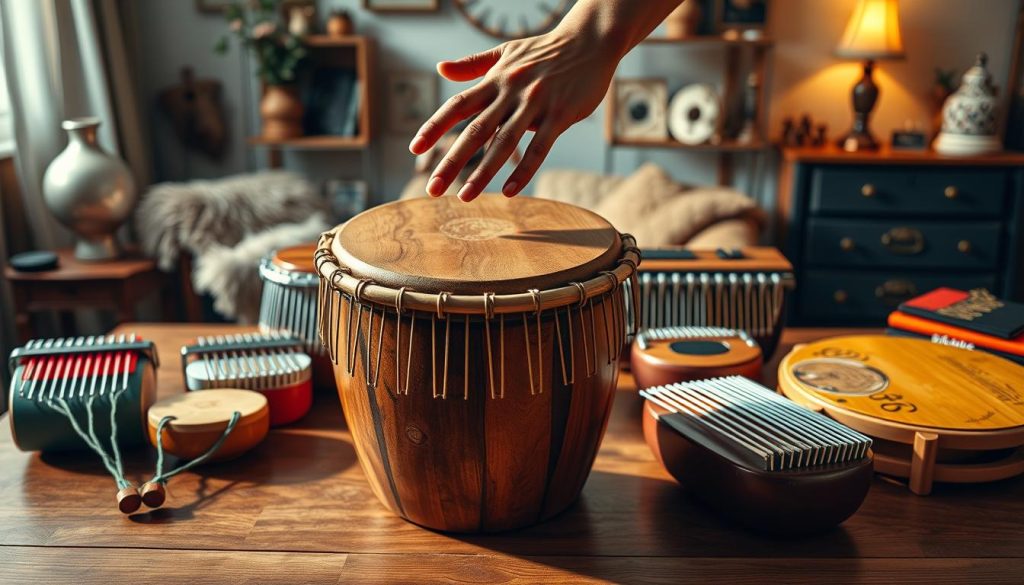
Tongue drum size: effects on sound, portability and playing comfort
The size of a percussion instrument such as a tongue drum plays a major role in how it is used. It affects sound quality and ease of transport. Choosing the right size helps you get the most from your musical experience.
Small, medium or large tongue drum: which balance suits you?
Tongue drums come in three size categories:
- Small: 15 to 20 cm in diameter, with 6 to 8 notes. Ideal for children and travel.
- Medium: 25 to 30 cm, with 11 to 13 notes. Recommended for most players.
- Large: 33 to 38 cm, with 15 notes or more. Intended for demanding musicians.
Size and resonance chamber: effects on sound
A large tongue drum has a bigger resonance chamber, producing deeper sounds that ring for longer. The result is a more ethereal sound. A small model, by contrast, produces drier, more percussive sounds suited to fast melodies.
A 30 cm drum with 11 or 13 notes is considered the benchmark for 80% of players. It offers a good balance between portability and sound quality.
Comfort and portability for travel or home use
If you plan to take your instrument with you, consider a model under 30 cm and 2 kg. It will fit easily into a backpack for outdoor sessions. If you mainly play at home, a large 33 to 38 cm model offers an immersive sound, ideal for complex compositions across two octaves.
Size also affects playing comfort. Good ergonomics let you strike the tongues without difficulty, an important point to check when trying an instrument in a store.
| Size category | Diameter | Number of notes | Recommended use |
|---|---|---|---|
| Small | 15 to 20 cm | 6 to 8 notes | Children, travel |
| Medium | 25 to 30 cm | 11 to 13 notes | Most players |
| Large | 33 to 38 cm | 15 notes or more | Demanding musicians |
In short, choose a tongue drum size that meets your needs for portability and sound quality. That way, you can enjoy your instrument to the fullest.
Tongue drums at Cultura: which models should you choose? A look at accessories
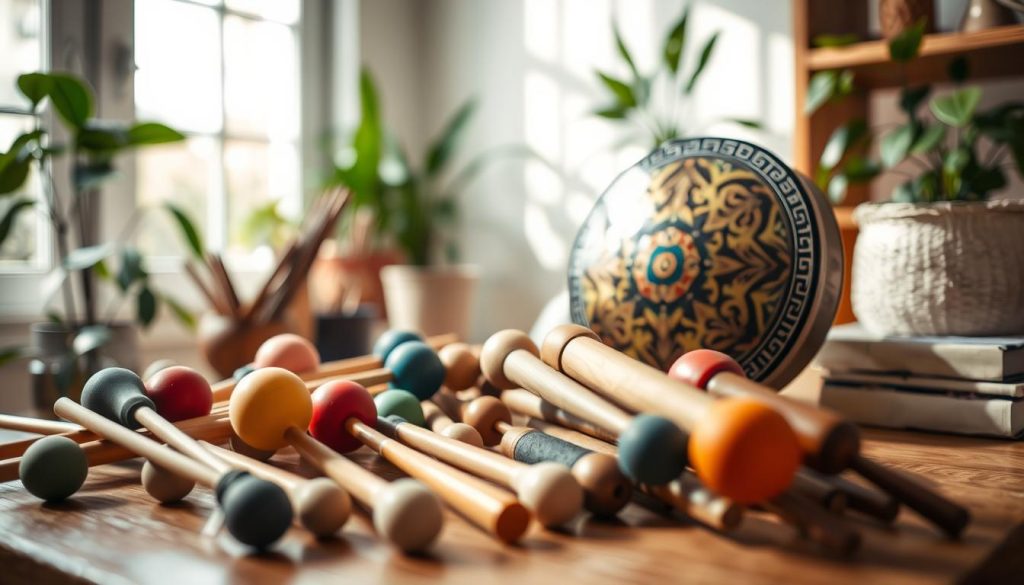
When buying a musical instrument, consider the accessories that come with it. Mallets, finger protectors and picks can add to your playing experience. These practical accessories affect both the sound and how easy the instrument is to play.
Mallets, finger protectors and picks: benefits and uses
Mallets are sticks about 30 cm long with rubber tips. They produce a clear sound without damaging the instrument’s tongues. This is the most accessible playing method for beginners and makes learning easier.
Finger protectors and picks fit over the fingers so you can strike the tongues directly. They provide a tactile, expressive alternative to mallets and create a closer connection with the instrument, which may appeal during meditation sessions.
Sheet music, carrying bags and other useful extras
Alongside mallets, several accessories can enrich your musical experience. Note-label stickers make learning easier, especially for beginners. A sheet music booklet lets you play familiar melodies and explore different musical styles.
A carrying bag is another useful addition. It protects your instrument from dust and knocks, especially when you travel. For outdoor playing, it becomes particularly valuable.
Should you choose a model with accessories included?
Do not choose a tongue drum solely for its included accessories. Sound quality and suitability for your needs should come first. If you like a model that lacks certain accessories, you can buy them separately.
For beginners, a model supplied with a sheet music booklet and note-label stickers is a good choice. These help you get started. Check the quality of the supplied mallets, too. Good rubber tips help produce a pleasing sound and last longer.
| Accessory | Use | Importance for beginners |
|---|---|---|
| Mallets | Main playing method; clear sound | Essential for getting started |
| Finger protectors and picks | Tactile playing and a closer connection with the instrument | An appealing option for meditation |
| Note-label stickers | Make learning easier | Recommended for beginners |
| Carrying bag | Protects the instrument | Important for travel |
| Sheet music booklet | Helps you play melodies | Useful for making progress |
In short, choosing the right accessories matters as much as choosing the instrument itself. They can shape your musical experience and progress.
Tuning frequency: 432 Hz or 440 Hz, and how does it affect your playing?
When choosing an instrument, tuning frequency is an important consideration. The two most common reference frequencies are 432 Hz and 440 Hz. Each affects the sound and your playing experience.
Differences between 432 Hz and 440 Hz tuning
The international reference is A at 440 Hz, or 440 cycles per second. With 432 Hz tuning, that reference is lowered to 432 cycles per second. All the notes shift slightly, creating a subtle difference that some musicians can hear.
Opinions on 432 Hz differ: some musicians and therapists attribute calming properties to it. However, no scientific study has established these benefits.
“Music tuned to 432 Hz can be a path to relaxation and meditation.”
What this means for meditation and playing with other musicians
A tongue drum tuned to 432 Hz is often recommended for yoga and music therapy sessions. Its sounds are described as softer and conducive to relaxation. If you play with other musicians, however, a 440 Hz instrument is preferable. It helps avoid tuning clashes and makes playing together more harmonious.
How should you choose a frequency?
If you play alone, a 432 Hz instrument may interest you for meditation. If you want to play familiar melodies or accompany other instruments, 440 Hz is the standard and more versatile choice.
Finally, if a product listing does not specify the frequency, the instrument is almost certainly tuned to 440 Hz, the usual default. This information can help you make an informed purchase.

Tongue drum brands: effects on quality and price
When considering a tongue drum, the brand can have a noticeable effect on the instrument’s quality and price. The market offers many brands, each with its own features and advantages.
Comparing established brands with generic models
Well-known brands such as Hluru, Rav Vast, Zenko and Nataraj stand out for sound quality and durability. They invest in quality materials and careful manufacturing. Generic models, often cheaper, can still offer fair value, especially for a first purchase.
Compare your options carefully. A generic instrument can sometimes be just as satisfying, but an established brand may be preferable if you want a particular sound and longer life.
Advantages and disadvantages of choosing a brand
Choosing a reputable brand has several advantages. You are more likely to get an instrument that is well tuned, made from quality materials and capable of sustained resonance. Treatments such as electroplating can also improve corrosion resistance.
Cost can be a drawback, however. Branded instruments can cost up to three times as much as other models. Reselling a branded tongue drum may also mean a substantial loss, often exceeding 50% of the purchase price.
Advice for your first purchase at Cultura
For your first purchase, consider an unbranded model or a mid-range instrument such as Hluru. You can discover the instrument without spending a fortune. Choose a trusted retailer such as Cultura, where you may be able to try instruments in store.
Before buying, read customer reviews and listen to sound demonstrations. Two instruments that look identical can sound very different because of how they were made. Your brand choice may also come down to personal taste. Some musicians prefer an artisan’s distinctive sound, while others are happy with more affordable models.
Materials: steel, alloys or wood?
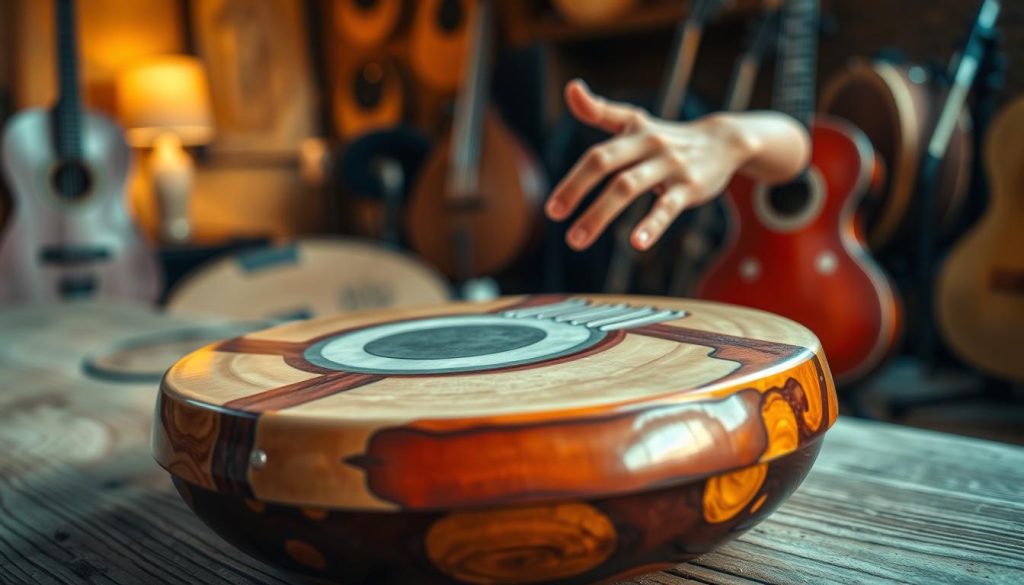
The materials used to make a musical instrument strongly affect its performance. Tongue drums are mainly made of metal, such as steel and steel alloys, although wooden versions are also available. Each material has distinctive qualities that can shape your musical experience.
Characteristics of steel and alloy tongue drums
Steel tongue drums are often valued for their clear, bright sound. Less expensive carbon steel may produce an unpleasant metallic ring. Stainless steel resists corrosion and can last longer.
A steel and titanium alloy, used by brands such as Hluru, offers a warm, clear sound and excellent resonance. This material reduces internal damping, producing purer vibrations. Although more expensive, nitrided steel offers greater resistance to impacts and corrosion, making it a premium option.
Benefits and characteristics of wooden tongue drums
Wooden tongue drums, made from materials such as bamboo or maple, produce warm, natural sounds. They are especially popular for activities such as meditation and yoga. Their natural appearance and distinctive resonance add an organic quality to your playing.
Wood is less resistant to impacts and changes in climate than metal, however. Regular care is therefore needed to keep these instruments in good condition.
How materials affect sound, durability and care
Material has a direct effect on an instrument’s sound. Steel models produce clear, striking tones, while wooden ones produce softer, more soothing tones. Metal’s robustness makes it a good choice for travel. For relaxation-focused use indoors, wood may appeal.
In terms of price, standard steel tongue drums are the most affordable. Titanium alloy and nitrided steel models cost more, while handmade wooden instruments can be expensive, ranging from €490 to €1,490.
Finally, quality heat treatment is essential for stable tuning and a longer instrument life. Always check this before buying.
Choosing the right musical scale: major, minor, pentatonic and more
Choosing a musical scale can transform your playing and compositions. Major and minor scales create different moods. Major scales sound bright and cheerful, while minor scales evoke more melancholy, introspective sounds.
Pentatonic scales have five notes and are often used to create simple, accessible melodies. Diatonic scales have seven notes: C, D, E, F, G, A and B. Chromatic scales contain 12 notes. These structures let you explore different musical styles.
Common scales
Names such as “Akebono,” “Hijaz,” “Celtic” and “Happy” are often marketing labels. What matters most is the scale’s structure. For a first purchase, consider a tongue drum in C major, D major or F major. These versatile scales suit many melodies.
How scales shape mood and musical style
A minor scale, such as D minor, is well suited to relaxation and music therapy. A major scale works well for lively, cheerful compositions. Consider the mood created by a scale when making your choice.
Models with multiple scales and their appeal
Multiscale tongue drums use magnets placed beneath the tongues to change the scale. This offers useful flexibility, but at a high price, generally between €400 and €500. For many players, buying several differently tuned models may offer a wider variety of sounds.
Experienced musicians may enjoy exploring less familiar scales such as “Akebono” or “Hijaz.” Listen to sound demonstrations first, as these distinctive sounds do not suit every repertoire.
Budgeting for a tongue drum at Cultura: making a considered investment
The amount you spend on a musical instrument can vary considerably. Small tongue drums start at around €50. Larger models with more tongues can cost about €200.
Instruments from well-known brands such as Hluru or Rav Vast can cost from €300 to more than €1,000. These prices often reflect better sound quality and durability.
Here is an overview of the price ranges:
| Model type | Minimum price | Maximum price |
|---|---|---|
| Small: 6 to 8 notes | €50 | €80 |
| Medium: 11 to 13 notes | €80 | €150 |
| Large: 15 notes or more | €150 | €300 |
Define your needs before setting your budget. If you want to play complex melodies, it may be better to save for a 15-note model than to settle for a limited small model.
A tongue drum costing €30 may be poorly tuned and sound unpleasant, which could discourage you from playing. Choose a quality model for a more satisfying experience.
For good value, consider a medium-sized, 12-inch steel model with 11 to 13 notes. It balances musical versatility with a reasonable price.
A premium instrument may be a worthwhile investment once you have developed your playing. It can let you explore distinctive sounds and enjoy exceptional resonance.
This instrument can be a lasting investment. A quality model that is well cared for can bring years of musical enjoyment and even be passed on.
Conclusion: make an informed choice and enjoy your tongue drum
Taking time to choose your instrument can make your musical experience more rewarding. By considering the criteria in this guide, including the number of tongues, size and accessories, you can make an informed decision. Every detail helps you get the most from your instrument.
Set your priorities: someone who travels with their instrument may value portability, while a meditation enthusiast may prefer 432 Hz tuning. Think of the instrument as an investment in your well-being, bringing soothing sounds to an often noisy world.
Try different models in a store or listen to sound demonstrations online to hear their character. Beyond technical specifications, the ideal instrument is one you feel connected to and want to play.
Regular practice, whether with mallets or your bare hands, is essential for improving and discovering the instrument’s melodic possibilities. Explore what it offers and find a model that suits your musical ambitions.