
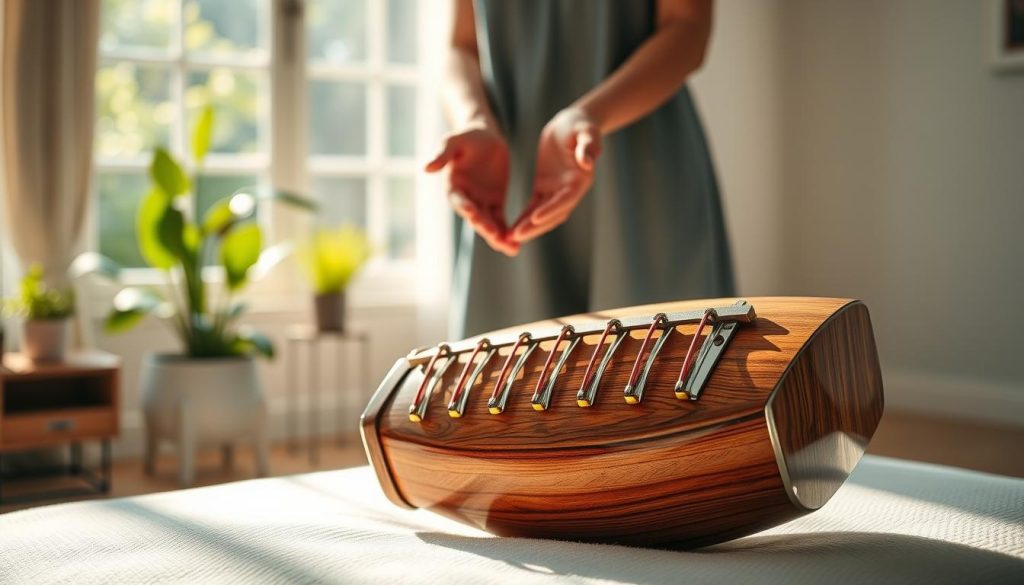
The tongue drum is a captivating percussion instrument. Each tongue produces a distinct note, making it accessible to anyone who wants to explore music without prior experience.
This guide will take you step by step through an introduction to this soothing instrument. Drawing on ten years of experience advising beginners, the author shares what they have learned.
In this article, you will find everything you need to get started. We will cover preparing the instrument, playing techniques, and the benefits of practicing. The tongue drum can be a tool for relaxation and creativity for everyone.
Whether you play with mallets or your fingers, this intuitive instrument lets you create beautiful melodies within minutes.
Discover the tongue drum: a fascinating instrument for beginners
Also known as a steel tongue drum, this instrument is an ideal choice for anyone who wants to explore percussion. Made from high-quality steel, it is often fashioned from recycled propane tanks. Each precisely cut tongue produces a distinct, bell-like note. Its soothing, ethereal sounds make it well suited to meditation and relaxation.
What is a tongue drum, and what are its main features?
The tongue drum is a percussion instrument distinguished by its shape and construction. Here are some of its main features:
- Definition: A steel percussion instrument whose tongues produce distinct notes.
- Other names: Also known as a tank drum or hank drum.
- Construction: Made from high-quality steel for durability and sound quality.
- Tuning: Often tuned to a pentatonic scale, allowing the notes to sound harmonious together.
Why the tongue drum appeals to beginners
This instrument has several advantages for beginners:
- Intuitive: No previous musical training is required.
- Easy to learn: Unlike string instruments, it makes it easier to play notes that sound good together.
- Creativity: Encourages improvisation and personal expression without pressure.
The tongue drum’s sounds are especially appreciated for their relaxing qualities. It is often used in sound healing and meditation. Here are some reasons for its popularity:
- Relaxation: Its soothing sounds encourage calm and serenity.
- Meditation: It can accompany meditation and create an atmosphere that supports concentration.
- Musical exploration: It provides an introduction to melodic percussion.
| Feature | Details |
|---|---|
| Material | High-quality steel |
| Tuning | Pentatonic |
| Notes produced | Distinct and harmonious |
| Uses | Meditation, relaxation, improvisation |
Prepare your tongue drum before playing
Before exploring your instrument, take time to prepare it. Good preparation will help you enjoy playing. Here are a few key steps.
How to place note stickers correctly
Most tongue drums come with a set of stickers. Each sticker bears a number corresponding to a musical note. Follow the instruction booklet to place them correctly.
The stickers help beginners identify the instrument’s different tongues. They also show you which notes to play. Once they are in the right places, you can focus on playing instead of searching for notes.
Position and hold the instrument for comfort and resonance
The position of your tongue drum affects both its resonance and your comfort. Consider these three options:
- On a hard surface: Make sure the instrument has rubber feet so it can resonate properly.
- On your thighs: Sit comfortably with your legs crossed and place the instrument on your thighs. Raise your knees slightly to tilt the drum toward you and make every note easier to reach.
- On a stand: If you prefer to play standing up, a wooden or metal stand can be an excellent option.
Choosing a comfortable position can help prevent pain and numbness during longer sessions.
Useful accessories for getting started
Some accessories are helpful when you begin playing the tongue drum:
- Mallets: Usually supplied with the instrument, they produce rich tones.
- Silicone finger protectors: These fit over your fingers like rings and can make finger playing easier.
- Instruction booklet: A guide can help you take your first steps.
For comfort, choose an instrument model and size that suit you. Consider buying a stand if you want to play standing up or use several instruments.
| Accessory | Purpose |
|---|---|
| Mallets | Produce rich tones |
| Silicone finger protectors | Make finger playing easier |
| Instruction booklet | Guide beginners |
| Stand | Play standing up or use several instruments |
By preparing your instrument and gathering the right accessories, you can make beautiful sounds from the start of your musical journey.
The essentials of learning to play the tongue drum
To get the most from this fascinating instrument, it helps to understand the basic playing techniques. Mallets and fingers each offer advantages and present their own challenges.
Playing with mallets: grip and practical tips
A comfortable mallet grip helps you play smoothly. Bend your index finger into a curve. Rest the mallet handle in that curve and hold it with your thumb. Let your other three fingers rest along the handle for control.
To practice, play a sequence of notes without trying to form a melody. This will help you find a grip that suits the size of your hands.
Playing with your fingers: benefits, challenges, and tips
Finger playing takes more care because the metal is thicker than that of a handpan. Use your fingertips or the ends of your fingers to make a quick, light strike. Lift your fingers promptly so you do not dampen the vibrations.
Although mallets are easier for beginners, finger playing can help you sound more than two notes at once and give you greater control.
Understand the notes and how the tongues vibrate
Each tongue corresponds to a distinct note. Where you strike it affects the sound. Striking toward the center of the tongue drum can produce a deeper, stronger sound; striking farther outward can produce a lighter one.
The steel tongues produce sound as they vibrate. To stop a note, press a finger against the vibrating tongue. This technique helps you control the sound and add variety to your playing.
Understanding your instrument’s tuning and scale can make playing easier and help you hear how the notes work together. Try different striking positions and degrees of force to vary each note’s volume and tone.
With these basics, you can progress steadily and avoid common beginner frustrations. For more information about sheet music and techniques, see the resource here.
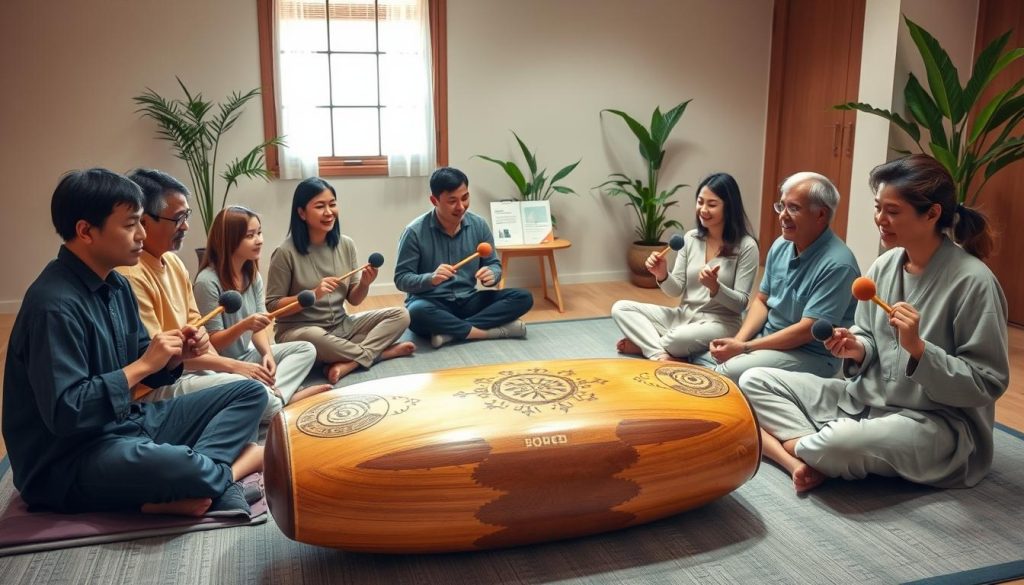
Getting started with the tongue drum: master the fundamentals
Getting to know this instrument opens the door to a new musical experience. Before your first session, prepare both yourself and the instrument.
Prepare yourself and your instrument for a successful first session
Start with a relaxed attitude. Set aside any pressure to perform and enjoy discovering new sounds. Take a moment to check the placement of the stickers on the tongues. They will help you learn the notes.
Make sure your instrument is stable so it can resonate properly. Choose a comfortable playing position, whether the drum rests on your thighs or a flat surface.
Explore your first sounds and learn the different notes
Gently strike each tongue in turn. Listen to its sound and remember where the note is located. Vary the strength of your strikes to discover different tones.
There is no need to rush into complex melodies. Follow a rhythm and experiment freely with the notes. This intuitive approach will help you become familiar with the instrument.
How to avoid common beginner mistakes
Some habits can slow a beginner’s progress. Avoid leaving your fingers on the tongues after striking them, as this dampens their vibrations. Also, try to strike neither too hard nor too softly.
To avoid frustration, begin with short sessions of 10 to 15 minutes. Focus on sound quality before speed. Learning takes patience.
Online resources, including YouTube demonstrations, can give you ideas from other players. Regular practice will help develop muscle memory and familiarity with the instrument.
Progress with your steel tongue drum: effective ways to practice
Exploring this instrument’s sounds can be a rewarding musical journey. Follow the rhythm and notes, try different combinations, and develop your own style without needing sheet music.
Improvise and create melodies by instinct
Improvisation is a skill you can develop. Close your eyes and let your feelings guide you. Play patterns that sound right to you and try different rhythms. You may discover melodies that reflect your own musical tastes.
Read and use tongue drum sheet music
An instruction booklet often comes with the instrument. It may use simple number notation, with each number corresponding to a numbered tongue. You can also find sheet music on specialist websites and blogs. Familiar songs such as “Happy Birthday” and “Twinkle, Twinkle, Little Star” are good starting points.
Add advanced sound effects to your playing
Some advanced techniques can give your playing more depth. For example, you can use the opening underneath the tongue drum. Partially or fully covering it with your thigh can create a wah-wah effect that changes the resonance. This offers another way to explore the instrument’s sounds.
As you progress, the quality of your instrument matters. A model with at least 11 notes gives you more variety. Vary the strength of your strikes and play different areas of the tongues to become more expressive.
Consider recording your sessions. Listening back can help you assess your rhythm and fluency and identify areas to improve. Over time, you can move from discovering individual notes to free improvisation and learning simple melodies from sheet music.

Choosing the best beginner tongue drum: essential criteria
When choosing a suitable instrument, consider several factors. Every tongue drum model has features that can shape your playing experience. Here are the main criteria to consider.
Choose the right number of notes for your playing style
The number of notes matters. If you want to play from sheet music, an instrument with 15 notes is a good choice. It lets you play a wider range of pieces.
If you prefer creating your own melodies, a model with 8 to 10 notes may be enough. Diatonic instruments with 7 notes suit simple scores, while pentatonic models with 5 notes encourage improvisation.
Why the scale and key affect your learning
Your chosen scale and key affect how you learn. Major scales such as C major and F major produce bright, balanced sounds and are often good for beginners.
Minor scales such as D minor or Amara create a more melancholy mood. For intuitive playing, explore other scales such as Akebono or Hijaz, which offer different tonal colors.
How much should a beginner budget for a quality instrument?
Budget is an important consideration when buying a tongue drum. A small 20 to 25 cm model with around 10 notes can cost under €100. Larger instruments with 15 notes cost around €200 to €300.
For a first purchase, consider keeping your budget below €500. More expensive models are often aimed at experienced musicians. To explore a broad selection, Instruments du Monde offers many models.
Also consider the design and included accessories. An instrument you enjoy looking at may make playing more inviting.
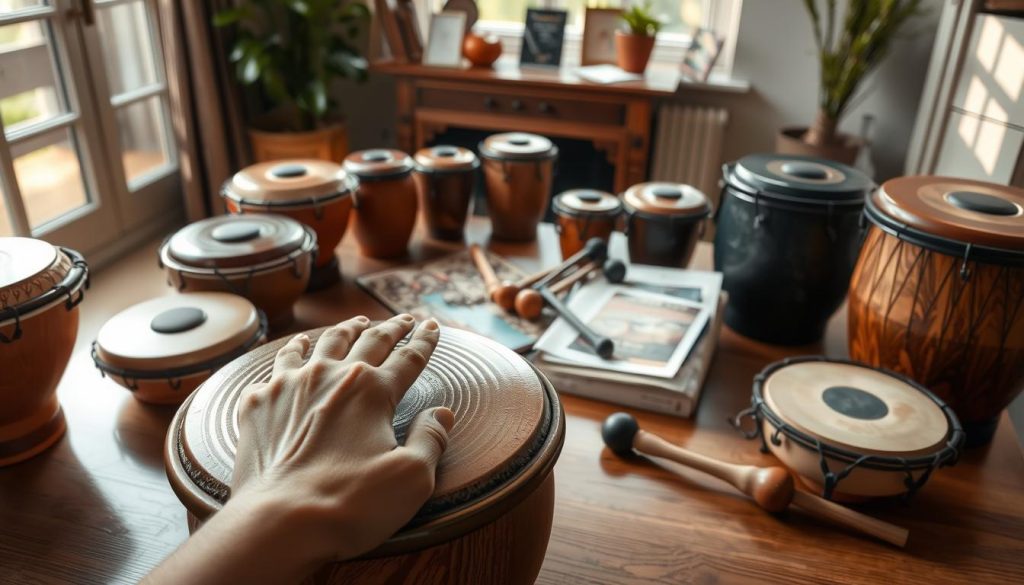
Practical tips for steady, lasting progress
Regular practice helps you become comfortable with this fascinating instrument. Just 10 to 15 minutes a day can improve your tongue drum playing. As a familiar saying puts it: “Repetition is the mother of learning.”
Start slowly when learning a new song. Speed will come with time. Accept that fluency and accuracy develop gradually. Patience matters throughout your musical journey.
Why consistency and patience matter
Regular playing helps develop muscle memory. As the movements become more familiar, you can focus more on musical expression. Every session counts, even a short one.
Sharpen your ear and refine your touch
To train your ear, listen closely to the sounds you produce. Vary the force and position of your strikes on the tongues. Compare the resulting tones to understand your instrument’s nuances.
To refine your touch, change how firmly you strike with your mallets or fingers. Try different striking areas on each tongue to discover new sounds. This will add variety to your playing.
Use online resources and demonstrations to improve
Online resources can help you progress. Many YouTube tutorials show numbered visual patterns that make learning easier. They can demonstrate how to play songs and develop your technique.
Explore specialist blogs and websites offering free sheet music. Tongue drum communities can also provide support. Share advice and experiences with other players.
Record yourself regularly, too. Listening back lets you assess your rhythm and fluency and spot areas for improvement.
Remember to make room for relaxation and enjoyment. Keep the pressure low, enjoy your time with the instrument, and follow the music.
To learn more about music therapy, consult the resources of the American Music Therapy Association. They can deepen your understanding of how music can support well-being.
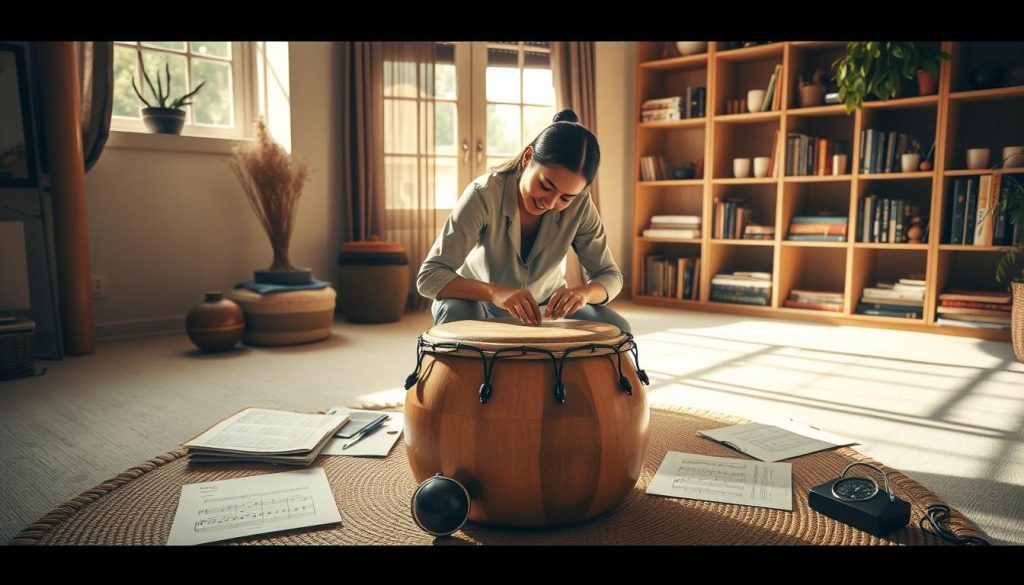
The world of tongue drums: benefits and possibilities for beginners
The tongue drum offers a distinctive musical experience through its soothing sounds. It can support relaxation and meditation, while the notes of its tongues create an atmosphere often associated with sound healing.
The tongue drum’s relaxing and meditative qualities
The instrument’s ethereal tones make it a popular choice for relaxation. Playing may help you unwind and feel calmer. Closing your eyes can make the experience more meditative, helping you connect with your emotions while creating your own soundscapes.
Develop musical creativity without pressure
One appeal of a pentatonically tuned tongue drum is that its notes work well together. Players can explore freely, improvise, and experiment. Children, for example, can begin making pleasing melodies within minutes, even without musical training.
Explore percussion with an accessible instrument
The tongue drum offers an accessible introduction to melodic percussion. You can improvise, play familiar songs, or create sounds for meditation or yoga.
As you progress, try different scales and tongue drum models. They can broaden your musical experience and introduce you to new sounds. Playing can also bring together musical enjoyment, relaxation, and personal growth.
Join the growing community of tongue drum enthusiasts. Share what you learn and explore the possibilities, from relaxing casual play to more advanced practice on professional-quality instruments.
Conclusion
This instrument invites you to explore sound and creativity. With the advice in this article, beginners can build their skills and enjoy playing. The tongue drum is a welcoming choice for relaxation, meditation, or personal expression.
Patience and regular practice will support lasting progress. Share your enthusiasm with the people around you and introduce others to this fascinating instrument.
Start your tongue drum journey and enjoy its captivating sounds. There is a rich, calming musical world to discover.